
A campus is more than classrooms and corridors.
\n\n\n\nIt is where students spend some of the most important years of their lives—learning new things, making friends, discovering their interests, working on ideas, participating in events, and gradually preparing themselves for the professional world.
\n\n\n\nAt CIMAGE Digital Campus, this entire experience has been thoughtfully brought together in one technology-driven environment.
\n\n\n\nFrom the moment you enter the CIMAGE building to the classrooms, laboratories, library, innovation spaces, recreational areas and the large auditorium, every part of the campus has a purpose.
\n\n\n\nThe idea is simple: give students an environment where they can learn, experiment, collaborate, create and grow.
\n\n\n\nAnd the best way to understand the campus is to walk through it.
\n\n\n\nThe Journey Begins at the CIMAGE Building
\n\n\n\nThe first impression of the CIMAGE Digital Campus begins with its building itself.
\n\n\n\nDesigned as a modern educational environment, the campus brings academic spaces, technology infrastructure, student facilities and collaborative areas together under one roof.
\n\n\n\nBut before stepping into the academic world, there is a space that sets a different tone for the journey.
\n\n\n\nSankalp Mandir: Beginning with a Sense of Purpose
\n\n\n\nAs you enter the campus, one of the first spaces you encounter is Sankalp Mandir.
\n\n\n\n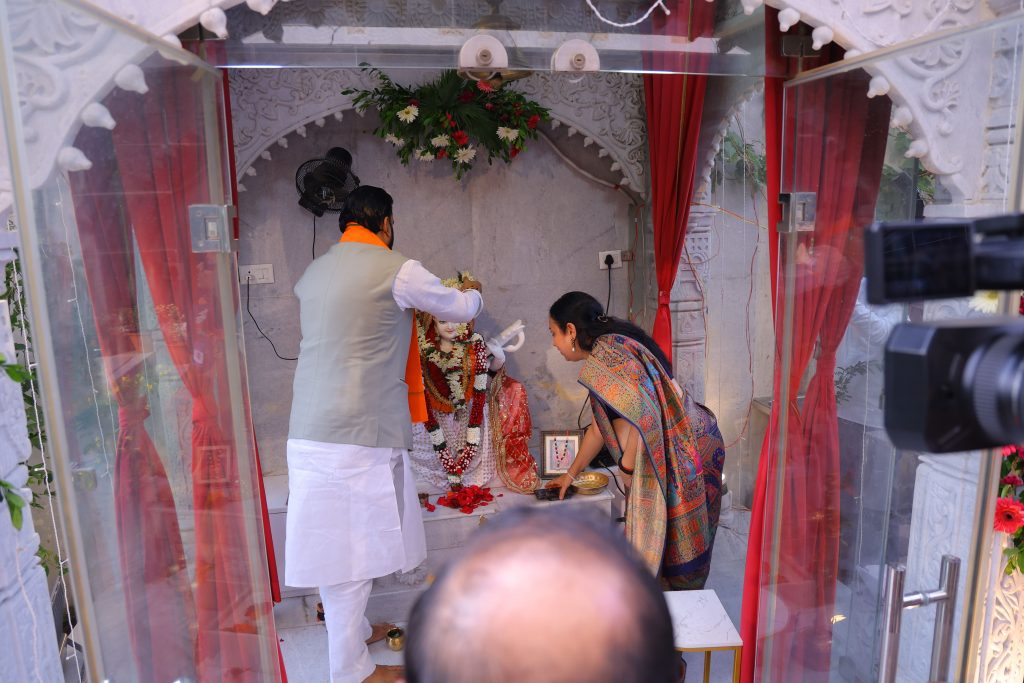
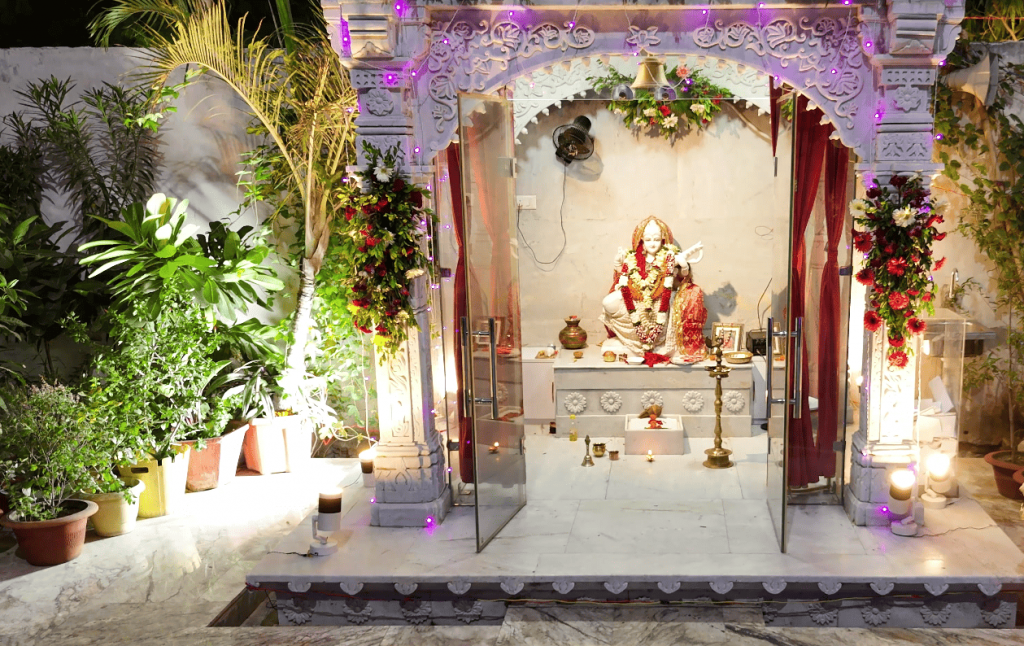
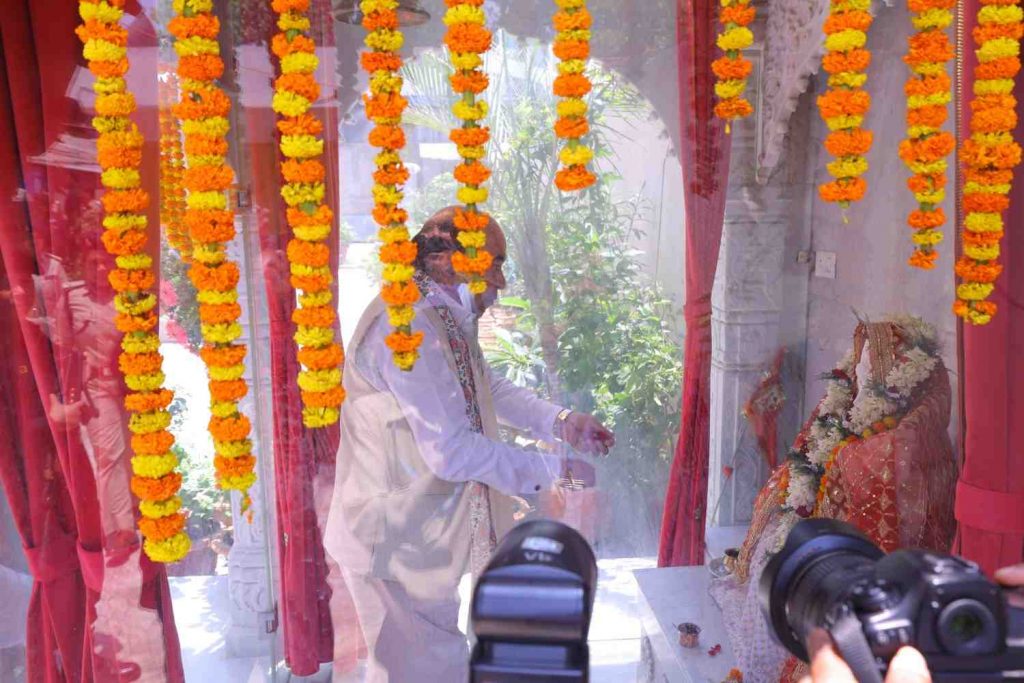
It represents something more than a physical space. For students beginning a new chapter of their lives, it becomes a quiet reminder of purpose, determination and the aspirations they bring with them.
\n\n\n\nFrom here, the campus gradually moves from reflection to everyday student life.
\n\n\n\nReception & Waiting Area: The First Welcome
\n\n\n\nThe reception is where the campus begins to feel active.
\n\n\n\n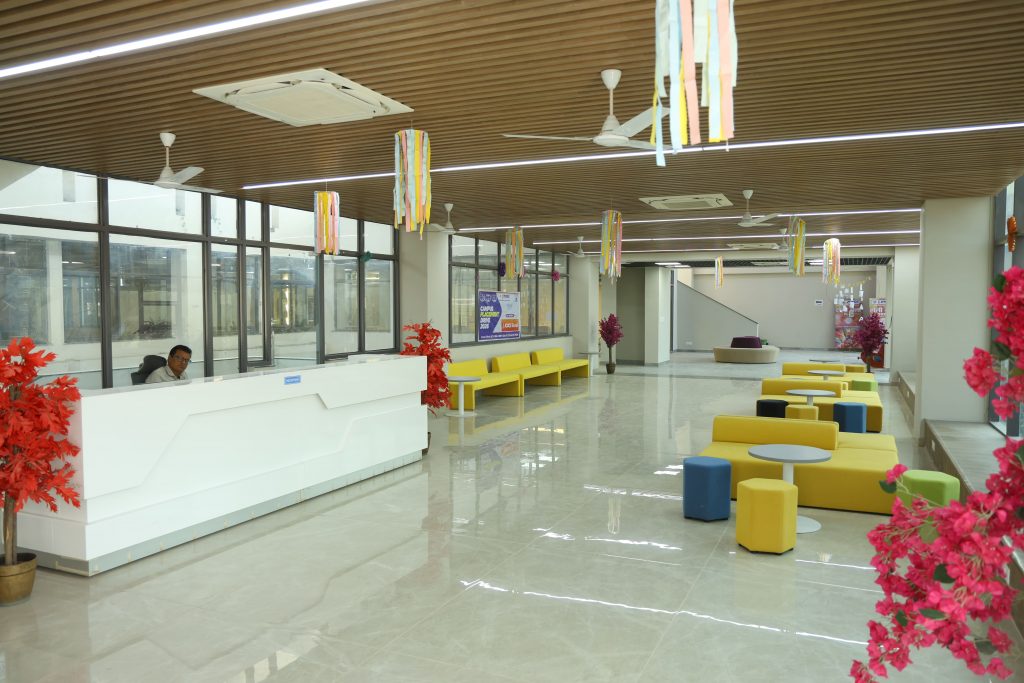
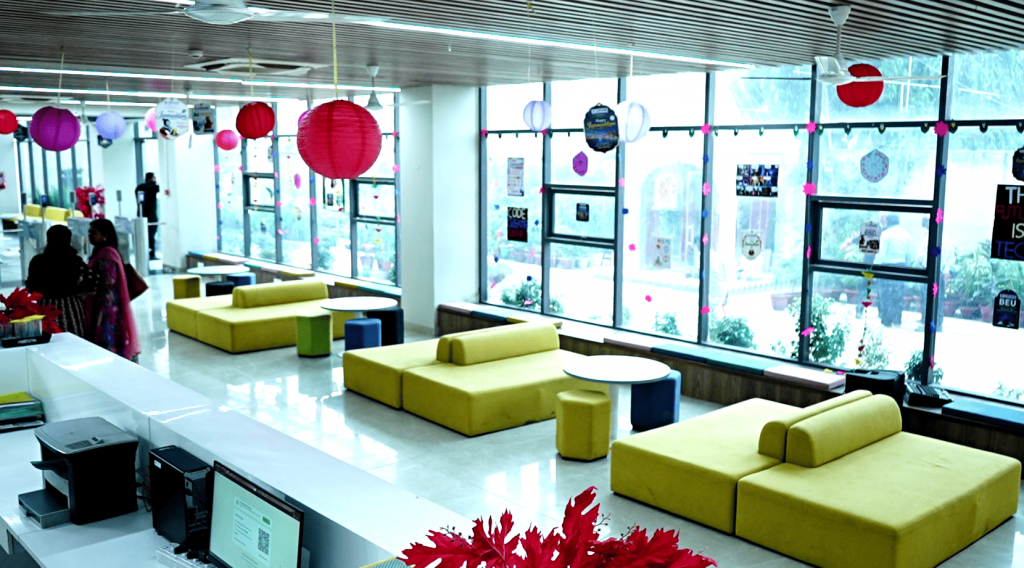
Students, parents, visitors and guests are welcomed here before moving into the different areas of the campus. The reception and waiting area are designed to make the first interaction comfortable and organized.
\n\n\n\nIt is a small part of the campus experience, but an important one—because a good campus experience begins with feeling welcomed.
\n\n\n\nTechnology-Enabled Entry & Attendance
\n\n\n\nAs students move further into the campus, technology becomes part of the everyday experience.
\n\n\n\n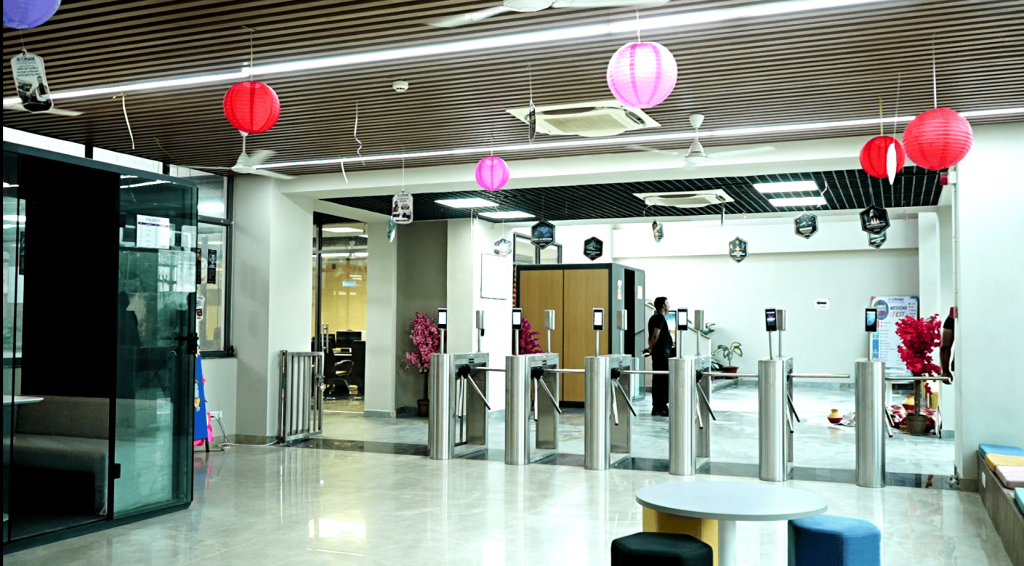
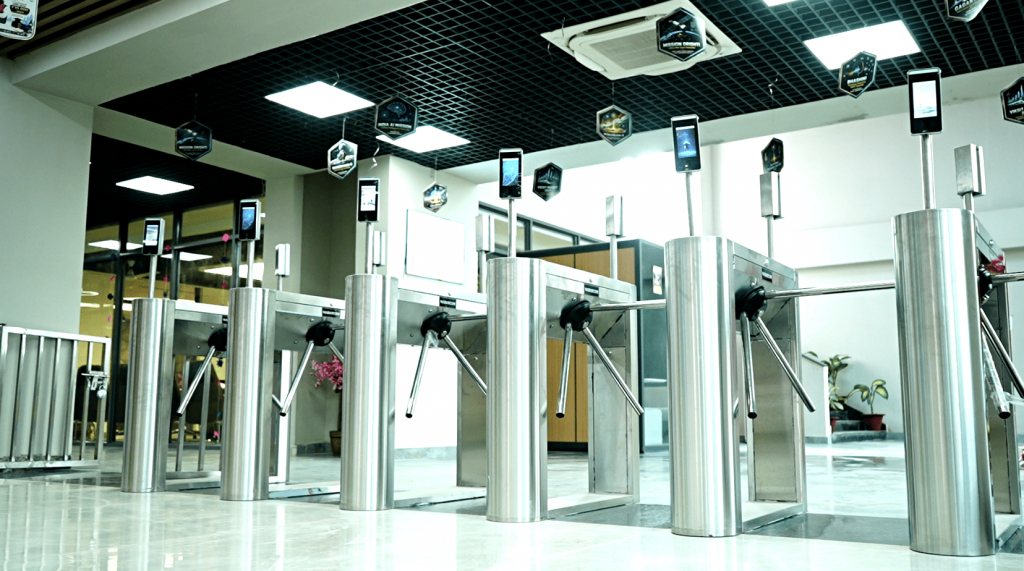
The Turnstile-based attendance and entry mechanism provides a structured way to manage campus access and attendance.
\n\n\n\nIt is one of the many examples of how digital systems are integrated into the day-to-day functioning of the campus rather than being limited to laboratories and classrooms.
\n\n\n\nSilent Pods: Spaces for Conversations That Matter
\n\n\n\n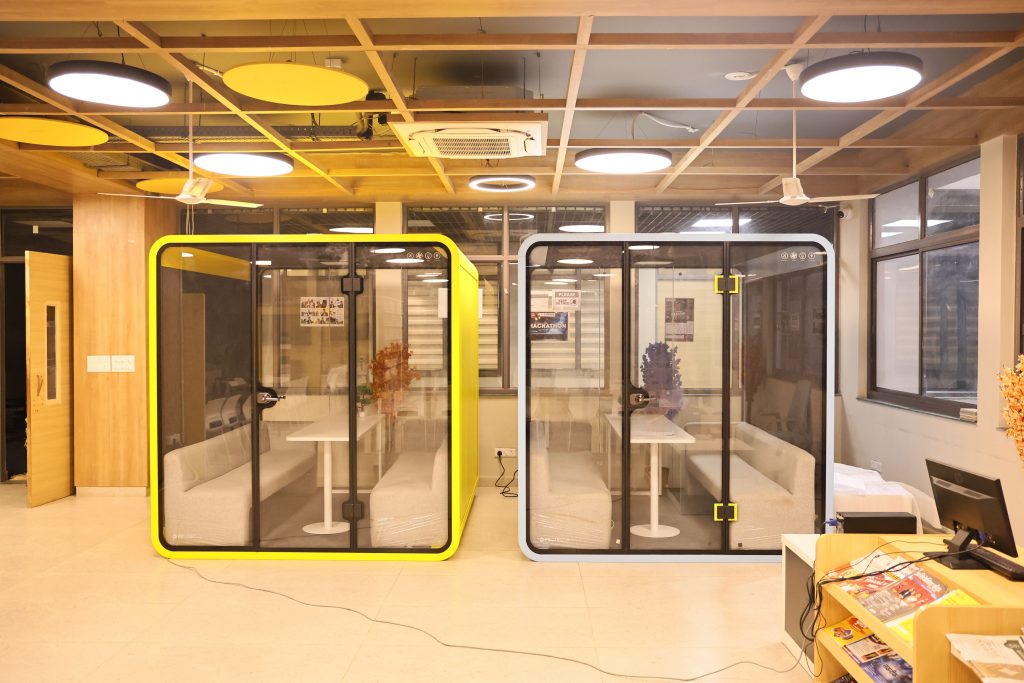
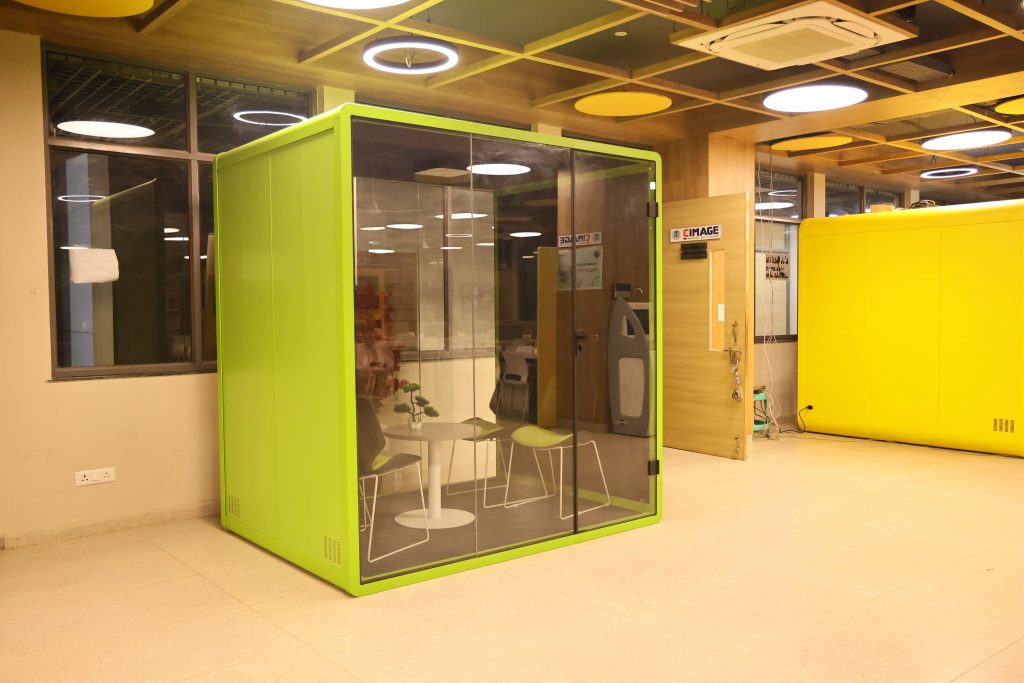
Not every conversation needs a classroom.
\n\n\n\nSometimes a student needs to discuss a doubt with a faculty member. Sometimes a parent needs to have a private conversation with a teacher. Sometimes a student simply needs focused guidance.
\n\n\n\nThat is where the Silent Pods come in.
\n\n\n\nThese dedicated spaces provide a quieter setting for:
\n\n\n\n- \n
- Parent–Teacher Meetings \n\n\n\n
- One-to-one student–faculty discussions \n\n\n\n
- Doubt-clearing sessions \n\n\n\n
- Mentoring and guidance \n\n\n\n
- Academic conversations \n
The idea behind these pods is simple: create a comfortable environment where conversations can happen without the distractions of a busy campus.
\n\n\n\nBoard Room & Director’s Cabin
\n\n\n\n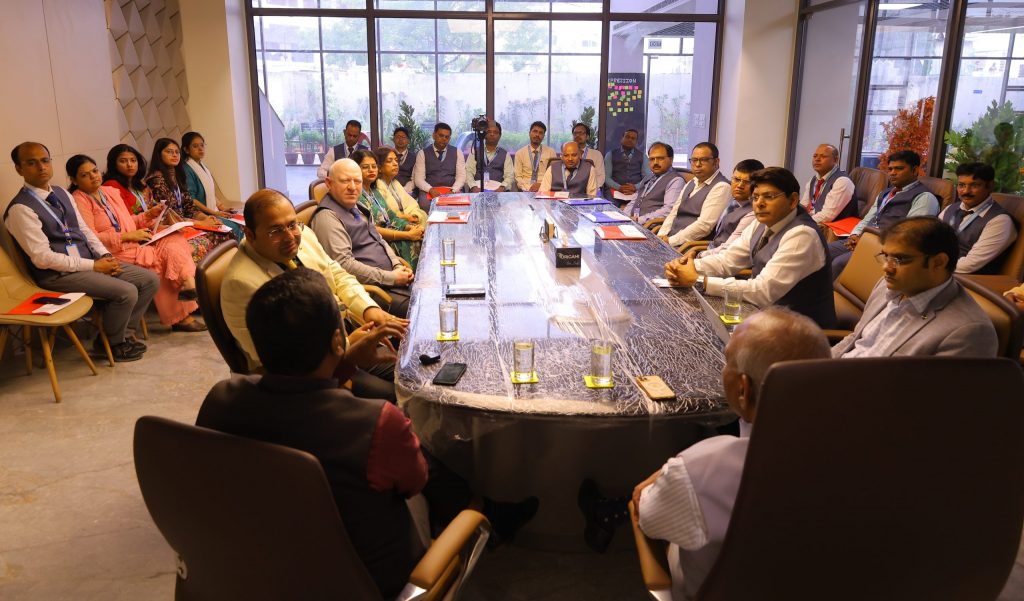
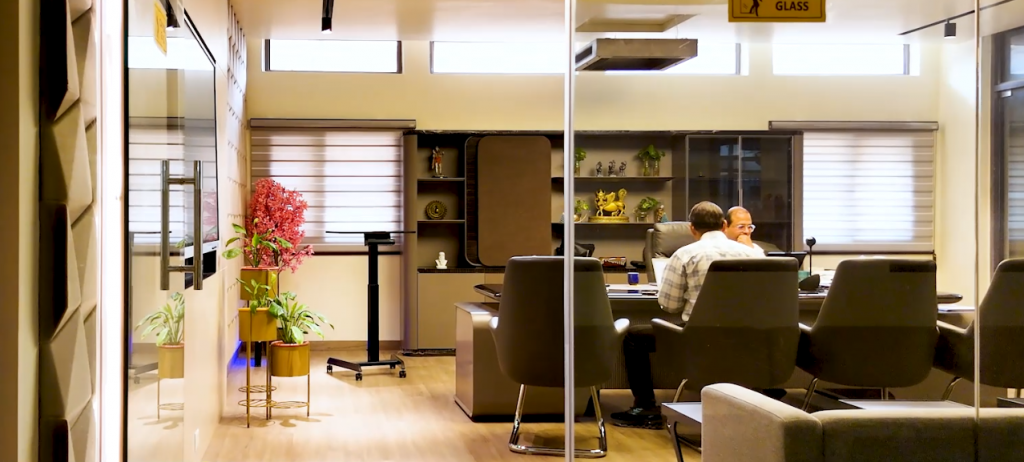
As an institution grows, there are spaces where important conversations and decisions take place.
\n\n\n\nThe Board Room provides a professional setting for meetings, discussions and institutional planning, while the Director’s Cabin forms part of the leadership and administrative infrastructure of the campus.
\n\n\n\nTogether, these spaces reflect another side of the campus—the planning and decision-making that supports the larger student experience.
\n\n\n\nCentral Library: A Smart Space for Learning
\n\n\n\nWalk further into the campus and the environment becomes quieter.
\n\n\n\n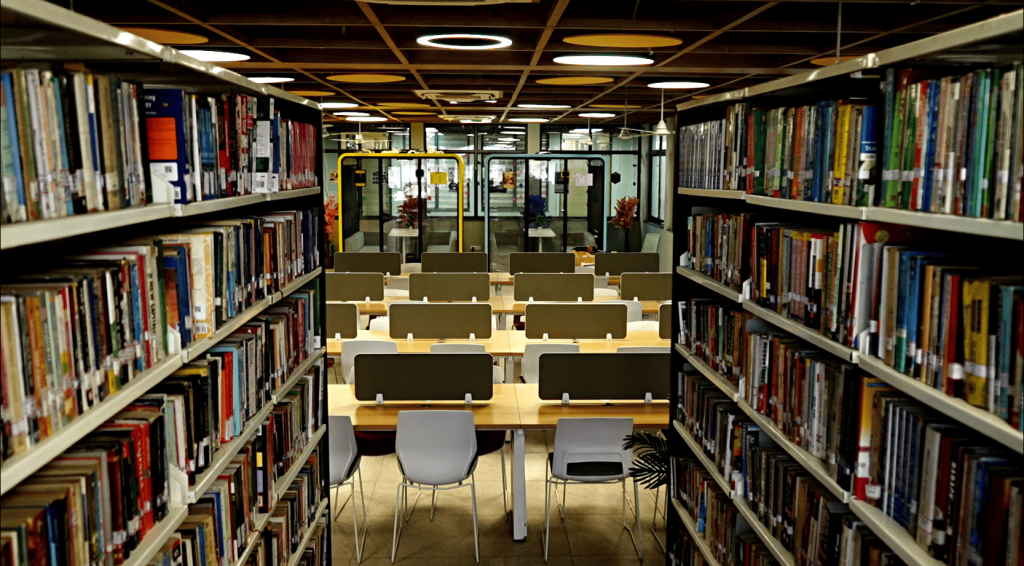
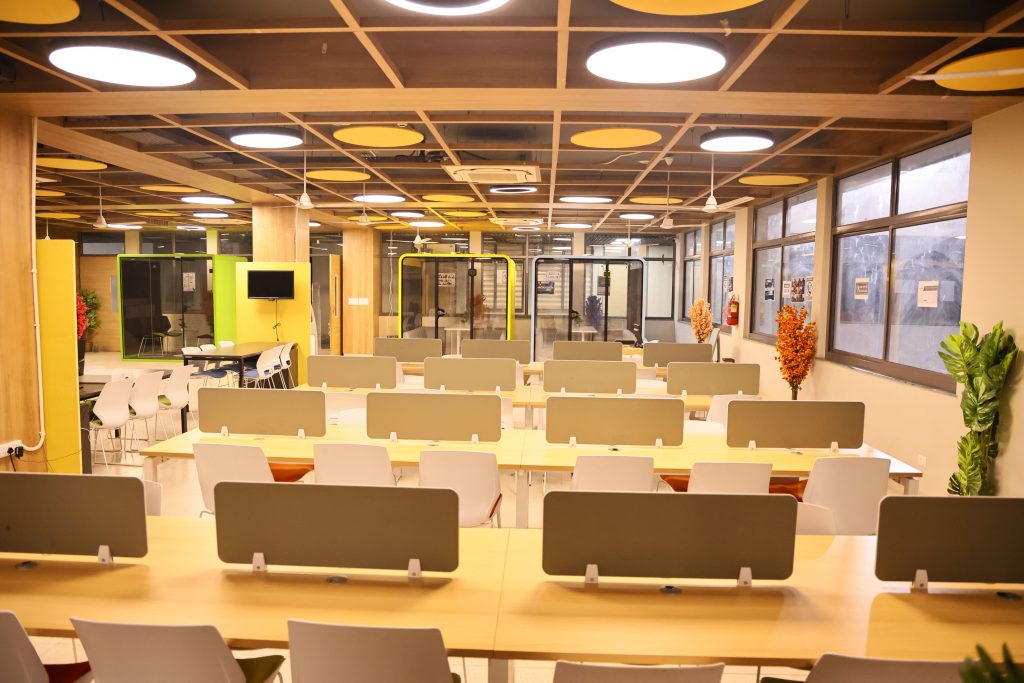
The Central Library is designed as a dedicated space for reading, preparation, research and self-learning.
\n\n\n\nOne of its notable features is its RFID-enabled library infrastructure, bringing technology into the way library resources are managed and accessed.
\n\n\n\nBut a library is ultimately about more than technology.
\n\n\n\nIt is where a student can sit down after class, open a book, work on an assignment, prepare for an examination or simply spend time learning independently.
\n\n\n\nBasement Extended Study Zone: More Space to Learn
\n\n\n\n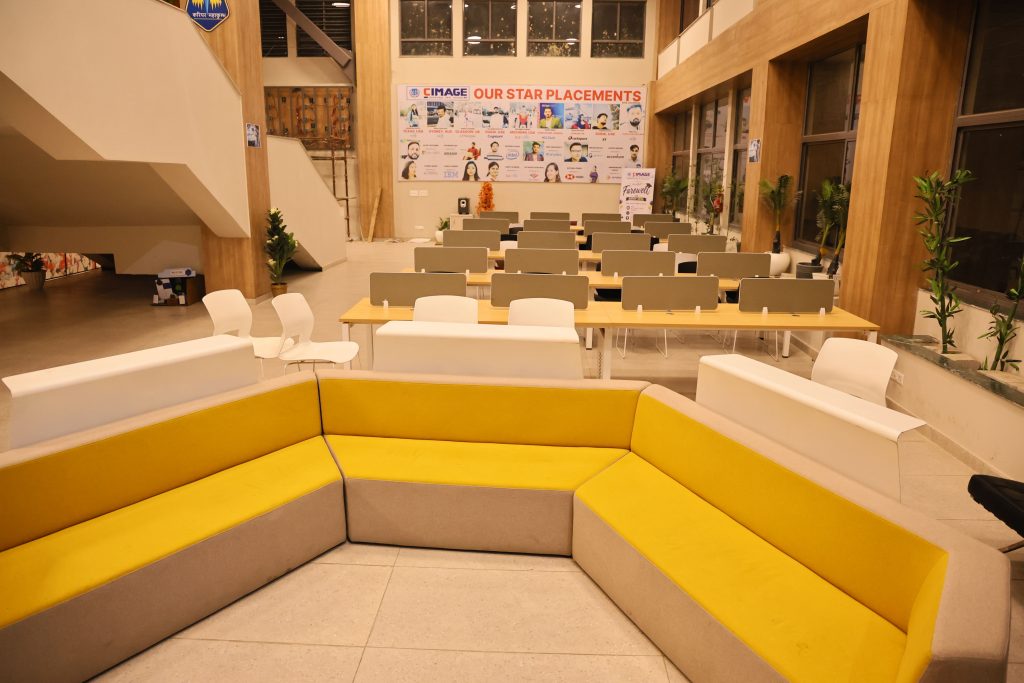
Learning does not stop when the classroom ends.
\n\n\n\nThe basement area extends the library environment with an additional study zone, giving students more space for focused work and self-study.
\n\n\n\nIt provides a quieter alternative for students who want to read, prepare, revise or work on projects away from the activity of the main campus.
\n\n\n\nAR/VR Zone: Experiencing Technology Differently
\n\n\n\n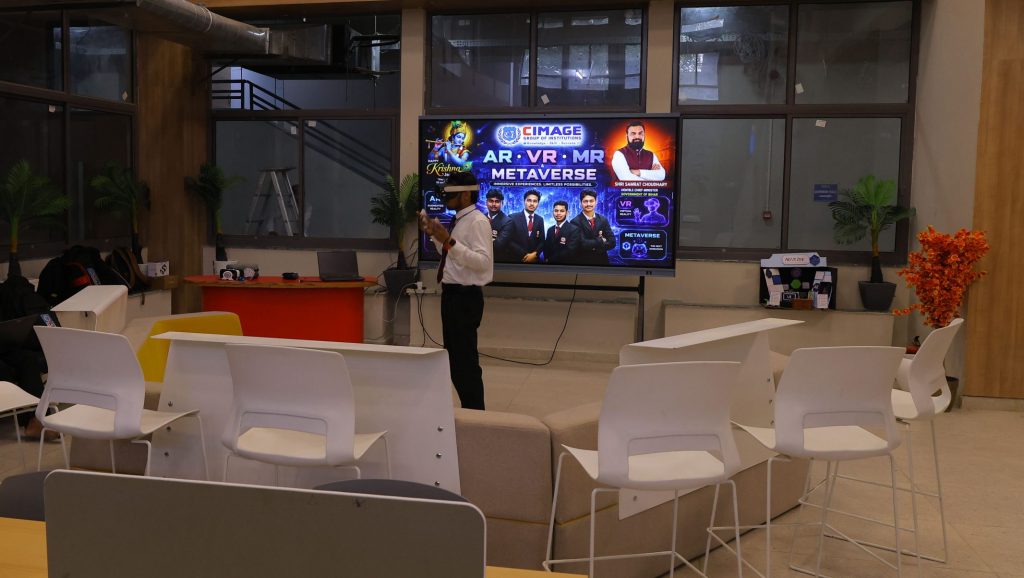
Then comes a completely different kind of learning environment.
\n\n\n\nThe AR/VR Zone brings immersive technology into the campus experience, allowing students to explore concepts and experiences beyond conventional screens and textbooks.
\n\n\n\nAugmented Reality and Virtual Reality are changing the way people interact with digital content, and having a dedicated space for these technologies gives students an opportunity to become familiar with an increasingly important part of the digital world.
\n\n\n\nFrom Ideas to Innovation: Startup Incubation
\n\n\n\n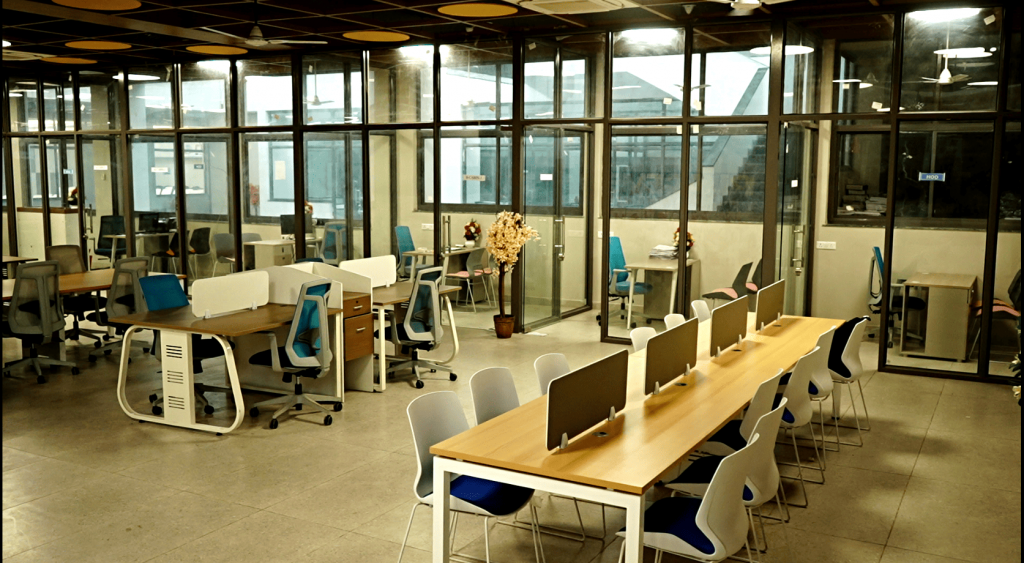
A good educational environment should not only teach students how things work.
\n\n\n\nIt should also encourage them to ask:
\n\n\n\n“What can I build?”
\n\n\n\nThe Startup Incubation and Innovation spaces at CIMAGE provide an environment where students can discuss ideas, work with teams, explore projects and develop an entrepreneurial mindset.
\n\n\n\nWhether it is a technology concept, a student project or an early-stage startup idea, the incubation environment gives students space to move from simply having an idea to actually working on it.
\n\n\n\nInclusive Office Area
\n\n\n\nThe Inclusive Office Area adds another dimension to the campus environment, supporting a collaborative and accessible working culture.
\n\n\n\nIt is part of the broader infrastructure that allows different academic, administrative and student-support activities to function together.
\n\n\n\nSeminar Hall: Where Ideas Take the Stage
\n\n\n\n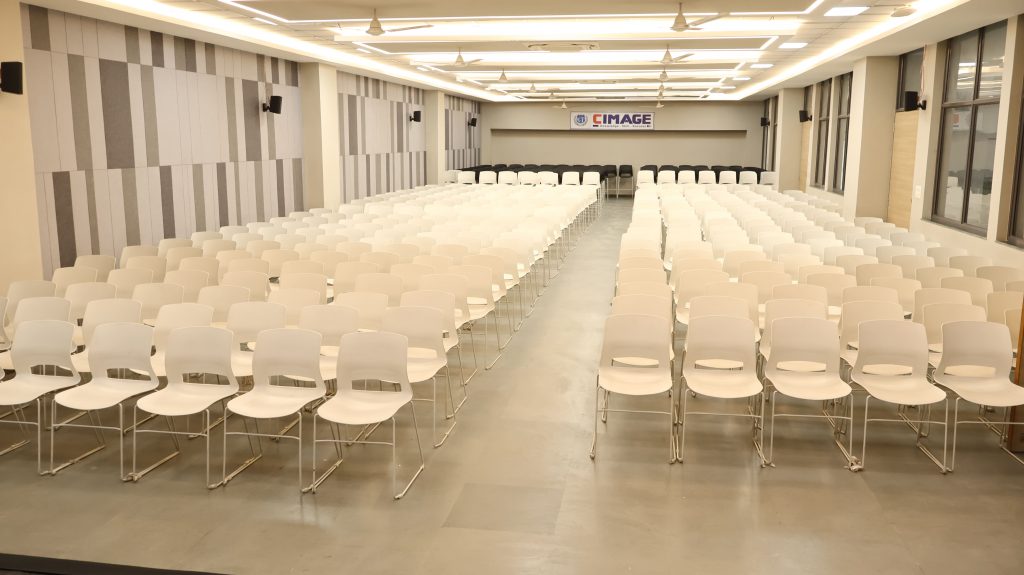
Some learning happens through books.
\n\n\n\nSome happens through conversation.
\n\n\n\nAnd some happens when an expert walks onto a stage and shares an experience.
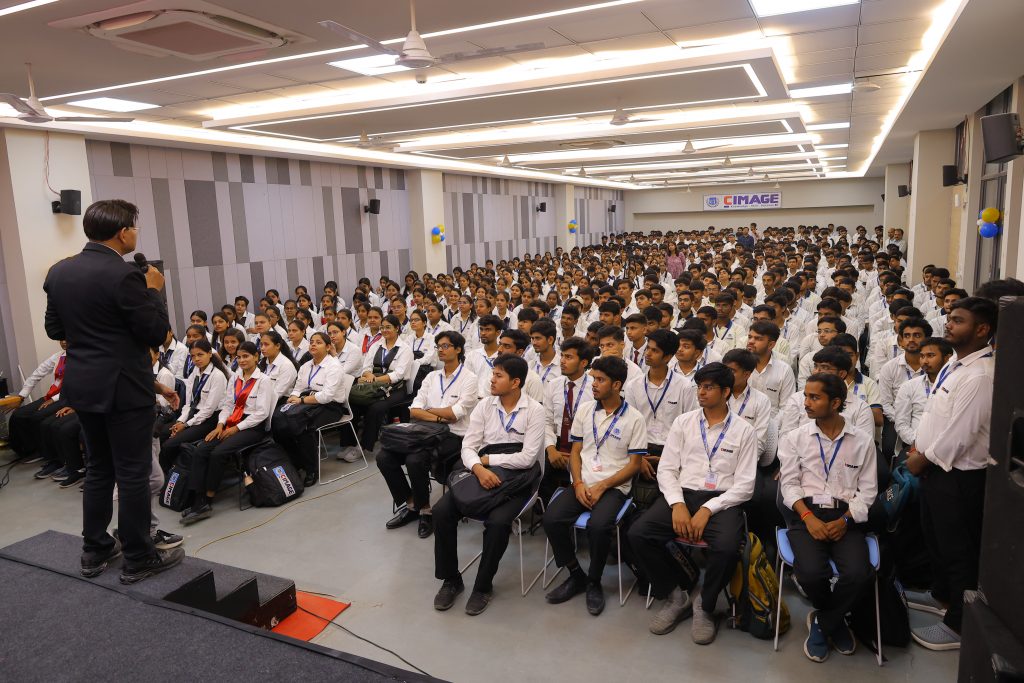
\n\n\n\nThe Seminar Hall provides a dedicated space for guest lectures, workshops, seminars, presentations, student activities and professional interactions.
\n\n\n\nThese events give students opportunities to hear perspectives that may not always be available inside their regular classrooms.
\n\n\n\nCISCO Lab: Turning Networking Concepts into Practice
\n\n\n\n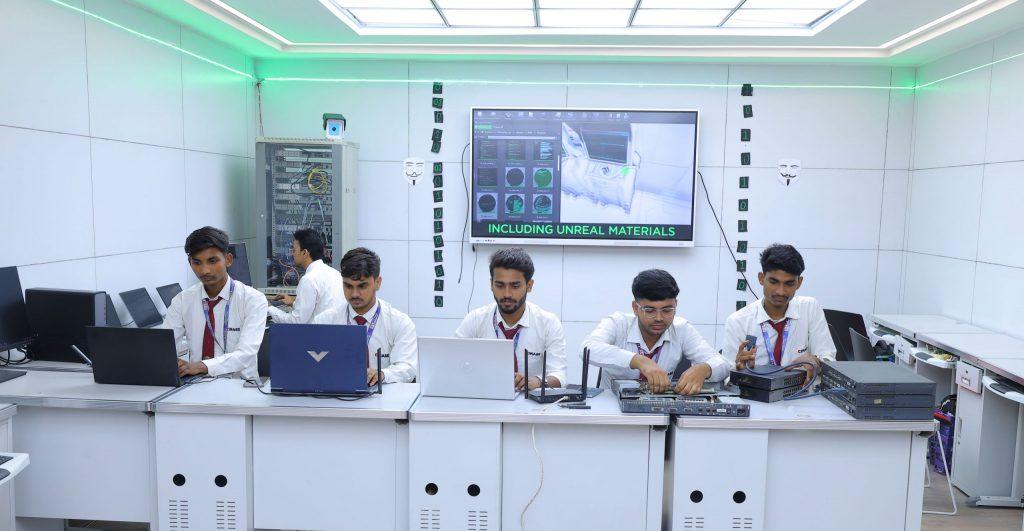
Technology education becomes more meaningful when students get to work with what they learn.
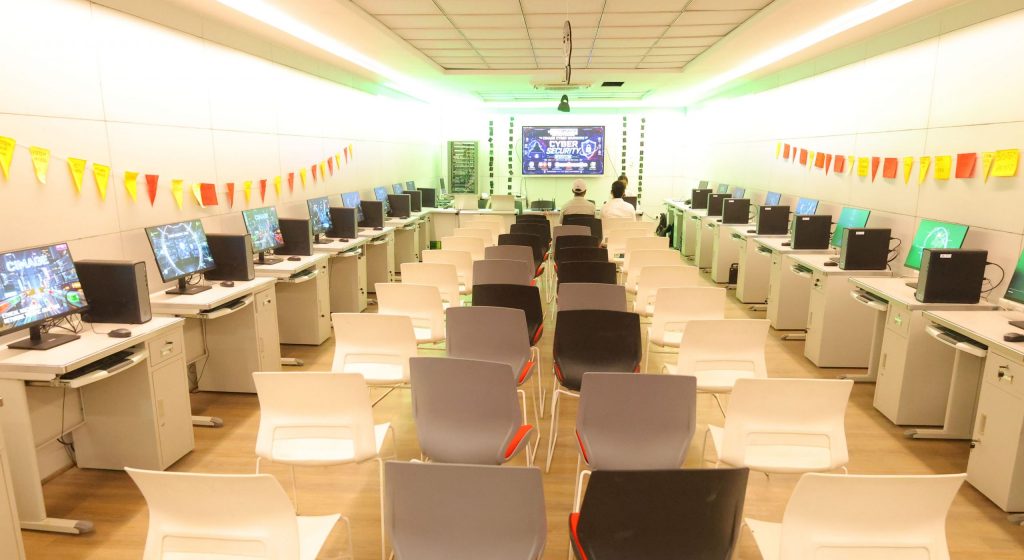
\n\n\n\nThe CISCO Lab provides a dedicated environment for exploring networking and related technical concepts through practical learning.
\n\n\n\nInstead of keeping technology confined to theory, specialized lab spaces allow students to experiment, practice and understand how concepts work in real-world environments.
\n\n\n\nPodcast Room: Giving a Voice
\n\n\n\nToday’s digital world is not only about consuming content.
\n\n\n\n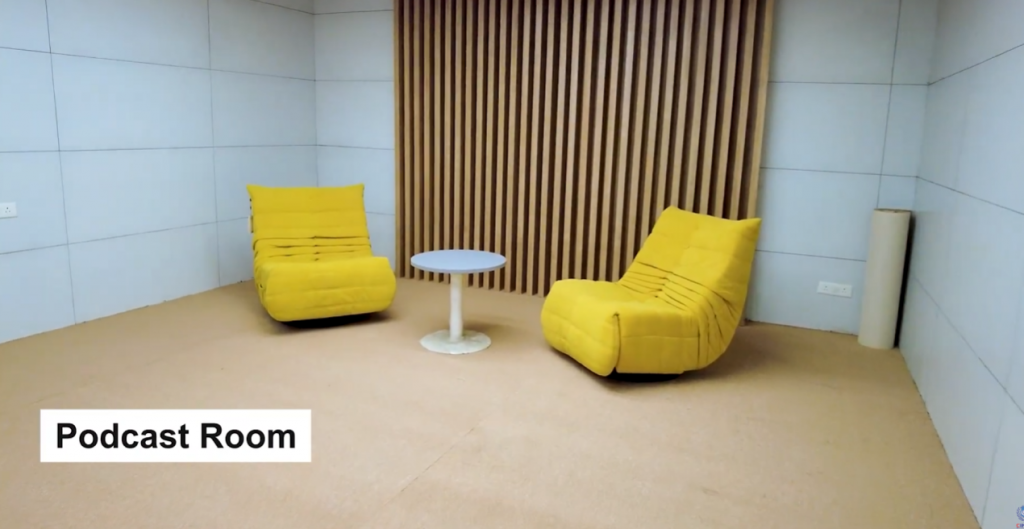
It is also about creating it.
\n\n\n\nThe dedicated Podcast Room gives a space to explore conversations, interviews, discussions and digital storytelling.
\n\n\n\nIt adds a creative side to the technology ecosystem of the campus and provides another way for students to develop communication and content skills.
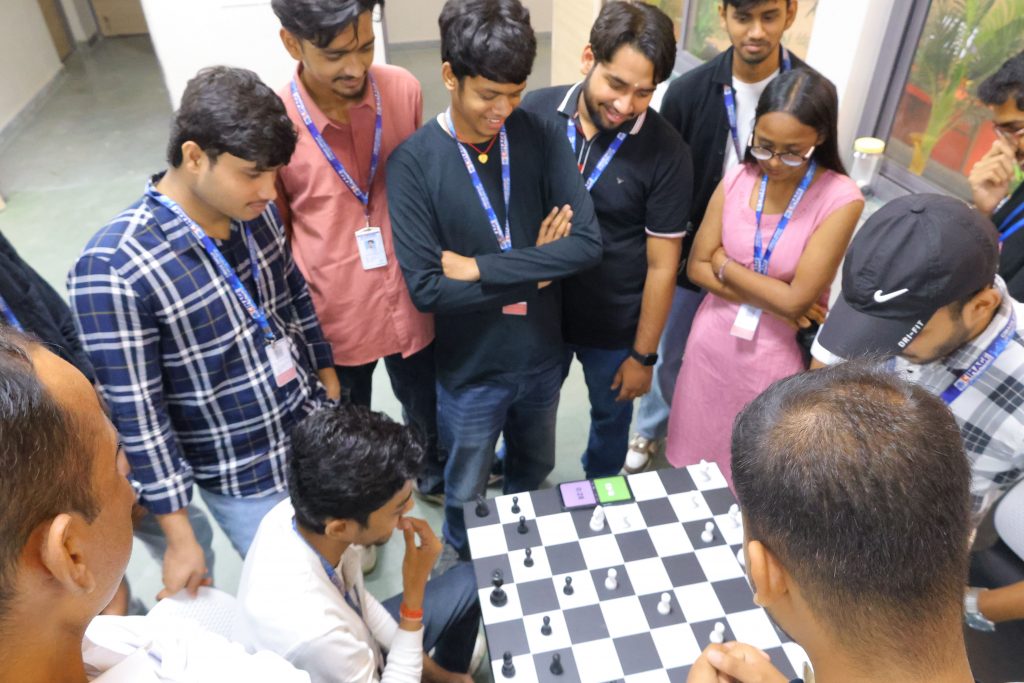
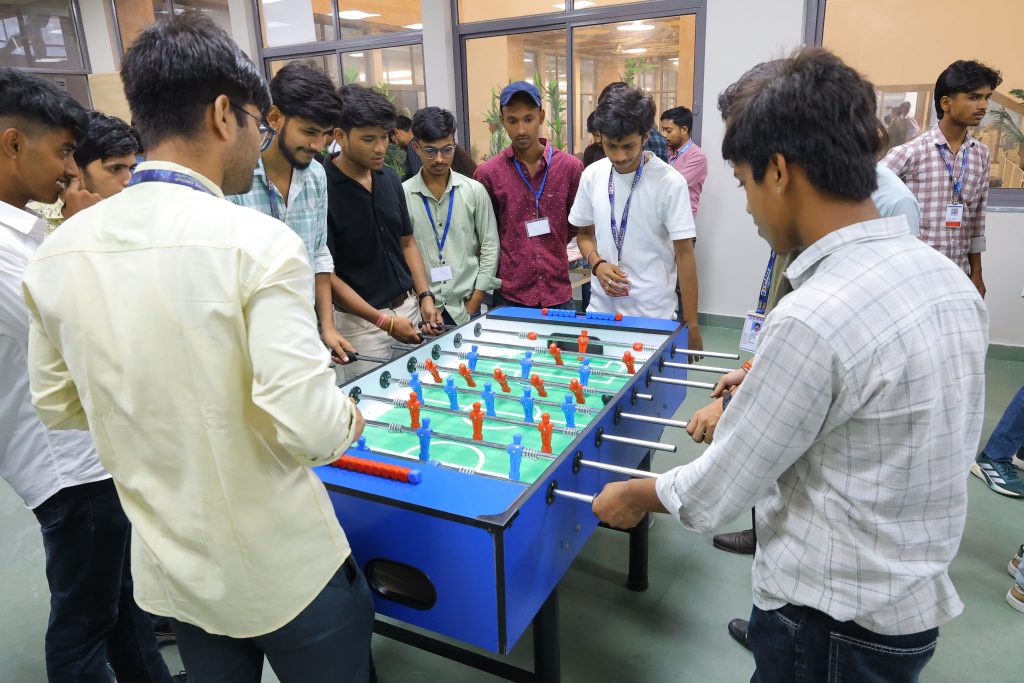
\n\n\n\nGame Zone, Badminton & Table Tennis: Because Campus Life Is More Than Academics
\n\n\n\n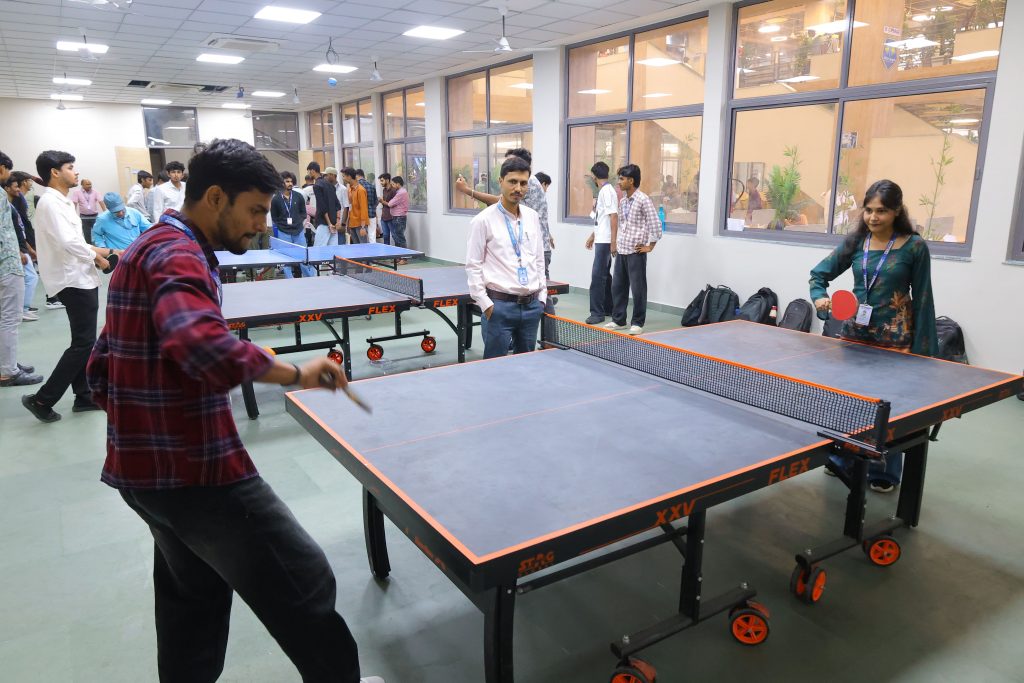
A student’s day cannot be all classes and assignments.
\n\n\n\nThere has to be time to relax, interact and recharge.
\n\n\n\nThe Game Zone, Badminton Court and Table Tennis Zone provide students with recreational spaces where they can take a break from academic routines and spend time with friends.
\n\n\n\nThese spaces add energy and personality to the campus.
\n\n\n\nWipro Centre of Excellence: Industry-Oriented Learning
\n\n\n\n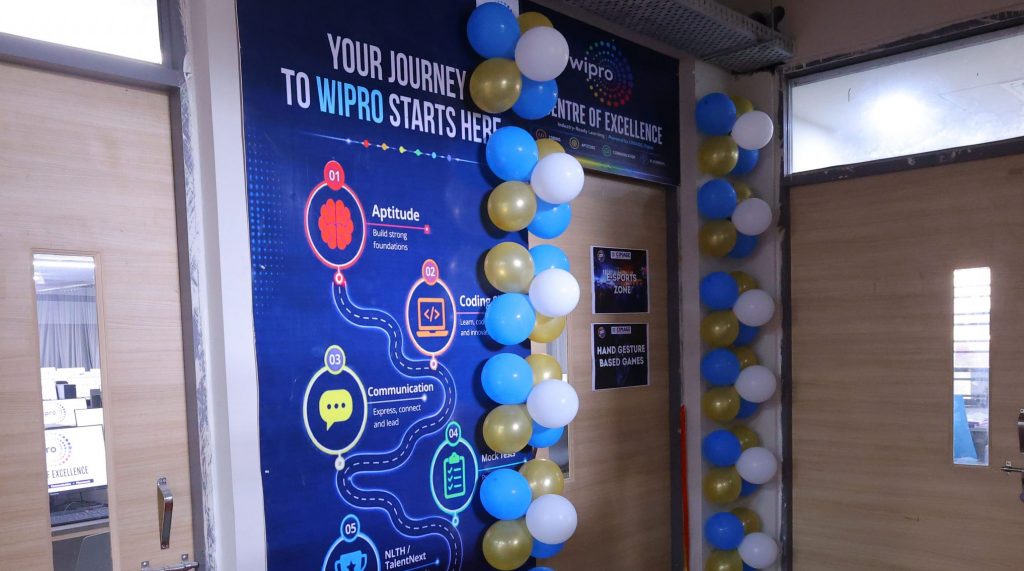
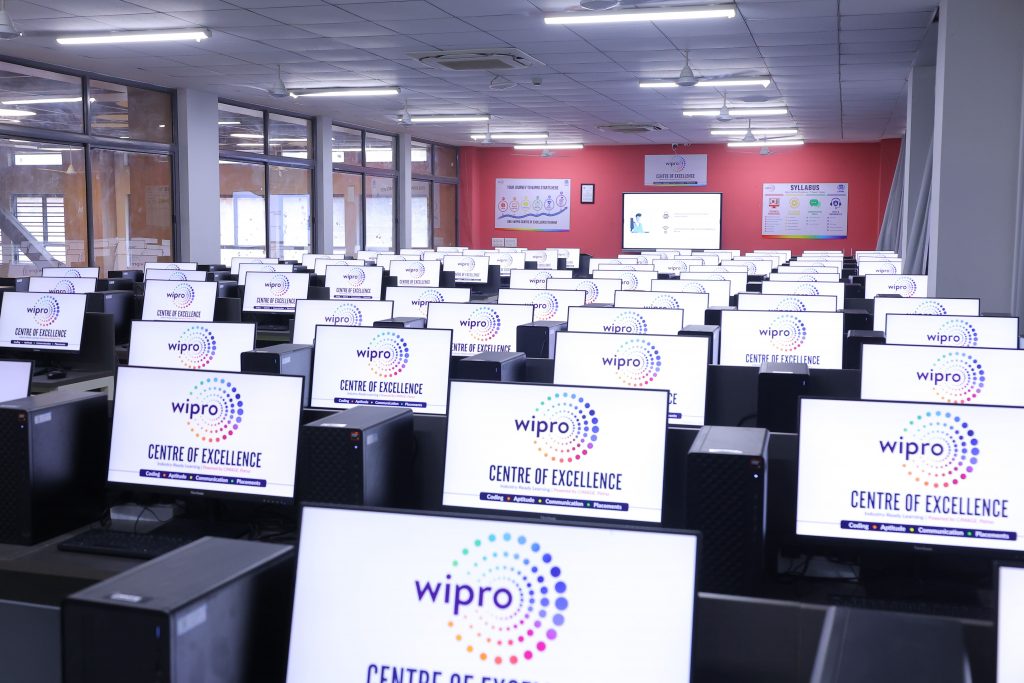
One of the important technology-focused spaces within the campus is the Wipro Centre of Excellence.
\n\n\n\nThe dedicated lab provides an environment for practical learning, technology exposure, workshops and skill development.
\n\n\n\nIt reflects CIMAGE’s broader emphasis on connecting classroom education with the technologies and skills students may encounter in their professional careers.
\n\n\n\nMeeting Room: Spaces for Collaboration
\n\n\n\nSome of the best ideas begin with a simple discussion.
\n\n\n\nThe campus therefore includes dedicated Meeting Rooms where students, faculty members and teams can hold discussions, project meetings, mentoring sessions and collaborative activities.
\n\n\n\nThese spaces provide a more focused environment for teamwork outside the traditional classroom.
\n\n\n\nOpen Theatre: Learning Beyond the Classroom
\n\n\n\n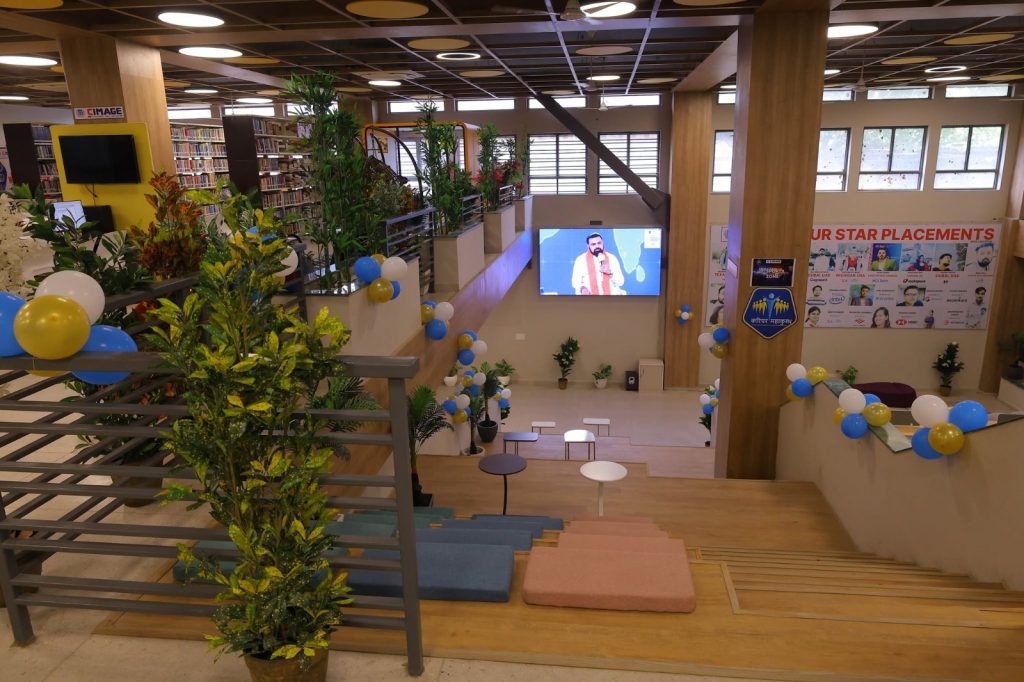
Education can happen through a documentary just as easily as it can happen through a textbook.
\n\n\n\nThe Open Theatre provides a dedicated environment for movie and documentary screenings, giving students opportunities to learn through visual storytelling while also enjoying shared campus experiences.
\n\n\n\nIt is one of those spaces that makes the campus feel less like a conventional college and more like a community.
\n\n\n\nLED Deck Area & Breakout Spaces
\n\n\n\n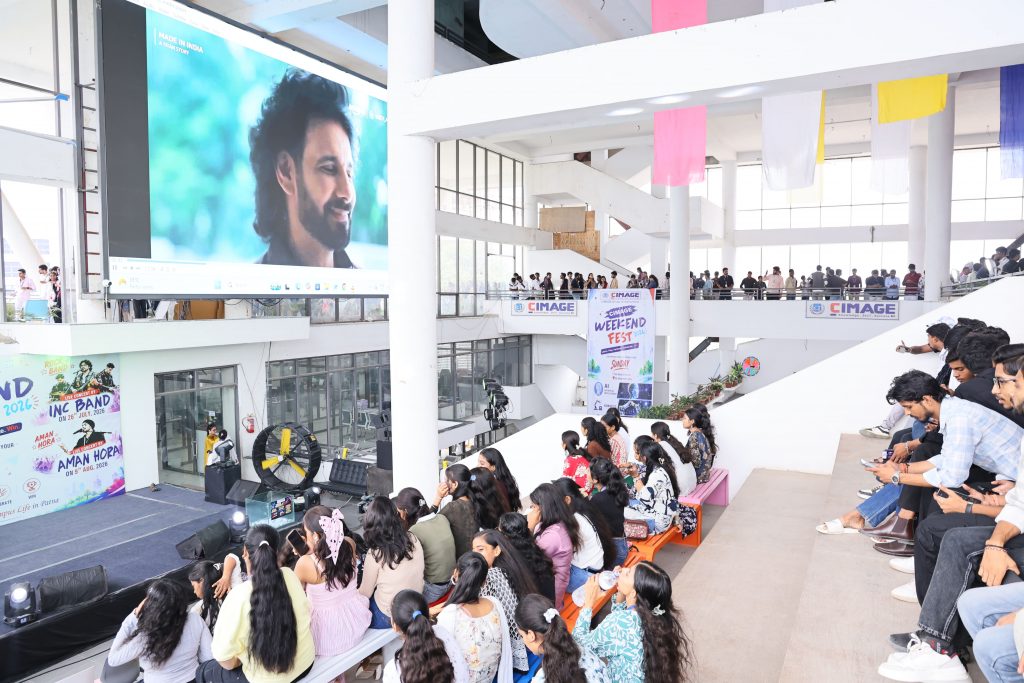
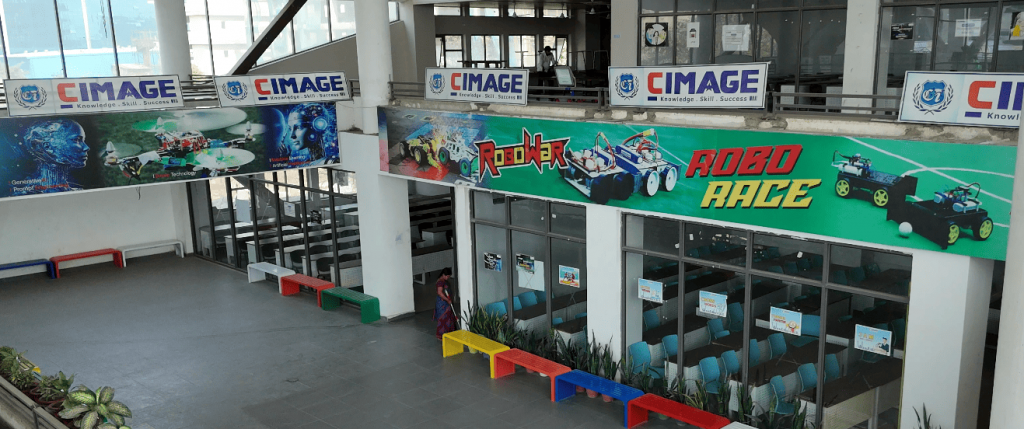
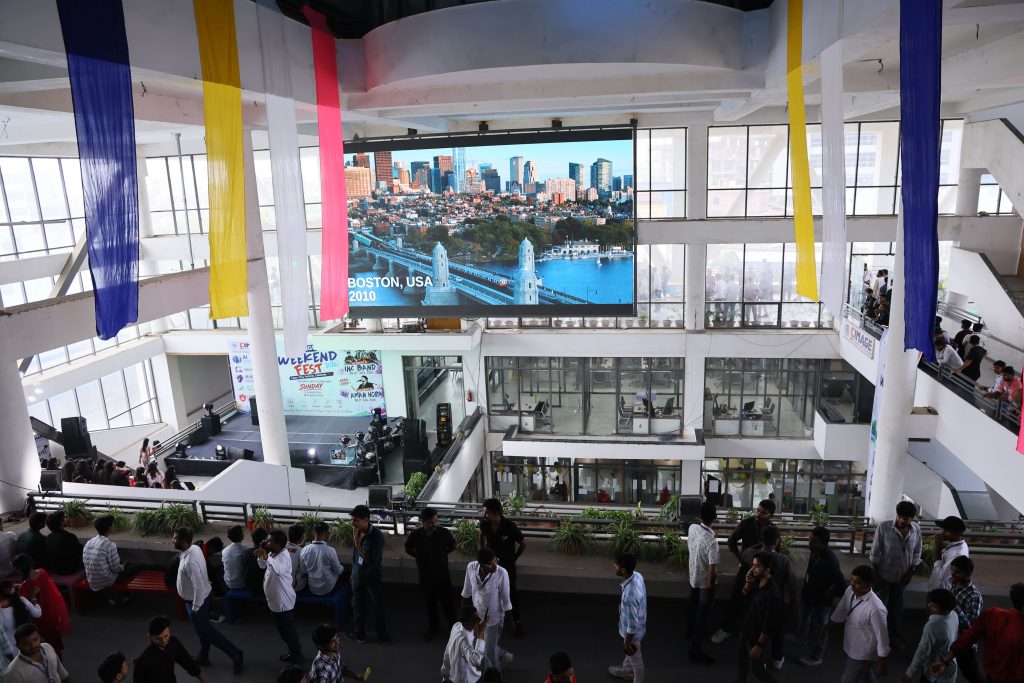
Move further through the campus and the environment becomes more informal.
\n\n\n\nThe LED Deck Area provides a dynamic space that can be used for campus activities, presentations, celebrations and student engagement.
\n\n\n\nNearby, breakout spaces give students room to sit together, discuss assignments, work on presentations or simply exchange ideas between classes.
\n\n\n\nThese informal spaces are important because not every meaningful interaction happens at a desk.
\n\n\n\ne-Yantra Lab: Building with Robotics
\n\n\n\n
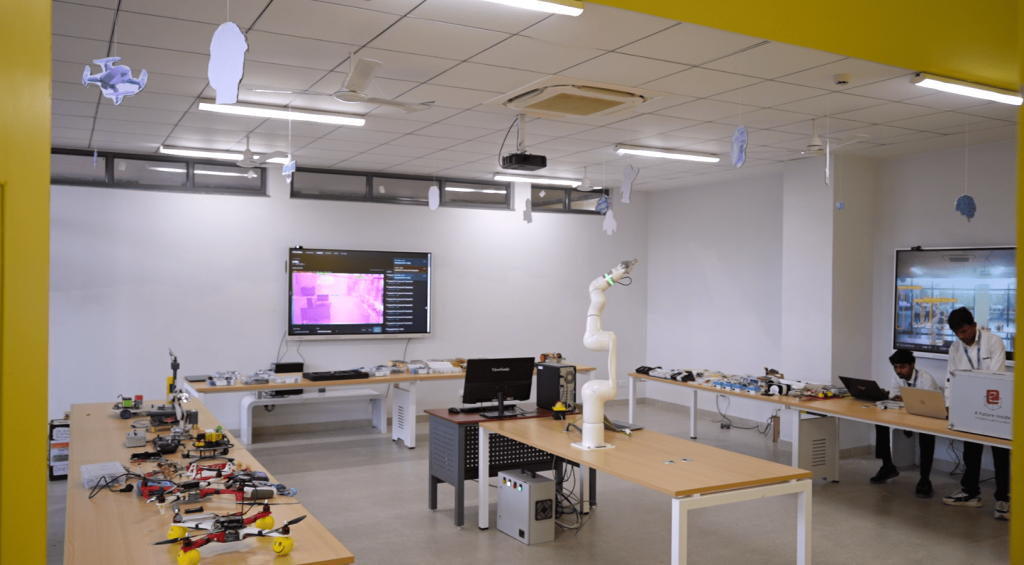
For students interested in robotics and emerging technologies, the e-Yantra Lab provides a dedicated practical learning environment.
\n\n\n\nThe lab is connected with the e-Yantra initiative of IIT Bombay, giving students an opportunity to explore robotics and technology through hands-on activities.
\n\n\n\nHere, learning moves from:
\n\n\n\nConcept → Experiment → Build → Test → Improve
\n\n\n\nAnd that is often where the most meaningful learning happens.
\n\n\n\nAI Lab & Google Lab: Preparing for a Digital Future
\n\n\n\n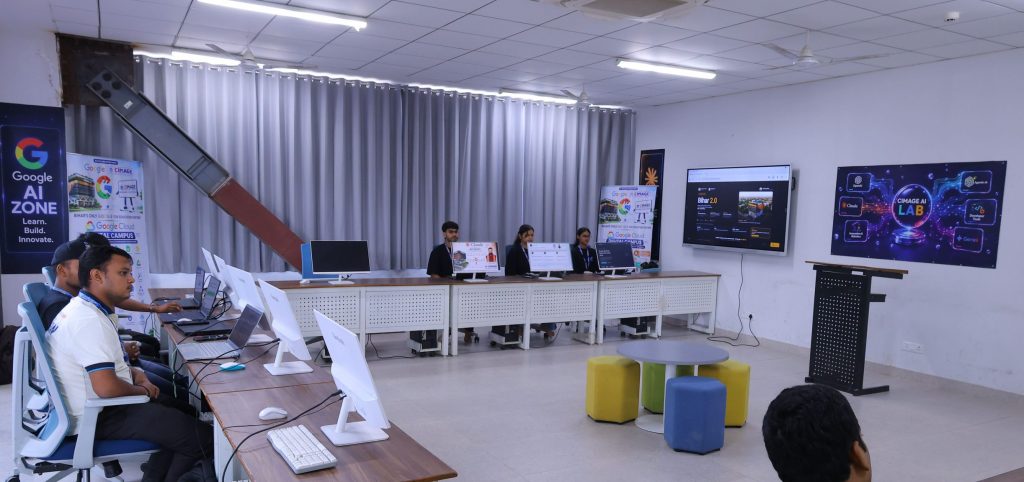
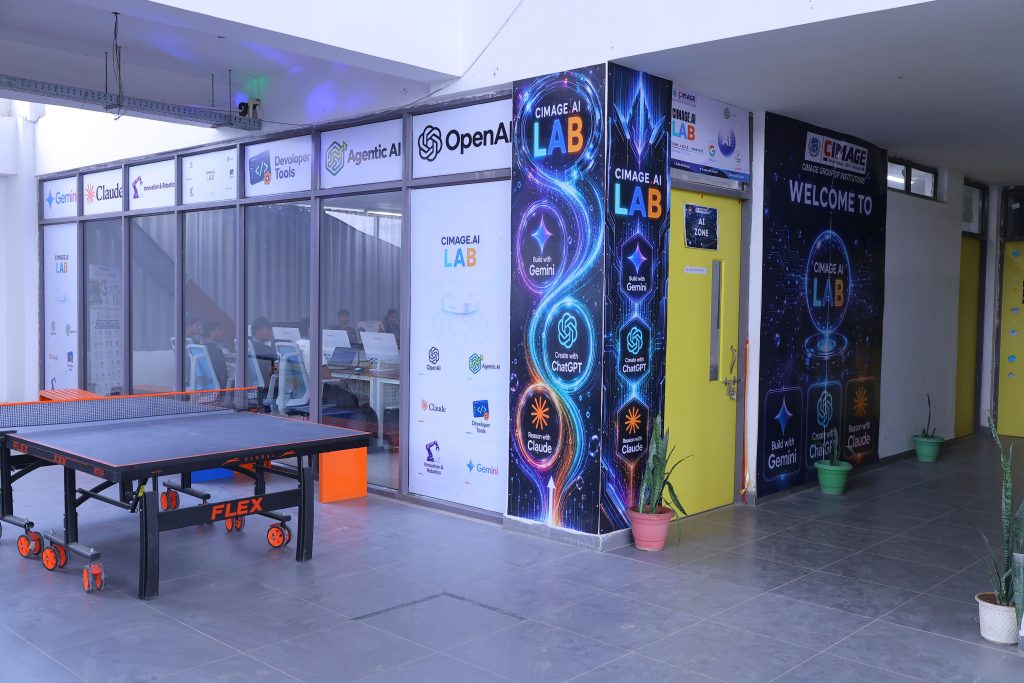
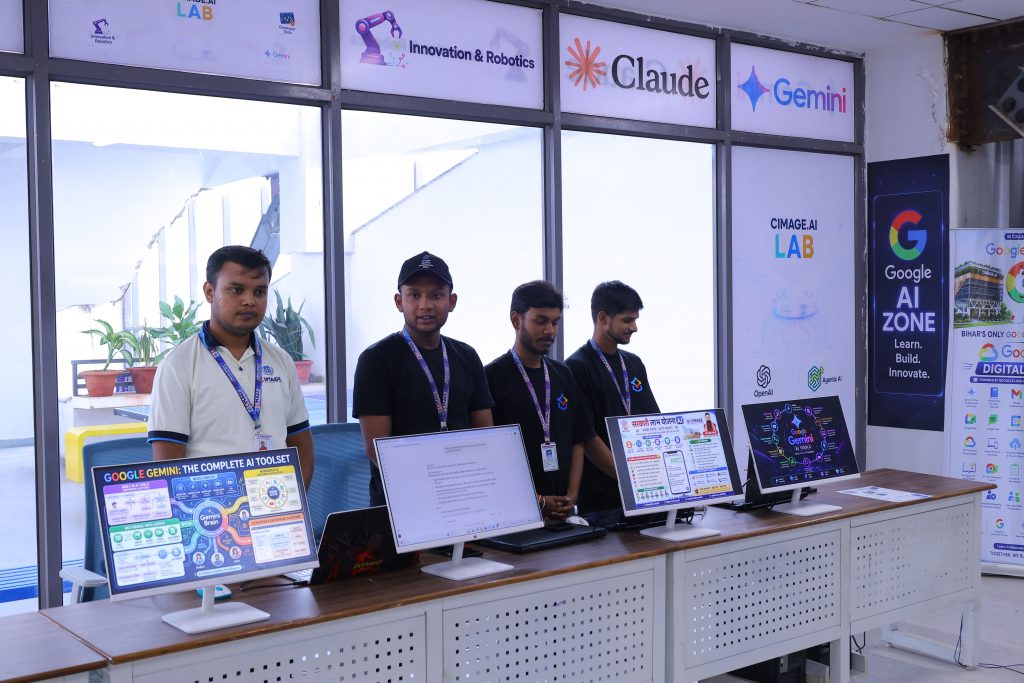
Artificial Intelligence is changing the way industries work, and students today are entering a world where digital skills matter more than ever.
\n\n\n\nThe dedicated AI Lab provides a space for students to explore Artificial Intelligence and related technologies through practical learning.
\n\n\n\nAlongside it, the Google Lab adds to the campus’s digital ecosystem.
\n\n\n\nCIMAGE has also been officially certified as a Google Cloud Digital Campus, with the institution announcing access to Google Cloud, Gemini AI, Skills Boost labs and related learning resources for students.
\n\n\n\nTogether, these facilities reflect a clear direction: give students opportunities to learn technologies that are shaping the future.
\n\n\n\nSkill Acceleration Lab: Learning Beyond the Syllabus
\n\n\n\n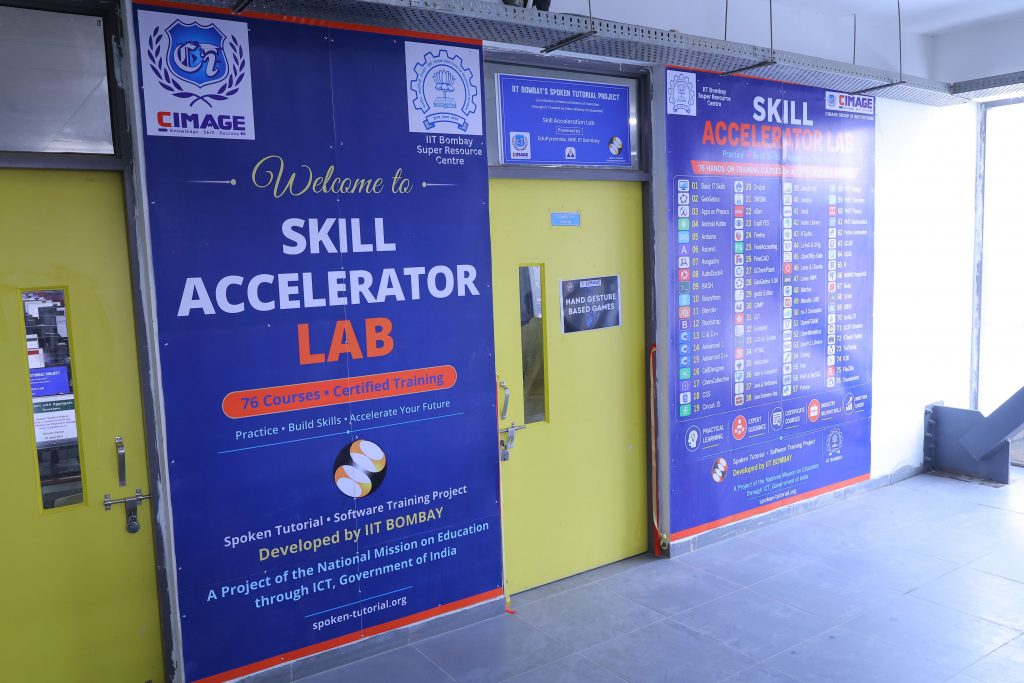
Technology keeps changing.
\n\n\n\nThat means students need to keep learning too.
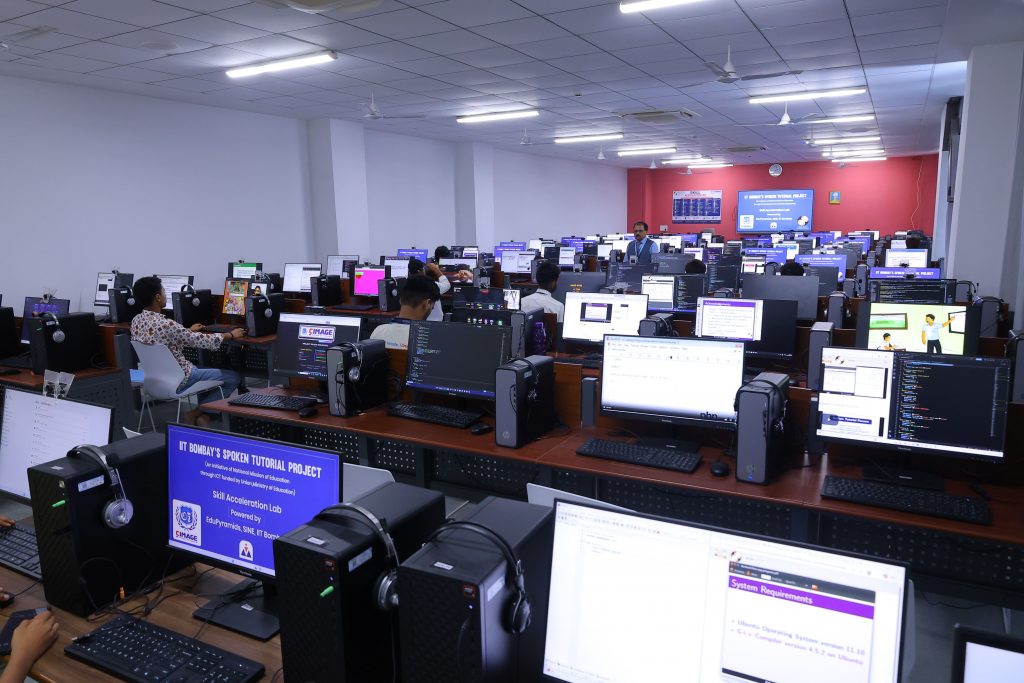
\n\n\n\nThe Skill Acceleration Lab, associated with the IIT Bombay Spoken Tutorial initiative, provides another space for students to strengthen their technical and digital skills.
\n\n\n\nIt complements classroom learning by giving students opportunities for additional practice and self-driven learning.
\n\n\n\nHigh-Tech Lab: Practical Learning in Action
\n\n\n\n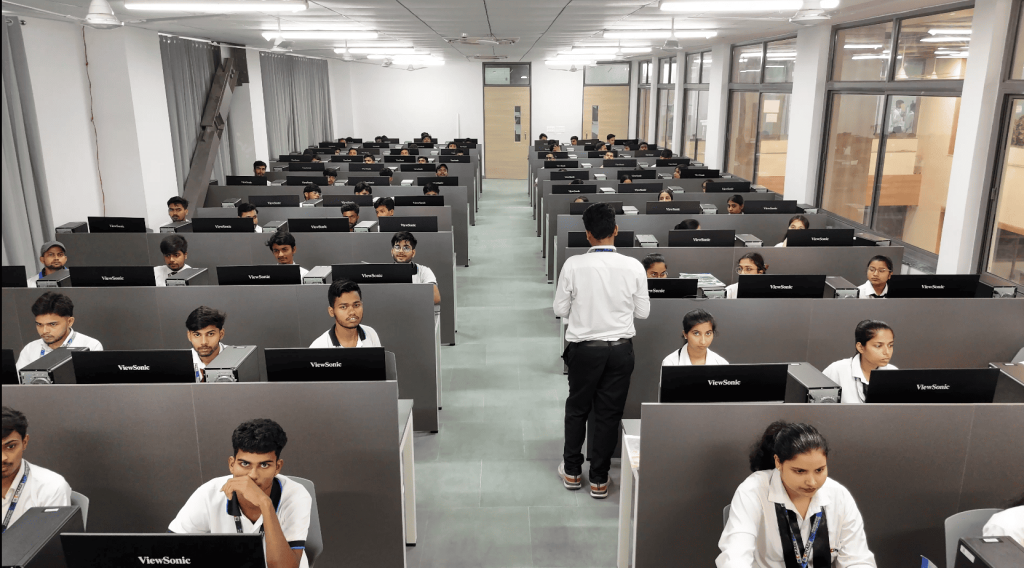
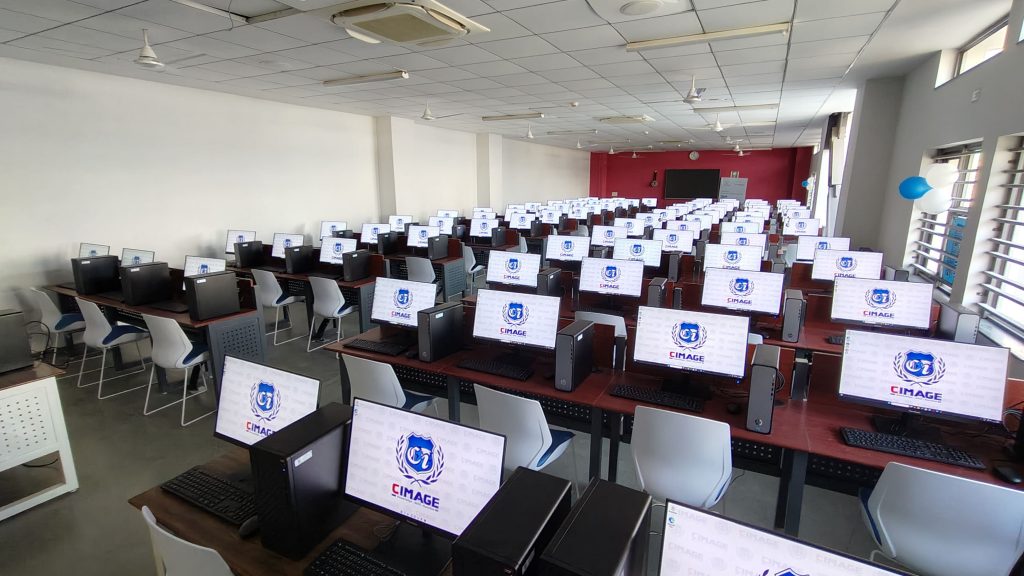
The High-Tech Lab adds another practical learning environment to the campus.
\n\n\n\nIts purpose is straightforward—give students a place where they can work with technology rather than only read about it.
\n\n\n\nFor a technology-focused educational environment, this connection between learning and doing is essential.
\n\n\n\nIncubation Centre: Turning Ideas into Possibilities
\n\n\n\n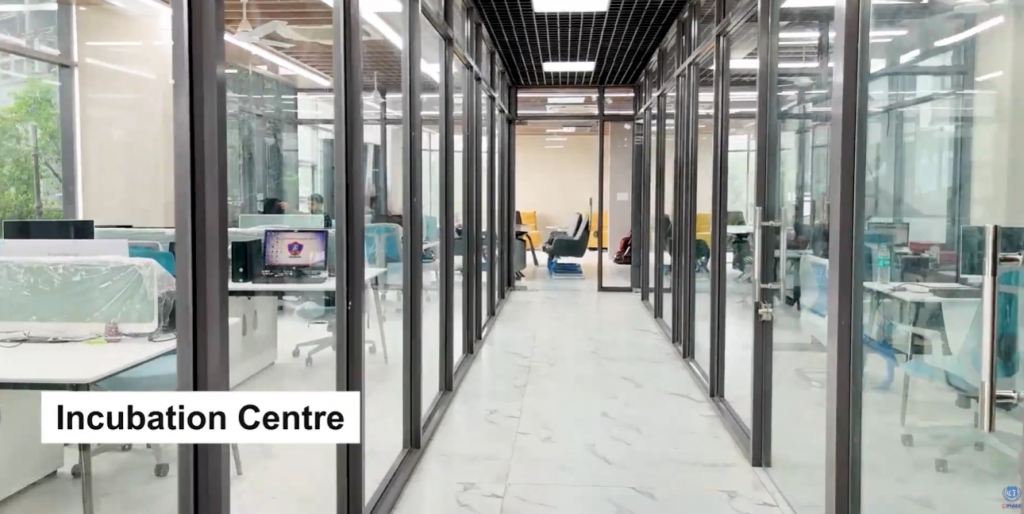
The campus’s Incubation Centre brings together another important part of the CIMAGE vision—entrepreneurship.
\n\n\n\nThese spaces can be use to brainstorm, collaborate, work on prototypes and explore ideas that could eventually develop into real projects or startups.
\n\n\n\nThe focus is not simply on having an idea.
\n\n\n\nIt is on creating an environment where students can work on that idea.
\n\n\n\nCafeteria: A Place to Pause
\n\n\n\n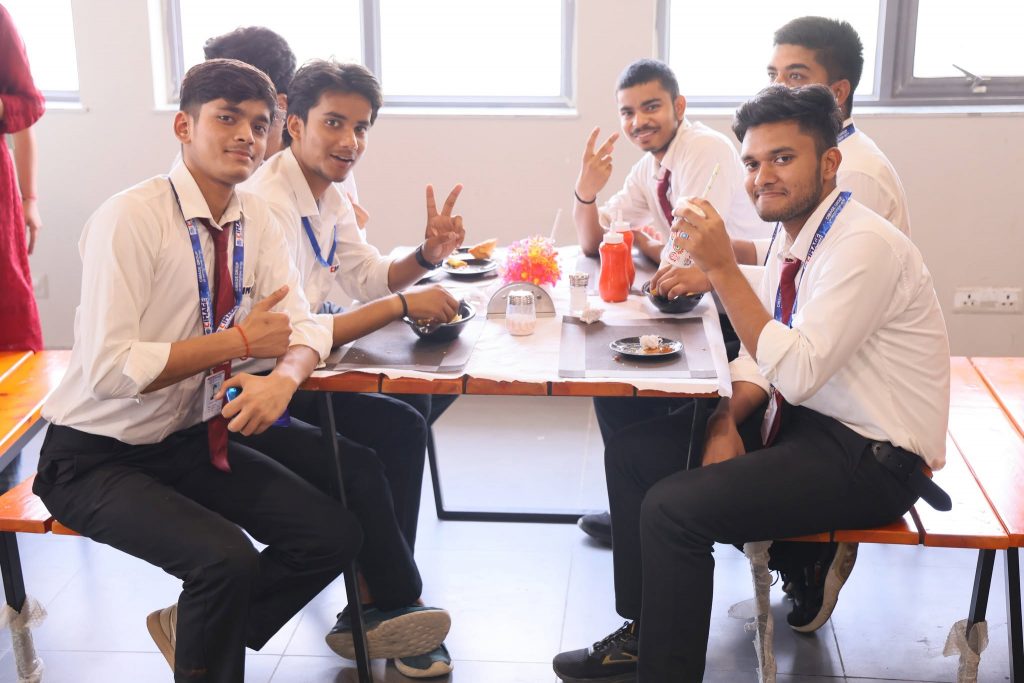
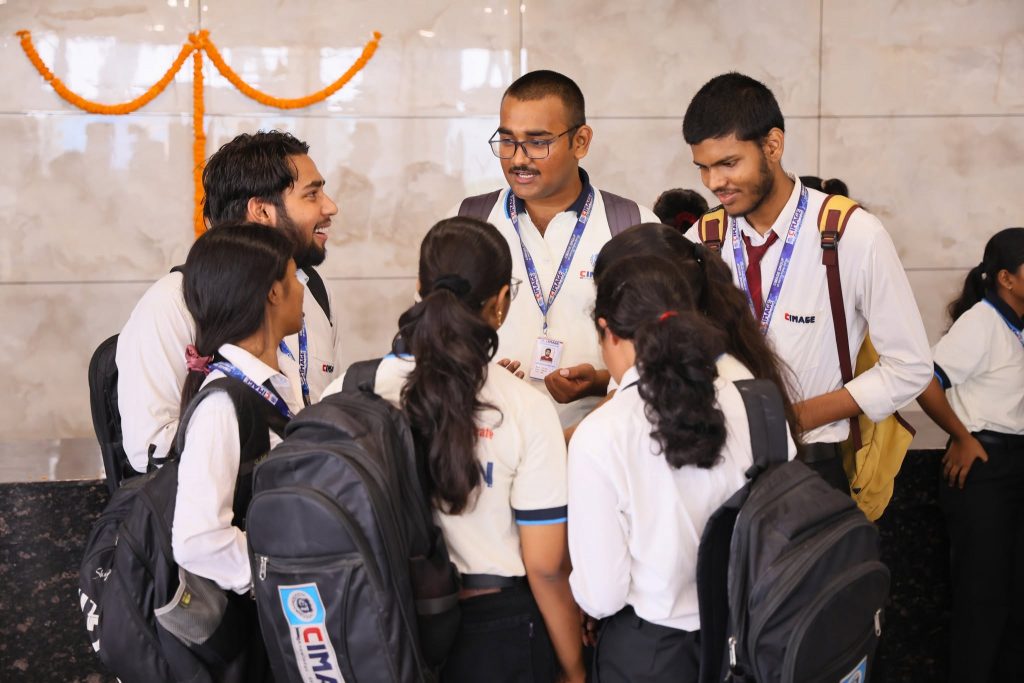
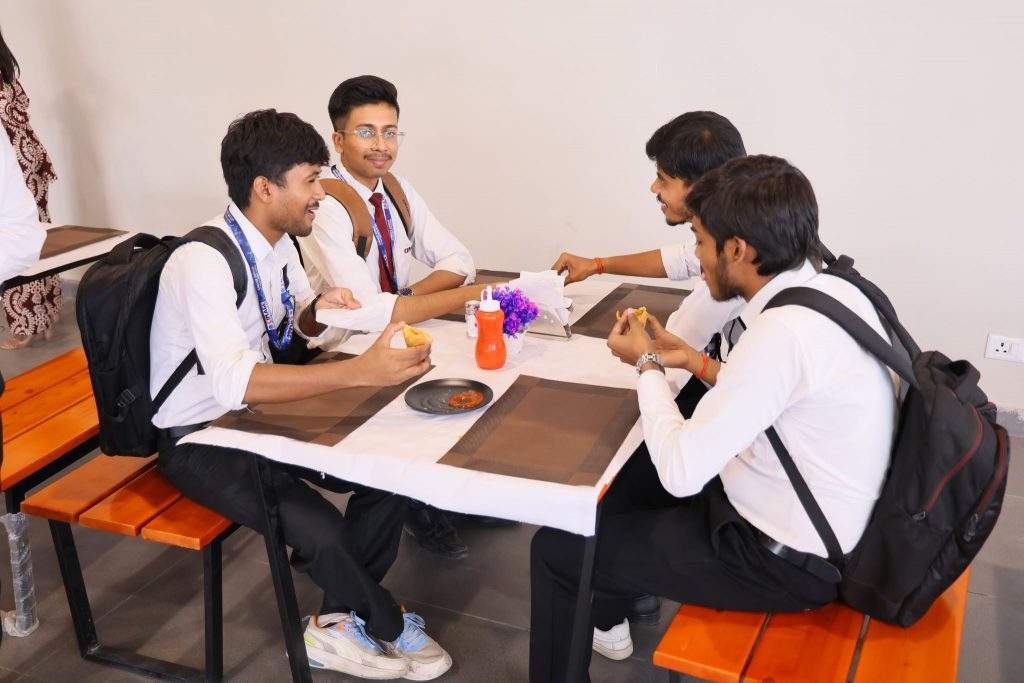
After a long class, lab session or project discussion, students need a place to take a break.
\n\n\n\nThe Cafeteria provides that everyday campus space.
\n\n\n\nIt is where students can grab something to eat, meet friends, exchange stories from the day and simply take a few minutes away from academic work.
\n\n\n\nOpen Terrace & Garden Area
\n\n\n\nNot every part of the campus needs screens, computers or equipment.
\n\n\n\nThe Open Terrace and Garden Area brings a more relaxed atmosphere into the campus.
\n\n\n\nOpen spaces give students room to breathe, interact and take a break from enclosed classrooms and laboratories.
\n\n\n\nThey also add a sense of openness to the overall campus environment.
\n\n\n\nHi-Tech Classrooms: The Heart of Everyday Learning
\n\n\n\n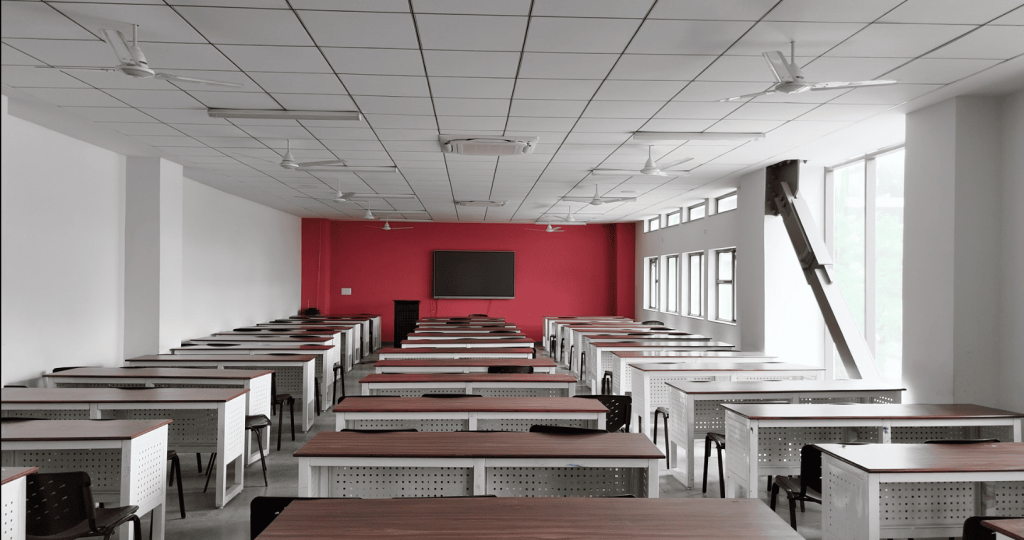
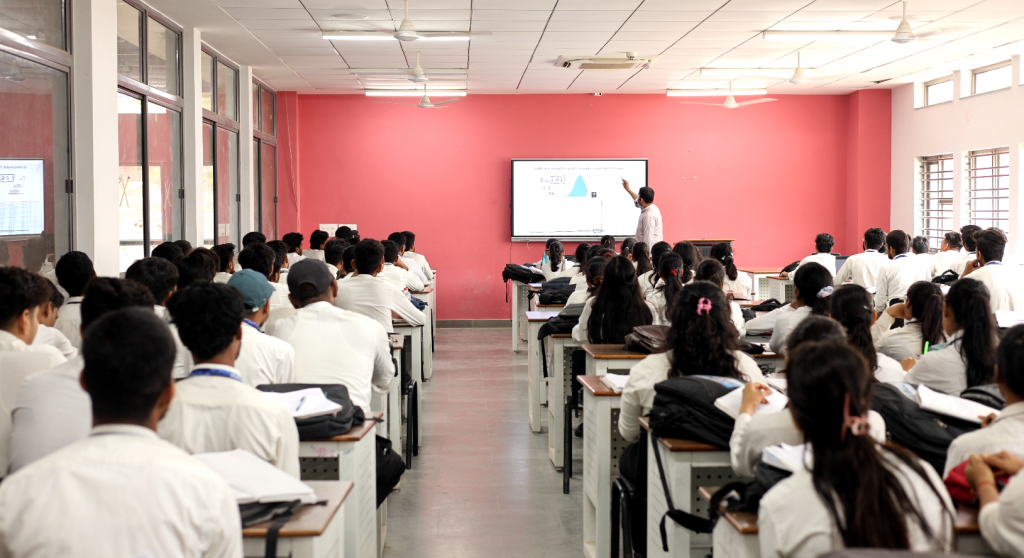
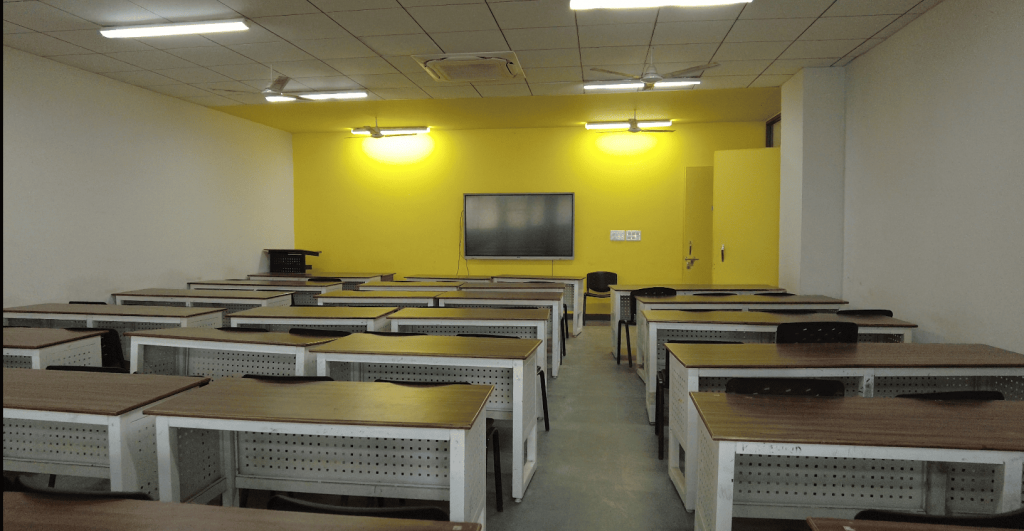
Eventually, every campus journey comes back to the classroom.
\n\n\n\nThe Hi-Tech Classrooms at CIMAGE are designed around technology-enabled teaching and learning.
\n\n\n\nCIMAGE’s infrastructure information highlights smart boards, interactive projection systems, air-conditioned classrooms, sound systems and computer-enabled learning facilities.
\n\n\n\nBut technology is only useful when it improves the learning experience.
\n\n\n\nThe goal is to create classrooms where faculty members can explain concepts more effectively and students can engage with lessons in a more interactive way.
\n\n\n\nAdvanced Labs: From Theory to Practice
\n\n\n\n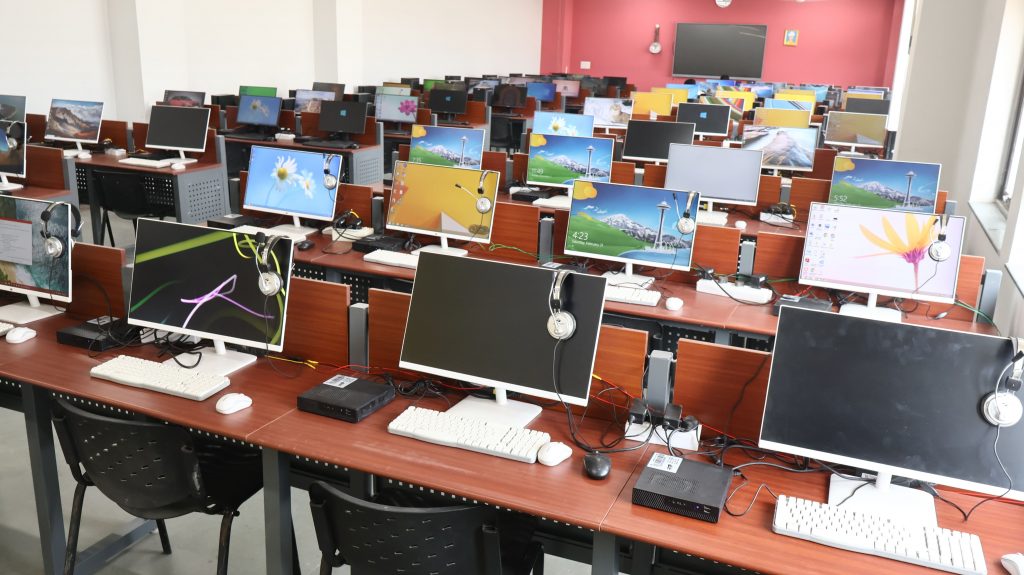
Alongside classrooms, the campus has multiple laboratories designed for practical learning.
\n\n\n\nWhether students are working with computers, networking, AI, robotics or other digital technologies, these labs provide an opportunity to move beyond theoretical understanding.
\n\n\n\nBecause ultimately, students don’t just need to know how something works.
\n\n\n\nThey need to know how to work with it.
\n\n\n\nRound Faculty Rooms: Staying Connected with Students
\n\n\n\nThe campus also features distinctive round faculty rooms, creating dedicated spaces where students can interact with faculty members.
\n\n\n\nEasy access to faculty can make a real difference in student life—whether it is asking a question, discussing an assignment, seeking guidance or simply having an academic conversation.
\n\n\n\nCampus Safety & Security
\n\n\n\nA modern campus is not complete without a strong focus on safety.
\n\n\n\nThe CIMAGE Digital Campus incorporates dedicated security infrastructure to support a safe and organized environment for students, faculty members, staff and visitors.
\n\n\n\nCCTV Surveillance
\n\n\n\nCCTV cameras support monitoring across important areas of the campus and contribute to campus safety and supervision.
\n\n\n\nEntry & Exit Management
\n\n\n\nThe technology-enabled entry and exit system helps maintain an organized flow of people entering and leaving the campus.
\n\n\n\nSecurity Infrastructure
\n\n\n\nDedicated security arrangements and monitoring systems complement the campus’s technology-enabled environment.
\n\n\n\nThe focus is simple: students should be able to learn, participate and move around campus in a secure and well-managed environment.
\n\n\n\nSick Room: A Dedicated Space for Student Wellbeing
\n\n\n\n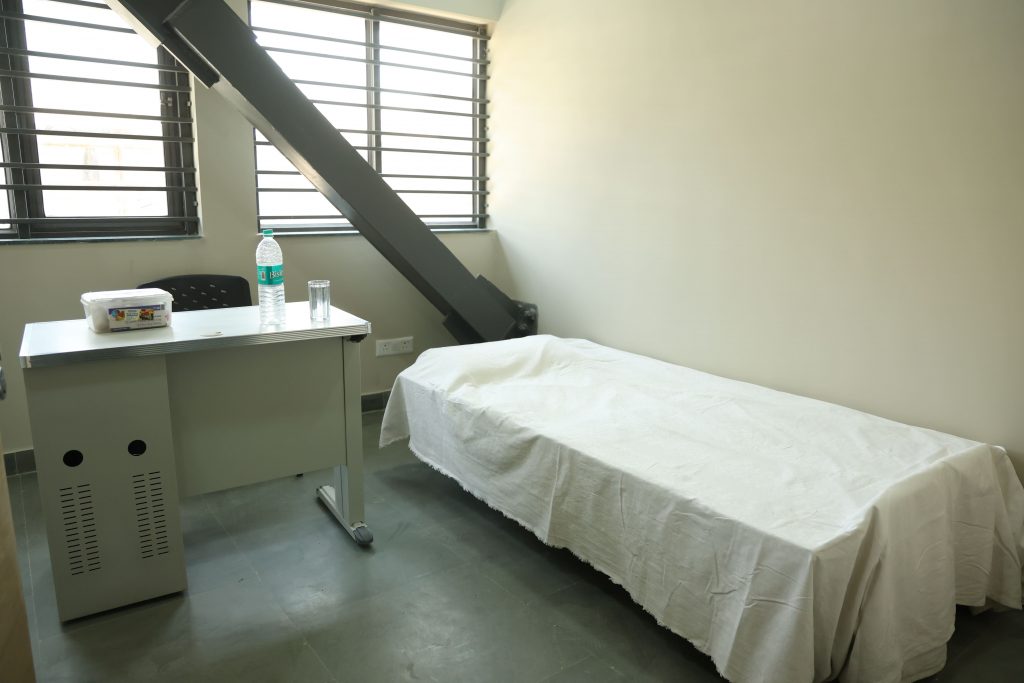
A safe campus is not only about security and infrastructure; it is also about being prepared when a student needs a moment of care. CIMAGE Digital Campus includes a dedicated Sick Room, providing a quiet and comfortable space where students can rest and receive basic assistance when they feel unwell during campus hours.
\n\n\n\nLocated within the campus, the Sick Room adds another layer to the student support system. Whether it is a sudden feeling of discomfort, fatigue, or the need for a short rest, having a designated space ensures that students have somewhere appropriate to go instead of having to manage the situation in a classroom or common area.
\n\n\n\nIt is a small but meaningful part of the campus infrastructure—reflecting CIMAGE’s focus on creating a learning environment where students can study, participate, and grow while also feeling supported and cared for.
\n\n\n\nThe Top Hall: A 1,200+ Capacity Auditorium
\n\n\n\n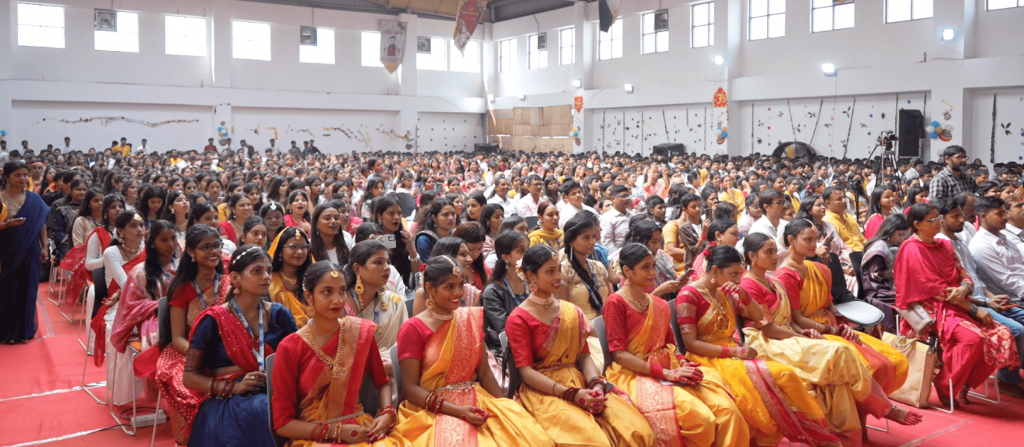
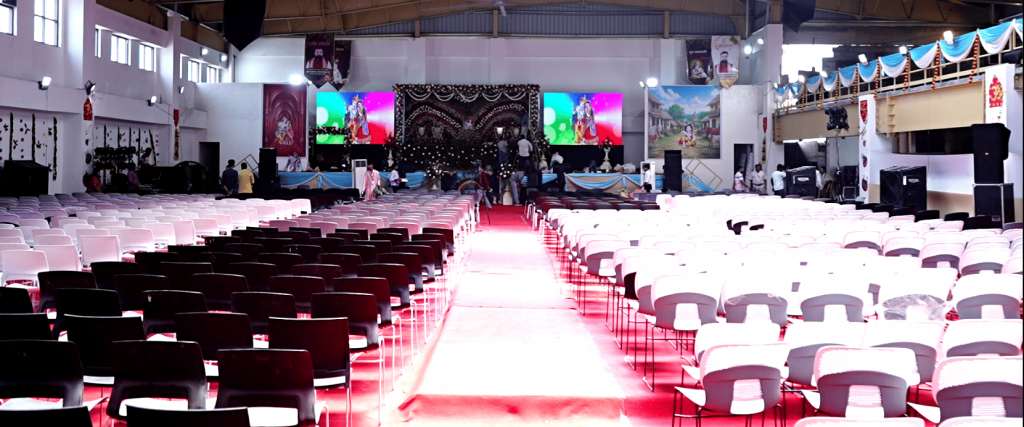
And finally, the campus opens up to one of its largest spaces.
\n\n\n\nThe Top Hall / Auditorium, with a seating capacity of 1,200+ people, is designed for large gatherings and major campus events.
\n\n\n\nFrom seminars and conferences to cultural programmes, celebrations, guest sessions and institutional events, the auditorium provides CIMAGE with a venue capable of bringing a large community together.
\n\n\n\nIt is fitting that the campus journey ends here.
\n\n\n\nBecause while much of the CIMAGE Digital Campus is designed around individual learning, labs and small-group collaboration, this space represents something larger: bringing people together.
\n\n\n\nWhat Makes CIMAGE Digital Campus Different?
\n\n\n\nWalk through CIMAGE Digital Campus once and you will notice something interesting.
\n\n\n\nThere isn’t one single facility that defines the campus.
\n\n\n\nIt is the combination that makes the experience different.
\n\n\n\nA student can begin the day in a hi-tech classroom, spend time in the library, clear a doubt with a faculty member inside a Silent Pod, work on a robotics project, explore AI, collaborate with friends in a breakout space, develop a startup idea in the incubation centre, take a break at the cafeteria, play a game of badminton and later attend a seminar or event in the auditorium.
\n\n\n\nEverything connects.
\n\n\n\nLearning connects with technology.
Technology connects with innovation.
Innovation connects with entrepreneurship.
And education connects with student life.
That is the idea behind the CIMAGE Digital Campus.
\n\n\n\nFrequently Asked Questions
\n\n\n\nWhat is CIMAGE Digital Campus?
\n\n\n\nCIMAGE Digital Campus is a technology-enabled educational environment that brings together modern classrooms, specialized laboratories, libraries, innovation spaces, student facilities, recreational areas and large event spaces.
\n\n\n\nWhat facilities are available at CIMAGE Digital Campus?
\n\n\n\nThe campus includes hi-tech classrooms, an RFID-enabled Central Library, study zones, Silent Pods, AR/VR Zone, AI Lab, Google Lab, e-Yantra Lab, CISCO Lab, Wipro Centre of Excellence, Skill Acceleration Lab, High-Tech Lab, incubation spaces, seminar hall, auditorium, cafeteria, recreational zones, Open Theatre, Podcast Room and more.
\n\n\n\nDoes CIMAGE have AI and robotics facilities?
\n\n\n\nYes. The campus includes an AI Lab and an e-Yantra Lab, along with other technology-focused facilities that support practical learning and experimentation.
\n\n\n\nIs the CIMAGE library RFID-enabled?
\n\n\n\nYes. The Central Library is RFID-enabled, integrating technology into the library environment.
\n\n\n\nWhat are Silent Pods used for?
\n\n\n\nSilent Pods are private spaces designed for Parent–Teacher Meetings, one-to-one student–faculty discussions, doubt clearing, mentoring and academic conversations.
\n\n\n\nDoes CIMAGE Digital Campus have sports facilities?
\n\n\n\nYes. Students have access to recreational facilities including a Badminton Court, Table Tennis Zone and Game Zone.
\n\n\n\nDoes CIMAGE Digital Campus have an auditorium?
\n\n\n\nYes. The Top Hall / Auditorium has a seating capacity of 1,200+ people and can host large academic, cultural and institutional events.
\n\n\n\nDoes the campus have security facilities?
\n\n\n\nYes. The campus includes CCTV surveillance, entry and exit management, and dedicated security infrastructure to support a safe and organized environment.
\n\n\n\nHow does CIMAGE support practical learning?
\n\n\n\nCIMAGE combines technology-enabled classrooms with specialized labs, innovation spaces, incubation facilities and skill-development environments. This allows students to complement classroom learning with practical exposure.
\n\n\n\nConclusion: A Campus Built for What Comes Next
\n\n\n\nThe best campuses are not defined simply by how many rooms or facilities they have.
\n\n\n\nThey are defined by what those spaces allow students to do.
\n\n\n\nAt CIMAGE Digital Campus, students have spaces to study, experiment, ask questions, build projects, explore technology, develop ideas, collaborate with others, participate in activities and simply enjoy their college years.
\n\n\n\nFrom Sankalp Mandir at the entrance to the Central Library, Silent Pods, AR/VR Zone, AI and Google Labs, e-Yantra Lab, Wipro Centre of Excellence, incubation spaces, hi-tech classrooms, recreational zones and the 1,200+ capacity auditorium, the campus brings together different parts of student life into one connected environment.
\n\n\n\nAnd perhaps that is what makes it more than just infrastructure.
\n\n\n\nIt is a place designed around the student experience.
\n\n\n\nA place to learn.
\n\n\n\nA place to experiment.
\n\n\n\nA place to create.
\n\n\n\nA place to grow.
\n\n\n\nExperience CIMAGE Digital Campus
\n\n\n\nPictures can show you the spaces.
\n\n\n\nBut walking through them is a different experience.
\n\n\n\nVisit the CIMAGE Digital Campus and experience the environment for yourself.
\n\n\n\nVisit Campus | Apply Now | Explore Programs
\n\n\n\nCIMAGE Digital Campus — Learn. Innovate. Collaborate. Grow.
\n