B.Tech Course in Patna
Best B.Tech College in Bihar
Best B.Tech College in Patna | B.Tech Admission 2026 | CIMAGE College
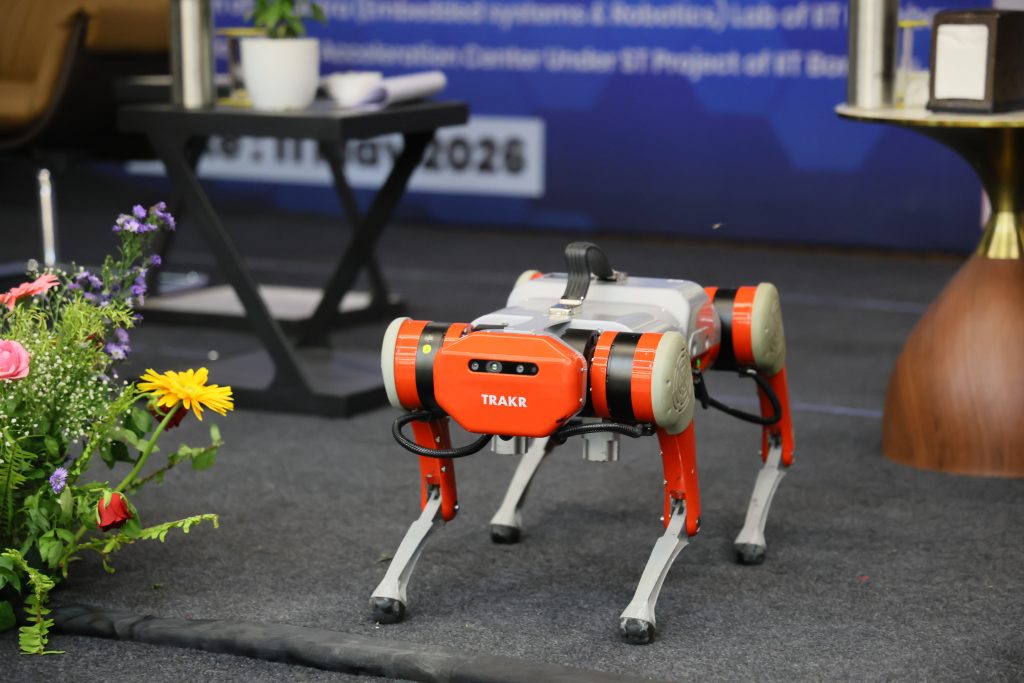
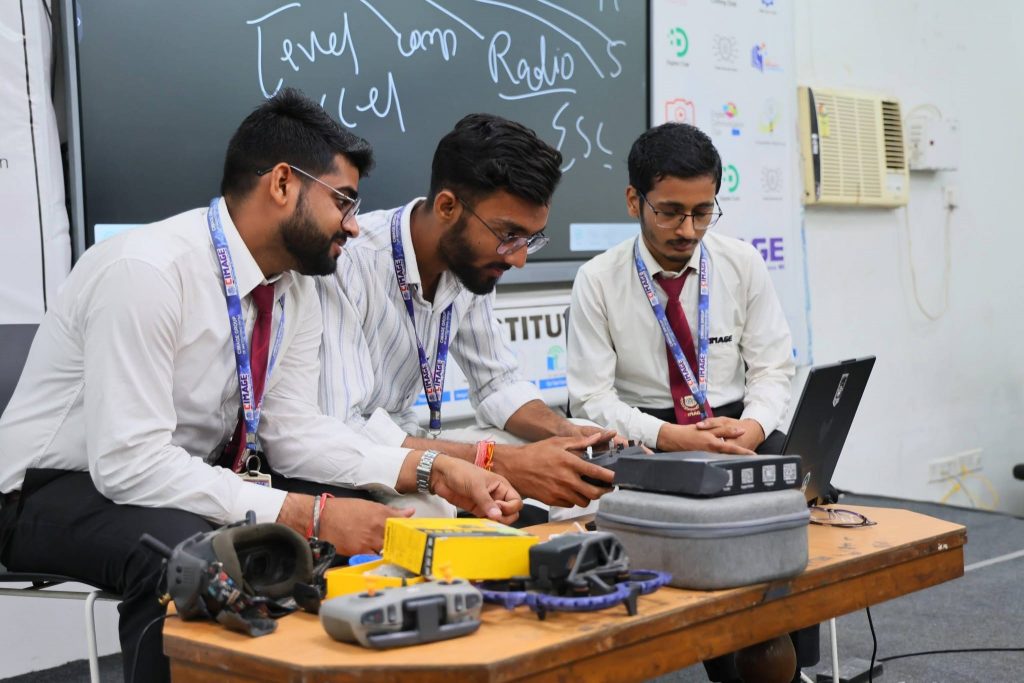
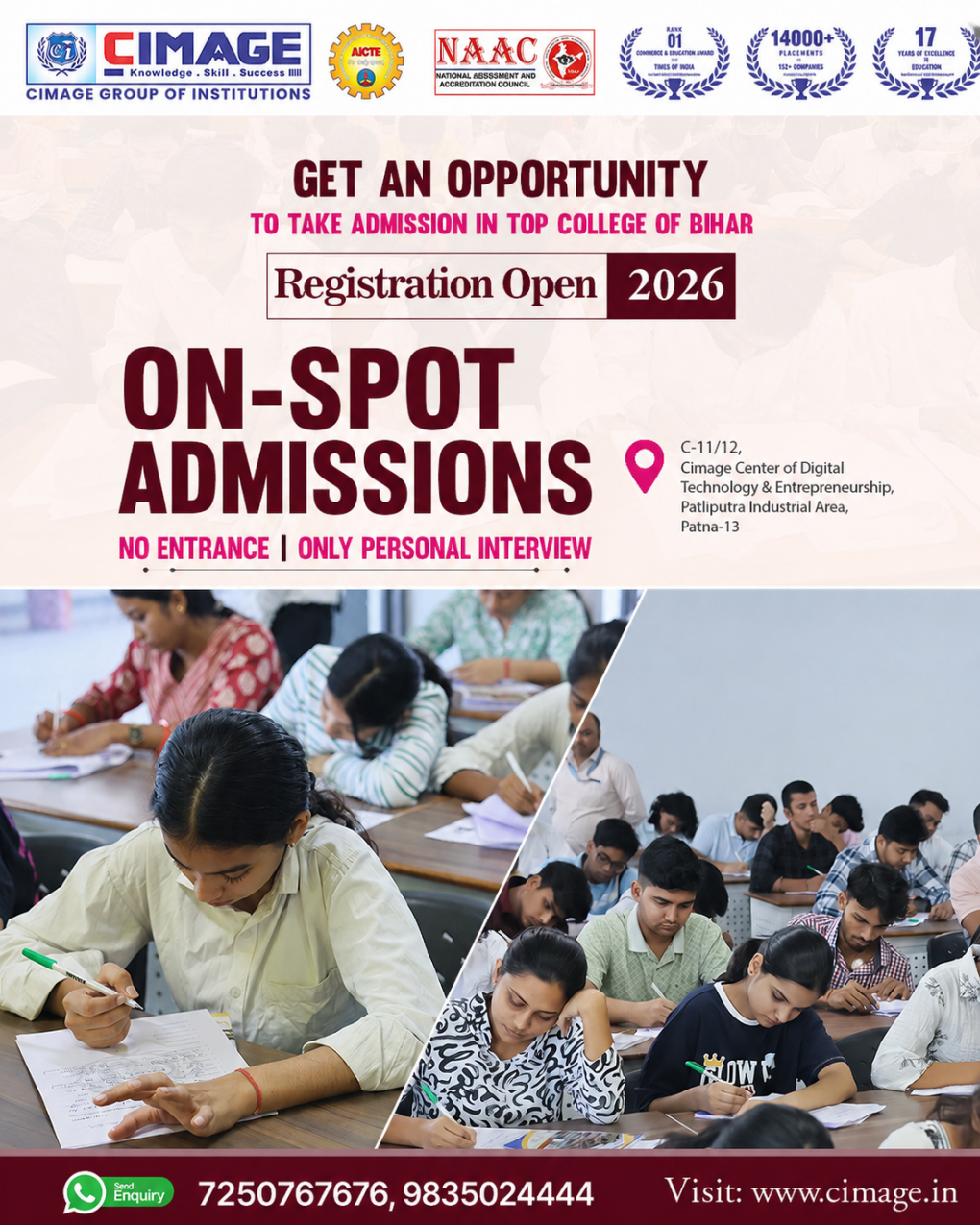
For years, thousands of students from Bihar have migrated to other states in search of quality engineering education, advanced laboratories, and better career opportunities. Today, that story is changing.
CIMAGE Group of Institutions proudly launches B.Tech Programs at the newly established CIMAGE Centre of Digital Technology & Entrepreneurship (CCDTE), Patna, bringing world-class infrastructure, cutting-edge technology, industry-focused learning, and placement-oriented education to Bihar.
Built with the vision of creating future engineers, innovators, entrepreneurs, and technology leaders, the campus offers an ecosystem where students don’t just earn a degree—they develop the skills, experience, and confidence required to succeed in the rapidly evolving world of technology.
Bachelor of Technology (B.Tech)
Duration : 4 Years
Eligibility : +2 or Intermediate
Course Duration : 4 Years (8 Semesters)
Why to Choose B.Tech at Cimage Patna | B.Tech Admission 2026
Looking for the best B.Tech college in Patna that combines quality engineering education with industry-ready skills and outstanding placement opportunities? CIMAGE Center of Digital Technology & Entrepreneurship (CCDTE) is redefining engineering education in Bihar by offering a future-focused learning environment designed for tomorrow’s innovators, engineers, and technology leaders.
As industries rapidly embrace Artificial Intelligence, Robotics, Cloud Computing, Automation, Data Science, and Smart Technologies, the demand for highly skilled engineers continues to grow across India and the world. A Bachelor of Technology (B.Tech) degree equips students with the technical expertise, analytical thinking, and practical problem-solving abilities required to excel in these evolving fields. Whether your goal is to build intelligent software, develop cutting-edge technologies, design modern infrastructure, or contribute to the next generation of engineering innovations, B.Tech provides the ideal foundation for a successful career.
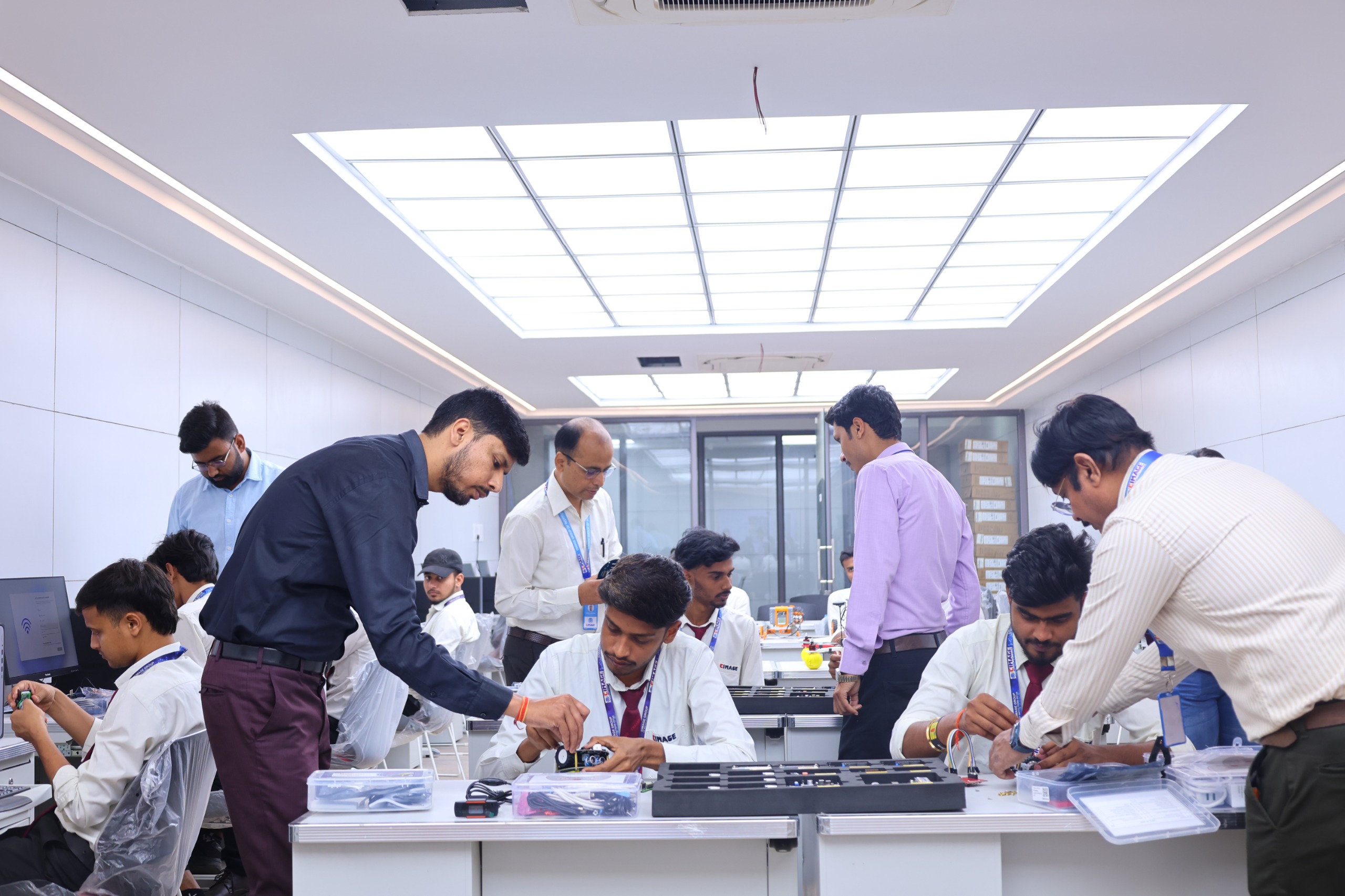
At CIMAGE CCDTE, engineering education goes beyond classroom teaching. Students learn through hands-on laboratory sessions, live projects, industry interactions, innovation challenges, technical workshops, and experiential learning that bridges the gap between academics and industry expectations. With AICTE-approved programs, affiliation with Bihar Engineering University (BEU), NAAC Accreditation, and a technology-driven campus featuring the IIT Bombay e-Yantra Lab, IIT Bombay Spoken Tutorial, Google Cloud Digital Campus, AWS Academy, Wipro Centre of Excellence, and Bihar’s First & India’s 7th Skill Acceleration Lab, students gain exposure to world-class resources from the very beginning of their engineering journey.
If you aspire to become a future-ready engineer equipped with technical excellence, innovation, leadership, and global career opportunities, B.Tech at CIMAGE Center of Digital Technology & Entrepreneurship is the right choice. Admissions for B.Tech 2026 are now open, offering students an opportunity to pursue engineering education at one of the fastest-growing and most technology-driven engineering institutions in Bihar.
E Yantra Lab
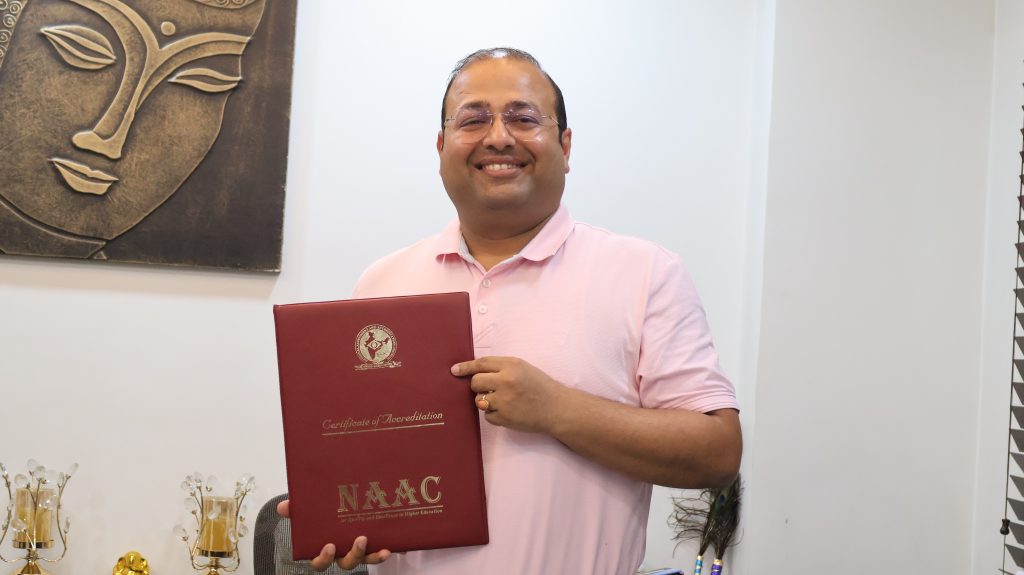
NAAC Accredited
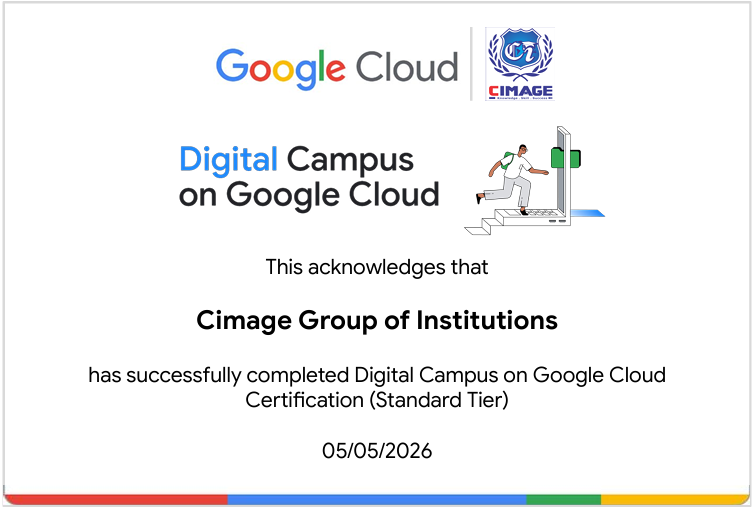
Google Campus
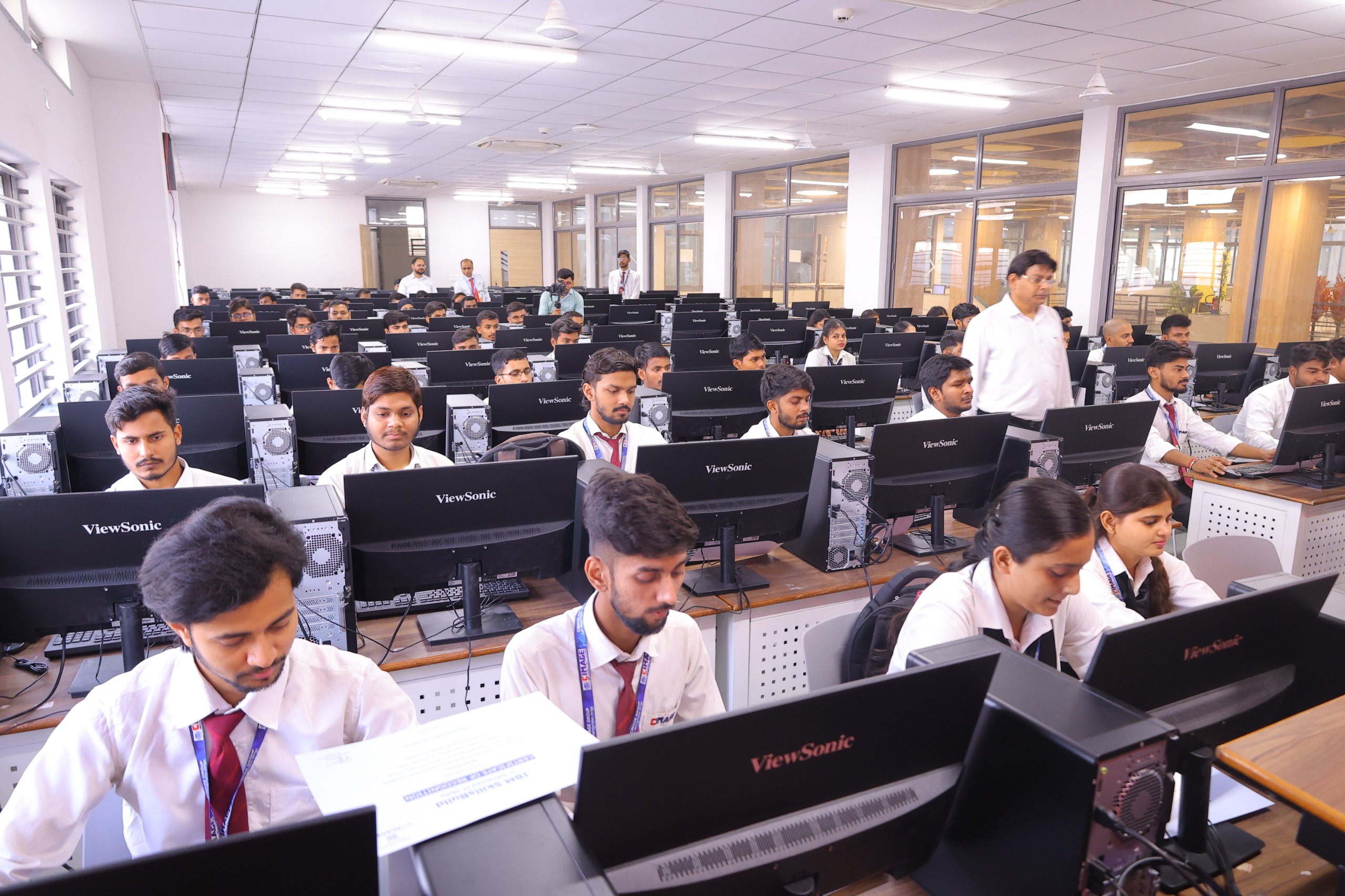
A dedicated Language Lab
Industry Align. Workshops
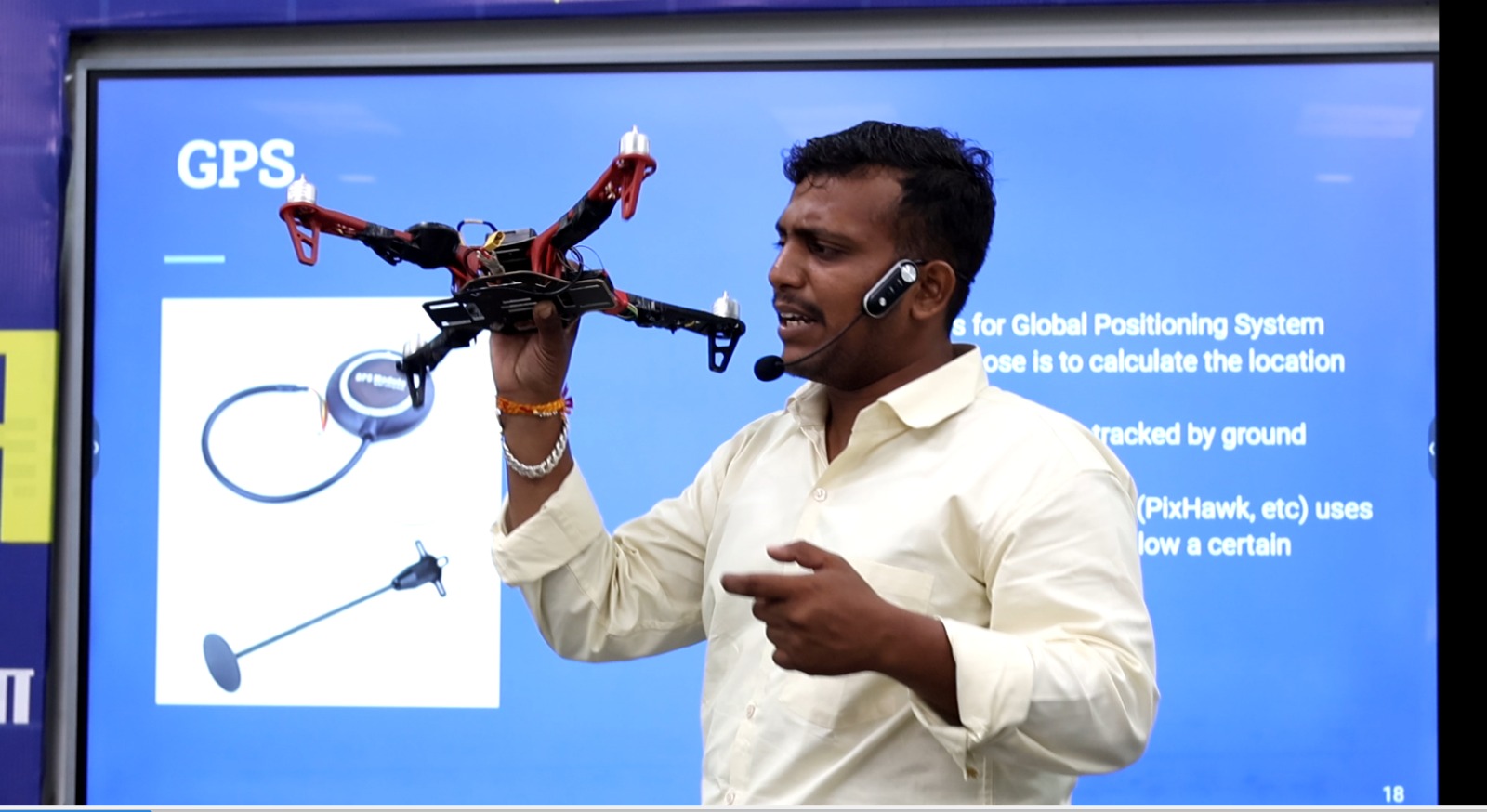
Placement-First Training
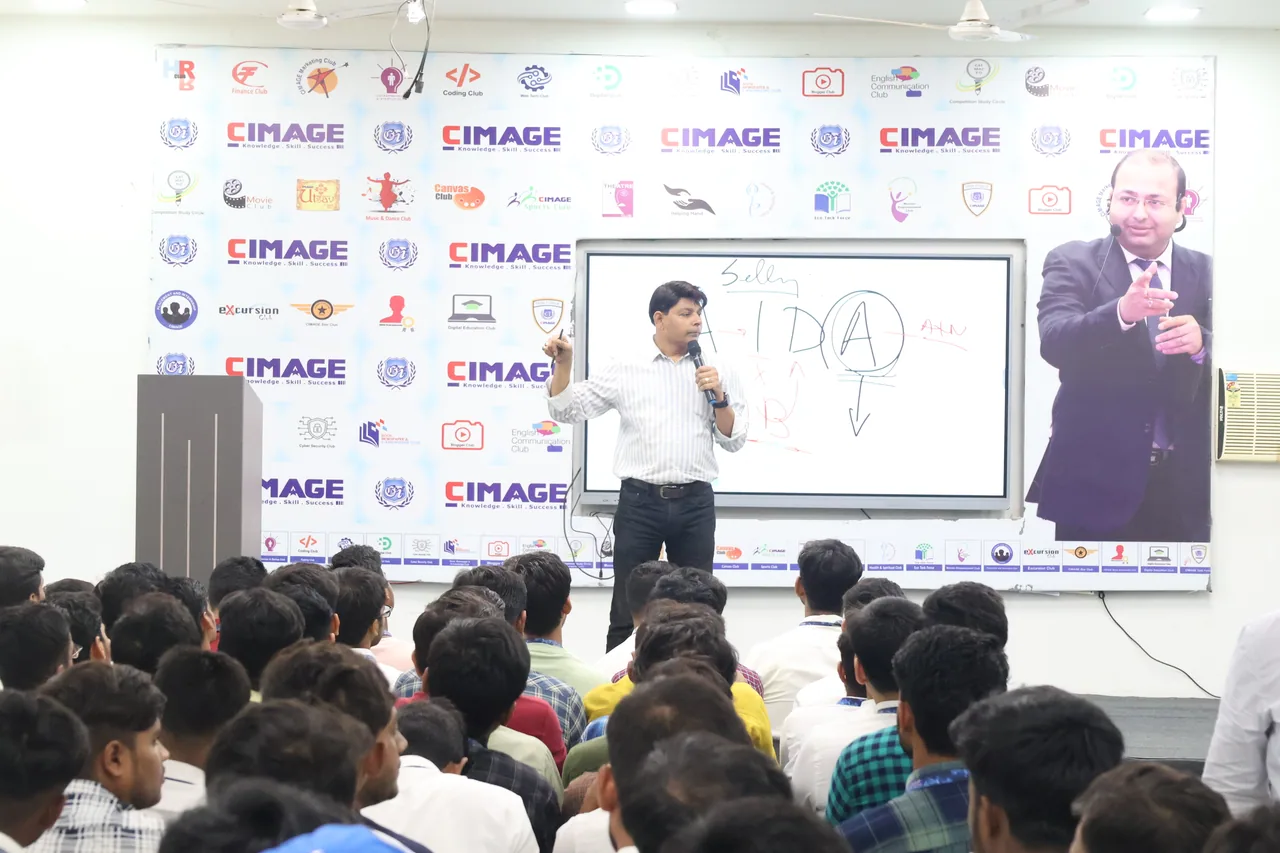
AICTE Approved & BEU Affiliated
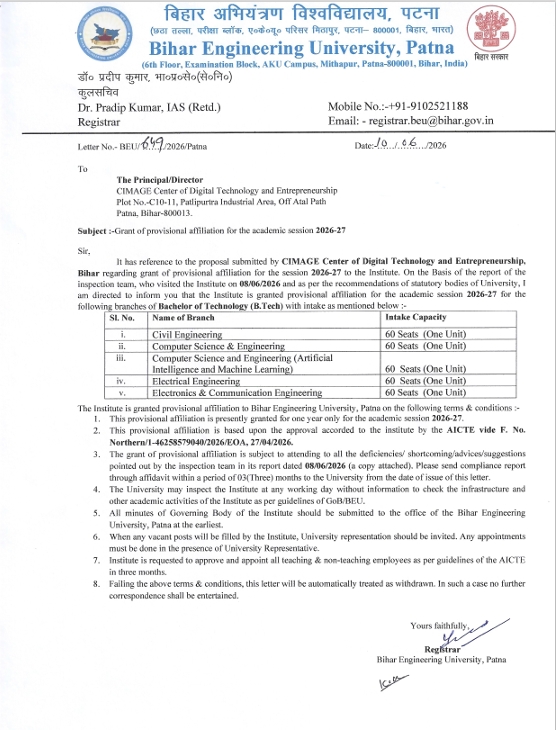
CIMAGE Center of Digital Technology & Entrepreneurship offers B.Tech programmes that are approved by the All India Council for Technical Education (AICTE) and affiliated with Bihar Engineering University (BEU). This ensures that students receive a degree recognized by the Government of India while studying under a curriculum that meets national technical education standards. The approval also reflects the institution’s commitment to quality education, modern infrastructure, qualified faculty, and industry-oriented engineering programmes.
Highlights
- AICTE Approved Engineering Institution
- Affiliated with Bihar Engineering University (BEU)
- Government-recognized B.Tech Degree
- Curriculum aligned with AICTE guidelines
- Industry-oriented engineering education
- Approved B.Tech programmes in CSE, AI & ML, ECE, EE, and Civil Engineering with sanctioned intake for the 2026–27 academic year.
B.Tech Programs Offered at CIMAGE
At CIMAGE, the B.Tech programme is designed to build strong technical foundations along with advanced industry-oriented skills. Each specialization focuses on practical learning, innovation, and career readiness for emerging technologies.
B.Tech in Artificial Intelligence & Machine Learning (AI & ML)
Artificial Intelligence is transforming every industry, from healthcare and finance to education and manufacturing, creating a growing demand for professionals who can develop intelligent, data-driven solutions. The AI & Machine Learning programme is designed to equip students with the knowledge and practical skills required to build advanced AI systems and solve real-world challenges. The curriculum covers a wide range of cutting-edge technologies, including Artificial Intelligence, Machine Learning, Deep Learning, Data Science, Computer Vision, Natural Language Processing (NLP), Generative AI, Big Data Analytics, Python Programming, and Cloud Computing. Upon completion of the programme, students are well-prepared to pursue rewarding careers as AI Engineers, Machine Learning Engineers, Data Scientists, Data Analysts, AI Research Associates, and Business Intelligence Analysts.
B.Tech in Computer Science & Engineering (CSE)
Computer Science & Engineering is one of the most sought-after engineering disciplines in today’s technology-driven world. As digital transformation continues to reshape industries, the demand for skilled computer science professionals is growing rapidly across sectors such as IT, healthcare, finance, manufacturing, e-commerce, and government. This programme provides students with a strong foundation in computer science principles while equipping them with the practical skills required to design, develop, deploy, and maintain modern software and computing systems.
Students begin by learning Programming Languages, gaining proficiency in languages such as C, C++, Java, and Python to build efficient and scalable applications. The curriculum emphasizes Data Structures & Algorithms, enabling students to develop optimized solutions for complex computational problems. Through Software Engineering, learners understand software development life cycles, project management, software testing, and best coding practices for creating reliable applications.
The programme also covers Database Management Systems, where students learn to design, manage, and optimize relational and NoSQL databases for efficient data storage and retrieval. In Web Development, they build dynamic, responsive, and interactive websites using modern front-end and back-end technologies. Mobile App Development introduces students to creating applications for Android and other mobile platforms, focusing on user experience and performance.
As organizations increasingly adopt cloud-based infrastructure, students gain hands-on experience in Cloud Computing, learning about cloud platforms, virtualization, containerization, and scalable application deployment. The Cybersecurity component equips them with knowledge of network security, ethical hacking, cryptography, secure software development, and techniques to protect digital systems from cyber threats. The programme also introduces Artificial Intelligence, enabling students to understand intelligent systems, machine learning concepts, automation, and AI-powered application development.
Upon successful completion of the programme, graduates are prepared for diverse and rewarding career opportunities across the technology sector. They can pursue roles such as Software Engineer, developing enterprise and consumer applications; Full Stack Developer, building complete web solutions from front-end to back-end; Cloud Engineer, designing and managing cloud infrastructure; Cybersecurity Analyst, protecting organizations against cyber threats; System Engineer, managing enterprise computing systems and infrastructure; and Technology Consultant, helping businesses adopt innovative technologies and digital solutions. With a strong blend of theoretical knowledge and practical exposure, the programme prepares students to excel in the rapidly evolving world of computing and technology.
B.Tech in Electronics & Communication Engineering (ECE)
Electronics & Communication Engineering (ECE) is a dynamic and rapidly evolving field that combines the principles of electronics, communication, computing, and automation to develop the technologies that power today’s connected world. From smartphones and satellite communication to smart homes, autonomous vehicles, and industrial automation, ECE plays a vital role in shaping modern digital infrastructure. This programme equips students with a strong foundation in electronic circuit design, communication technologies, embedded systems, and intelligent automation, preparing them to solve real-world engineering challenges.
Students begin by studying Digital Electronics, where they learn the fundamentals of digital logic, microprocessors, microcontrollers, and electronic circuit design. The programme covers Communication Systems, enabling students to understand analog and digital communication, data transmission, modulation techniques, optical communication, and modern telecommunication networks.
The curriculum includes Embedded Systems, where students gain hands-on experience in designing hardware-software integrated systems using microcontrollers and embedded programming. Through the study of the Internet of Things (IoT), learners explore how smart devices communicate over networks, collect data through sensors, and enable intelligent automation across industries such as healthcare, agriculture, manufacturing, and smart cities.
Students are also introduced to Robotics, where they learn about robotic systems, sensors, actuators, automation, control systems, and autonomous technologies. The VLSI (Very Large Scale Integration) Technology module focuses on the design and fabrication of integrated circuits and semiconductor devices that power modern electronic equipment. In Signal Processing, students study techniques for analyzing, processing, and improving audio, image, and communication signals for various real-world applications. The programme further covers Wireless Communication, providing knowledge of cellular networks, Wi-Fi, Bluetooth, satellite communication, and emerging wireless technologies that enable seamless global connectivity.
Graduates of the ECE programme are well-prepared for exciting career opportunities across industries such as telecommunications, consumer electronics, semiconductor manufacturing, automation, aerospace, healthcare technology, and smart infrastructure. They can pursue roles as Electronics Engineers, designing and developing electronic systems; Communication Engineers, building and maintaining communication networks; Embedded Systems Engineers, creating intelligent hardware and firmware solutions; IoT Engineers, developing connected smart devices and applications; Robotics Engineers, designing automated and autonomous systems; and Network Engineers, managing communication networks and ensuring reliable data transmission. With a balanced combination of theoretical knowledge, practical laboratory experience, and industry-oriented training, the programme prepares students to thrive in the rapidly advancing field of electronics and communication engineering.
B.Tech in Electrical Engineering (EE)
Electrical Engineering is a core engineering discipline that focuses on the generation, transmission, distribution, and efficient utilization of electrical energy. As industries increasingly adopt renewable energy, smart grids, and intelligent automation, electrical engineers play a vital role in building sustainable and reliable power infrastructure. This programme provides students with a strong foundation in electrical systems, energy technologies, industrial automation, and modern control techniques, preparing them to address the evolving needs of the power and energy sector.
Students begin by studying Electrical Machines, where they learn the design, operation, testing, and maintenance of transformers, motors, generators, and other essential electrical equipment used in industrial and commercial applications. The programme covers Power Systems, enabling students to understand power generation, transmission, distribution networks, electrical protection, load management, and power system analysis to ensure the reliable delivery of electricity.
The curriculum also emphasizes Renewable Energy Technologies, introducing students to sustainable energy sources such as solar, wind, hydroelectric, and biomass power. They learn how renewable energy systems are designed, integrated, and managed to support the global transition toward clean and environmentally friendly energy solutions.
Through Industrial Automation, students gain practical knowledge of programmable logic controllers (PLCs), supervisory control and data acquisition (SCADA) systems, industrial sensors, actuators, and automated manufacturing processes. The programme also includes Control Systems, where learners study system modeling, feedback mechanisms, controllers, and automation techniques used to improve the efficiency, stability, and performance of electrical and industrial systems. In Smart Grid Technologies, students explore modern power grids that utilize digital communication, real-time monitoring, advanced metering infrastructure, and intelligent energy management to improve grid reliability, efficiency, and sustainability.
Graduates of the Electrical Engineering programme are well-equipped to pursue rewarding careers in power generation, renewable energy, manufacturing, infrastructure, utilities, and industrial automation. They can work as Electrical Engineers, designing and maintaining electrical systems; Power System Engineers, managing power generation and distribution networks; Automation Engineers, developing automated industrial processes and control systems; Energy Analysts, optimizing energy consumption and promoting sustainable energy solutions; and Project Engineers, planning, executing, and managing electrical engineering projects across diverse industries. With a strong blend of theoretical knowledge, practical laboratory training, and industry exposure, the programme prepares graduates to contribute effectively to the future of electrical power and smart energy technologies.
B.Tech in Civil Engineering (CE)
Civil Engineering is one of the oldest and most essential branches of engineering, serving as the foundation for infrastructure development and nation-building. It focuses on the planning, design, construction, operation, and maintenance of buildings, roads, bridges, dams, airports, water supply systems, and other critical infrastructure. As the demand for sustainable and smart infrastructure continues to grow, civil engineers play a key role in creating safe, efficient, and environmentally responsible solutions. This programme equips students with the technical knowledge, practical skills, and engineering principles required to design and construct modern infrastructure projects.
Students begin by studying Structural Engineering, where they learn to analyze and design safe, durable, and cost-effective structures capable of withstanding various environmental and load conditions. The programme covers Construction Technology, providing knowledge of modern construction materials, techniques, project planning, quality control, safety standards, and efficient construction management practices.
The curriculum includes Transportation Engineering, enabling students to understand the planning, design, construction, and maintenance of highways, railways, airports, traffic systems, and urban transportation networks that support economic development and mobility. Through Environmental Engineering, learners study water supply systems, wastewater treatment, solid waste management, pollution control, and sustainable environmental practices to promote healthier communities and environmental conservation.
Students also gain expertise in Surveying, where they learn modern land measurement techniques using conventional and advanced surveying instruments, GPS, and geospatial technologies for accurate mapping and infrastructure planning. The Geotechnical Engineering component focuses on soil mechanics, foundation engineering, slope stability, and underground construction, helping students understand how soil and rock properties influence the safety and stability of civil structures. In Smart Infrastructure Development, students explore the integration of digital technologies, Building Information Modeling (BIM), smart construction practices, sustainable materials, and intelligent infrastructure systems that enhance efficiency, resilience, and long-term sustainability.
Graduates of the Civil Engineering programme are well-prepared for diverse career opportunities in construction, infrastructure development, transportation, urban planning, consulting, and government organizations. They can pursue careers as Civil Engineers, designing and supervising infrastructure projects; Structural Engineers, analyzing and designing buildings and bridges; Site Engineers, managing on-site construction activities and ensuring quality and safety; Construction Managers, overseeing project execution, budgeting, and resource management; and Project Engineers, coordinating engineering projects from planning through completion. With a strong combination of theoretical knowledge, laboratory training, fieldwork, and industry exposure, the programme prepares graduates to contribute to the development of modern, sustainable, and resilient infrastructure.
World-Class Infrastructure for Future Engineers
The new CCDTE campus has been designed to create an immersive learning environment featuring:
- Modern Engineering Laboratories
- Robotics & Automation Labs
- AI & Machine Learning Infrastructure
- Advanced Computer Centers
- Smart Classrooms
- Innovation & Incubation Spaces
- Collaborative Learning Areas
- Technology-Driven Campus Environment
Skills to be learned at Best B.Tech College in Patna
Students pursuing a Bachelor of Technology (B.Tech) at CIMAGE Center of Digital Technology & Entrepreneurship (CCDTE), Patna gain a strong foundation in engineering principles while developing the technical expertise required to succeed in today’s rapidly evolving technology landscape. Depending on their chosen specialization—Computer Science & Engineering (CSE), Artificial Intelligence & Machine Learning (AI & ML), Electronics & Communication Engineering (ECE), Electrical Engineering (EE), or Civil Engineering (CE)—students learn through a balanced combination of theoretical concepts, laboratory sessions, live projects, and practical applications.
The curriculum is designed to equip students with industry-relevant knowledge in areas such as programming, data structures, artificial intelligence, cloud computing, embedded systems, robotics, automation, power systems, construction technologies, communication systems, and smart infrastructure. Along with technical proficiency, students develop essential professional skills including analytical thinking, problem-solving, innovation, teamwork, communication, project management, and leadership—qualities that are highly valued by employers across industries.
At CIMAGE Group of Institutions, engineering education extends far beyond the classroom. Recognized as one of the leading institutions for technology-driven education in Bihar, CCDTE provides students with opportunities to learn from experienced academicians, industry experts, corporate mentors, and technology professionals through guest lectures, technical workshops, seminars, hackathons, coding competitions, and industry interactions. Supported by world-class facilities such as the IIT Bombay e-Yantra Lab, IIT Bombay Spoken Tutorial, Google Cloud Digital Campus, AWS Academy, Wipro Centre of Excellence, and Bihar’s First & India’s 7th Skill Acceleration Lab, students gain hands-on experience with emerging technologies and develop the confidence to solve real-world engineering challenges.
Holistic development remains a core focus of the B.Tech programme at CCDTE. In addition to academic excellence, students are encouraged to participate in innovation challenges, robotics competitions, research activities, entrepreneurship initiatives, technical clubs, cultural events, sports, and leadership programmes. This well-rounded approach helps students build technical competence, creativity, confidence, and professional ethics, preparing them to become industry-ready engineers capable of thriving in a competitive global environment.
Career Opportunities After Pursuing B.Tech from the Best Engineering College in Patna
A Bachelor of Technology (B.Tech) is one of the most sought-after professional degrees, opening doors to diverse and high-growth career opportunities across industries. As technology continues to reshape the global economy, skilled engineers are in demand in sectors such as Information Technology, Artificial Intelligence, Manufacturing, Electronics, Infrastructure, Renewable Energy, Telecommunications, Automation, Construction, and Smart Technologies. A B.Tech degree from CIMAGE Center of Digital Technology & Entrepreneurship (CCDTE) equips students with the technical knowledge, practical skills, and industry exposure required to build successful careers in these rapidly evolving fields.
With a strong emphasis on project-based learning, industry collaborations, innovation, and hands-on training, CIMAGE prepares students to take on real-world engineering challenges with confidence. Graduates can explore rewarding career opportunities with leading national and multinational companies in roles such as Software Engineer, Artificial Intelligence Engineer, Machine Learning Engineer, Full Stack Developer, Cloud Engineer, Cybersecurity Analyst, Data Scientist, Electronics Engineer, Embedded Systems Engineer, Electrical Engineer, Civil Engineer, Robotics Engineer, IoT Engineer, Automation Engineer, Network Engineer, Project Engineer, Systems Engineer, and many more.
Beyond corporate careers, B.Tech graduates can pursue higher education such as M.Tech, MBA, or MS, prepare for prestigious competitive examinations like GATE, explore opportunities in Public Sector Undertakings (PSUs) and government engineering services, or launch their own technology startups and entrepreneurial ventures. With its industry-focused curriculum, advanced laboratories, dedicated placement support, and strong recruiter network, CIMAGE CCDTE empowers students to become future-ready engineers capable of building successful careers in India and across the globe.
Wipro Centre of Excellence
The Wipro Centre of Excellence at CIMAGE bridges the gap between academics and industry by providing students real-time corporate exposure and hands-on learning experiences.
Key Features:
- Live Industry Projects based on real business challenges
- Corporate Mentorship from industry professionals
- Technical Workshops on emerging technologies
- Skill Development Programs focused on employability
- Professional Certification Opportunities for career growth
Future Scope After B.Tech from the Best Engineering College in Patna | B.Tech Admission 2026
Pursuing a B.Tech degree from one of the best engineering colleges in Patna lays a strong foundation for a successful and future-ready career in engineering and technology. As industries worldwide embrace digital transformation, artificial intelligence, automation, robotics, sustainable infrastructure, and smart technologies, the demand for highly skilled engineers continues to grow across every sector. Graduates from CIMAGE Center of Digital Technology & Entrepreneurship (CCDTE) are equipped with the technical knowledge, practical exposure, and professional skills needed to excel in this dynamic landscape.
A B.Tech graduate can begin their career in diverse roles such as Software Engineer, AI & Machine Learning Engineer, Cloud Engineer, Data Scientist, Electronics Engineer, Electrical Engineer, Civil Engineer, Automation Engineer, Embedded Systems Engineer, IoT Specialist, Network Engineer, Project Engineer, and many other technology-driven professions. With industry experience, professionals can progress into senior technical, managerial, research, consulting, or leadership positions within leading national and multinational organizations.
Beyond employment opportunities, a B.Tech degree also opens pathways for higher education and specialization. Graduates may pursue M.Tech, MBA, MS in India or abroad, or research programmes, depending on their career aspirations. Students interested in government careers can prepare for examinations such as GATE, Engineering Services, and various Public Sector Undertakings (PSUs), while aspiring entrepreneurs can leverage their technical expertise to build innovative startups in emerging fields such as Artificial Intelligence, Robotics, Cloud Computing, Smart Manufacturing, Renewable Energy, and Digital Infrastructure.
Choosing B.Tech at CIMAGE Center of Digital Technology & Entrepreneurship after Class 12 is an investment in a future driven by innovation and technology. With AICTE-approved programmes, affiliation with Bihar Engineering University (BEU), a NAAC Accredited institution, advanced laboratories, industry collaborations, and a placement-focused learning ecosystem, CIMAGE provides students with the ideal environment to transform their ambitions into successful engineering careers.
Whether your goal is to secure a high-paying placement, pursue higher studies, contribute to cutting-edge research, or become a technology entrepreneur, a B.Tech degree from CIMAGE CCDTE provides the knowledge, practical experience, and industry exposure required to thrive in the rapidly evolving world of engineering and technology.

The AWS Academy at CIMAGE provides students with in-demand cloud computing skills aligned with global industry standards.
Key Features:
- Training in Amazon Web Services (AWS) cloud platform
- Hands-on experience with cloud infrastructure
- Industry-recognized certification preparation
- Learning of cloud computing fundamentals and services
- Practical exposure to real-world cloud applications
From Education to Employability
CIMAGE Group of Institutions is widely acclaimed as a Center of Excellence for Management, Commerce, and Information Technology. Established by the ‘Vijayam Educational Trust’, managed by industry professionals, it stands as the best BCA college in Patna.
Renowned for providing quality education, our institution’s experienced and qualified faculty members skillfully train and prepare students to meet industry requirements. Over the past 17 years, we’ve facilitated placements for over 13500+ students, bridging the gap between education and employability. We offer a range of vocational Add-On Programs alongside B.Tech Course admissions in Patna at CIMAGE Center of Digital Technology & Entrepreneurship, aligning with the demands of various job markets.
Our success is evident in the IT sector, with over 13,500+ students securing placements in globally recognized IT firms like Wipro, TCS, Infosys, Accenture, Capgemini, IBM, PayPal, Intel, and more.
Industry-Oriented Add-On Courses & Professional Certifications with B.Tech
Engineering today goes far beyond classroom learning. Employers seek graduates who possess practical technical expertise, industry-recognized certifications, and hands-on experience with emerging technologies. Keeping this in mind, CIMAGE Center of Digital Technology & Entrepreneurship (CCDTE) complements its AICTE-approved B.Tech programmes with a wide range of industry-oriented add-on courses, professional certifications, technical workshops, and skill development programmes. These initiatives ensure that students graduate with competencies that align with current industry demands, giving them a competitive advantage in placements, internships, and higher education.
Through strategic collaborations with leading technology organizations such as Google for Education, Google Cloud, AWS Academy, IIT Bombay, and Wipro, students gain exposure to cutting-edge technologies, globally recognized certifications, and practical engineering applications that prepare them for the future of work.
Industry-Focused Add-On Courses & Certifications
- Google Cloud & Cloud Computing
- AWS Academy Certification Programmes
- Artificial Intelligence & Machine Learning
- Data Science & Analytics
- Python Programming
- Java & Advanced Java
- Data Structures & Algorithms (DSA)
- Full Stack Web Development
- Mobile App Development
- Software Development & DevOps
- DevOps & CI/CD Tools
- Docker & Kubernetes
- Git & GitHub for Version Control
- Power BI & Business Intelligence
- Microsoft Azure Fundamentals
- Blockchain Technology
- Generative AI & Prompt Engineering
- Embedded Systems
- Internet of Things (IoT)
- Robotics & Automation
- Big Data & Hadoop
NAAC Accreditation
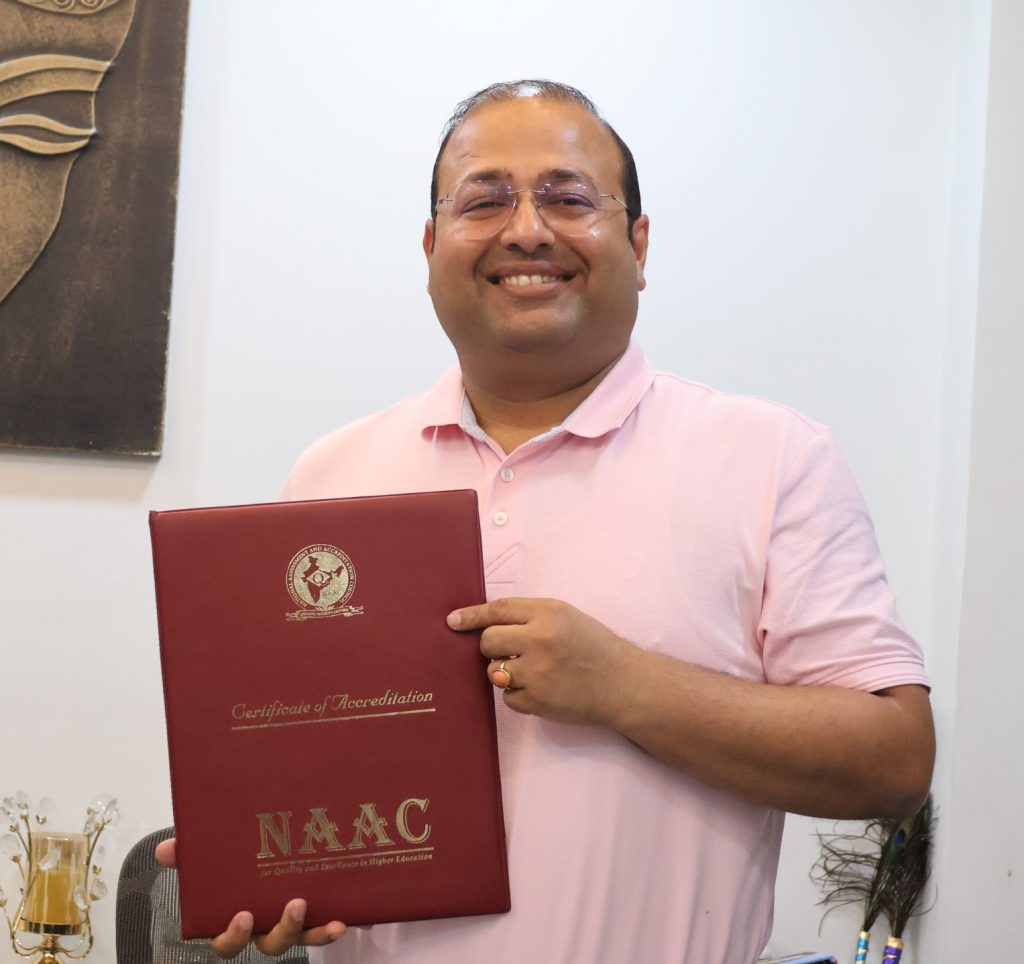
CIMAGE Group of Institutions is committed to maintaining high academic standards and quality education, aligned with national accreditation frameworks.
Highlights:
- Quality education driven by structured academic systems
- Continuous improvement in teaching and learning standards
- Focus on outcome-based education
- Recognition through academic quality evaluation frameworks
Why Choose CIMAGE for B.Tech?
- AICTE Approved B.Tech Programme affiliated with a reputed Government University
- NAAC Accredited Institution committed to academic excellence
- IIT Bombay e-Yantra Robotics Lab for hands-on engineering innovation
- Industry-oriented B.Tech curriculum aligned with emerging technologies
- Special emphasis on Communicative English.
- Several Personality Enhancement Training Programmes
- Most Hi-Tech Campus & State of the art Infrastructure
- Strong emphasis on practical learning through the "Learning by Doing" pedagogy
- Innovation-driven environment encouraging research, entrepreneurship, and startups
- Experienced faculty members from academia and industry backgrounds
- IT Industry oriented Course Curriculum and Teaching.
- Specialization-focused training in AI, Machine Learning, Cloud Computing, IoT, Cybersecurity, and Full Stack Development
- Industry-designed Add-On Certification Programmes at no extra academic burden
- Regular workshops, hackathons, coding competitions, and technical bootcamps
- Intensive corporate interaction through industry visits, expert sessions, and live projects
- Dedicated Training & Placement Cell with aptitude, technical, and interview preparation
- Internship opportunities with leading companies and industry partners
- Modern digital campus with advanced computing facilities and high-speed internet
- Student clubs, technical societies, and innovation cells for holistic development
Fee Structure
| Course | Duration | Affiliation | Course Fee |
|---|---|---|---|
| B.Tech in Computer Science & Engineering (CSE) | 4 Years | Bihar Engineering University (BEU) | ₹2,99,000 |
| B.Tech in Artificial Intelligence & Machine Learning (AI & ML) | 4 Years | Bihar Engineering University (BEU) | ₹3,25,000 |
| B.Tech in Electronics & Communication Engineering (ECE) | 4 Years | Bihar Engineering University (BEU) | ₹2,49,000 |
| B.Tech in Electrical Engineering (EE) | 4 Years | Bihar Engineering University (BEU) | ₹2,49,000 |
| B.Tech in Civil Engineering (CE) | 4 Years | Bihar Engineering University (BEU) | ₹2,49,000 |
– Internal Examination Fee (Per Semester): ₹1000/-
– Library Security Deposit (Refundable): ₹1000/-
The above Fee Structure would be offered under the Down Payment Mode (option 1) Contact: 9835024444, 7250767676
Spoken Tutorial Skill Acceleration Lab
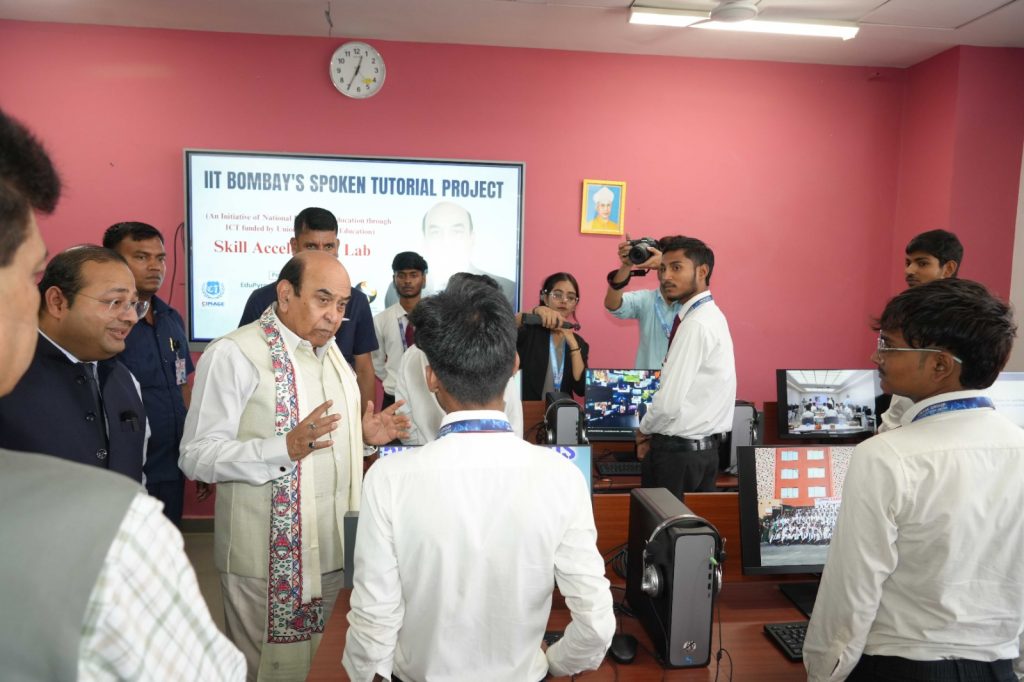
The Spoken Tutorial initiative helps students strengthen their technical understanding through structured, self-paced learning modules developed by academic experts.
Key Features:
- Step-by-step programming tutorials
- Self-learning based practical sessions
- Certification support in technical subjects
- Focus on programming fundamentals and IT skills
- Easy-to-understand learning methodology for beginners
Frequently Asked Question
Q1. Which is the best B.Tech college in Patna?
CIMAGE is among the leading B.Tech colleges in Patna, offering AICTE-approved engineering programmes with an industry-focused curriculum, modern laboratories, experienced faculty, internship opportunities, and strong placement support. The institution also provides advanced skill development through IIT Bombay e-Yantra Lab, Spoken Tutorial programmes, and industry certification courses.
Q2. Is B.Tech admission 2026 open at CIMAGE?
Yes. Admissions for the B.Tech programme are open. Eligible students who have completed Class 12 with Physics, Chemistry, and Mathematics (PCM) can apply according to the admission guidelines and university norms.
Q3. Which B.Tech specializations are offered at CIMAGE?
CIMAGE offers the following B.Tech programmes:
- Computer Science & Engineering (CSE)
- Artificial Intelligence & Machine Learning (AI & ML)
- Electronics & Communication Engineering (ECE)
- Electrical Engineering (EE)
- Civil Engineering (CE)
Q4. Is B.Tech from CIMAGE AICTE approved?
Yes. The B.Tech programme at CIMAGE is AICTE approved and affiliated with Bihar Engineering University (BEU), ensuring that students receive a recognized engineering degree.
Q5. What is the duration of the B.Tech course?
The Bachelor of Technology (B.Tech) programme is a four-year undergraduate engineering degree divided into eight semesters.
Q6. What is the eligibility for B.Tech admission?
Students who have completed Class 12 with Physics, Chemistry, and Mathematics (PCM) from a recognized board are eligible to apply for admission, subject to university and regulatory guidelines.
Q7. Does CIMAGE provide campus placements for B.Tech students?
Yes. CIMAGE has a dedicated Training & Placement Cell that prepares students through aptitude training, technical interview preparation, mock interviews, internships, industry interaction, and campus recruitment drives with reputed companies.
Q8. What career opportunities are available after B.Tech?
B.Tech graduates can pursue careers as:
- Software Engineer
- AI & Machine Learning Engineer
- Data Scientist
- Cloud Engineer
- Cybersecurity Analyst
- Full Stack Developer
- DevOps Engineer
- Electronics Engineer
- Civil Engineer
- Electrical Engineer
- IoT Engineer
- Network Engineer
Students can also prepare for higher education, research, government jobs, or entrepreneurship.
Q9. Does CIMAGE provide internships during the B.Tech programme?
Yes. Students receive opportunities for internships, industrial visits, live projects, technical workshops, hackathons, and hands-on training to gain practical industry experience before graduation.
Q10. What makes CIMAGE different from other engineering colleges?
CIMAGE focuses on industry-ready engineering education through:
- IIT Bombay e-Yantra Robotics Lab
- IIT Bombay Spoken Tutorial Certifications
- AI, Cloud Computing, and Emerging Technology Training
- Modern laboratories
- Industry-oriented curriculum
- Practical learning approach
- Dedicated placement support
- Personality development and soft skills training
Q11. Are Add-On certification courses available with B.Tech?
Yes. Along with the university curriculum, students can pursue industry-oriented certification programmes in:
- Artificial Intelligence & Machine Learning
- Cloud Computing
- AWS Academy
- Google Cloud
- Python
- Java
- Data Structures & Algorithms
- Cybersecurity
- Ethical Hacking
- Full Stack Development
- Robotics
- IoT
- DevOps
- Data Science
- Mobile App Development
- And many more.
Q12. Can I pursue higher studies after completing B.Tech?
Absolutely. After completing B.Tech, students can pursue M.Tech, MBA, MS, ME, research programmes, or prepare for competitive examinations such as GATE, CAT, UPSC, and other government recruitment exams.
Q13. Is B.Tech a good career option in 2026 and beyond?
Yes. With rapid advancements in Artificial Intelligence, Cloud Computing, Robotics, Data Science, Cybersecurity, Semiconductor Technology, and Automation, skilled engineering graduates continue to be in high demand across industries in India and abroad.
Q14. Does CIMAGE provide personality development and communication training?
Yes. Apart from technical education, CIMAGE emphasizes communication skills, aptitude development, leadership, group discussions, interview preparation, and overall personality development to improve students’ employability.
Q15. Why should I choose CIMAGE for B.Tech?
CIMAGE offers a combination of quality engineering education, experienced faculty, industry-oriented learning, affordable fees, modern infrastructure, advanced laboratories, internship opportunities, IIT Bombay collaborations, skill development programmes, and dedicated placement assistance, making it an excellent choice for aspiring engineers.
B.tech Course Detailed Syllabus
Semester 1 – Engineering Mathematics – I
Business Correspondence:
Structure of a Letter, Inquiry Letter, Sales Letter, Order Letter, Complaints, Complaint Handling, Routine letter
Government Correspondence:
Memo, Agenda, Minutes, Proposals
Writing Skills:
Report Writing, Composition (argumentative, explanatory, descriptive and narrative), Paragraph writing
Grammar:
Sentence Structure, Idiomatic Usage of Language, Tenses, Direct & Indirect Parts of Speech, Active & Passive Voice, Vocabulary.
Selected Short Stories:
Three short stories from the book, “Added Value: The Life Stories of Indian Business Leaders.” by Peter Church, Lotus Collection, New Delhi
1. Rahul Bajaj/ Bajaj Group (Page No. 20)
2. Subhash Chandra/ Eyssel Group/Zee TV (Page No. 40)
3. NR Narayana Murthy/Infosys (Page No. 148)
Preparation for Job:
Writing Applications for Jobs, Preparing Curriculum Vitae, Preparing for Interviews, Preparing for Group Discussions.
Text Books:
1. Added Value: The Life Stories of Indian Business Leaders; Peter Church; Roli Books.
2. Organisations – Structures, Processes, and Outcomes; Richard h Hall; Prentice Hall India.
3. English for the Secretary; Yvonne Hoban; Tata McGraw Hill.
4. Technical Communication: M. Raman & S. Sharma; Oxford University Press.
5. Business Communication Process and Product: M.E. Guffey; Thomson Learning.
Reference Book:
1. Human Behaviour at Work; John W New storm & Keith Davis; Tata McGraw Hill.
2. The Most Common Mistakes in English Usage; Thomas Elliot Berry, Tata McGraw Hill.
3. Business Communication: R.K. Madhukar; Vikas Publication.
Semester 1 – Engineering Physics
Objectives: To know about Logical operators, validity of arguments, set theory and set operations, relations and functions, linear operations, Binary algebra, Permutations & Combinations, Differentiation, Straight lines, pair of straight lines, Circles
MODULE I: SYMBOLIC LOGIC & SET THEORY:
Proposition, Logical operators, conjunction, disjunction, negation, conditional and bi-conditional operators, converse, Inverse, Contra Positive, logically equivalent, tautology and contradiction. Arguments and validity of arguments. Set operations, Venn diagram, Properties of sets, number of elements in a set, Cartesian product, relations & functions, Relations: Equivalence relation. Equivalence class, Partially and Totally Ordered sets, Functions: Types of Functions, Composition of Functions.
MODULE II: DIFFERENTIAL CALCULUS
Differentiation, successive differentiation, Leibnitz theorem, partial differentiation, Applications of differentiation, Tangent and normal, angle between two curves, Maximum and Minimum values (Second derivative test), Curvature and radius of Curvature (Cartesian coordinates), Envelopes.
MODULE III: INTEGRAL CALCULUS
Definite Integral and its application for area, length, and volume. Multiple Integrals. Change of order of Integration. Transformation of integral from Cartesian to polar. Applications in Areas, volume, and surfaces.
MODULE IV: TWO DIMENSIONAL ANALYTICAL GEOMETRY
Straight Lines. Pair Straight Lines. Circles.
Text Books:
1. Das BC and Mukherjee, Differential Calculus, Calcutta, U.N. Dhar Publishers
2. Das BC and Mukherjee, Integral Calculus, Calcutta, U.N. Dhar Publishers
3. Grewal B.S., Higher Engineering Mathematics, Delhi Khanna Publishers.
Semester 1 – Programming for Problem Solving using C
Introduction To Computers
Introduction, Characteristics of computers, Evolution of computers, Generation of Computers, Classification of Computers, The Computer System, Applications of Computers.
Input / Output devices and Memory
Introduction, Keyboard, Pointing Devices, Speech Recognition, Digital Camera, Scanners, Optical Scanners. Classification of Output, Printers, Plotters, Computer Output Microfilm (COM), Monitors, Audio Output, and Projectors. Random Access Memory (RAM), Read Only Memory (ROM), Types of ROM. Classification of Secondary Storage Devices, Magnetic Tape, Magnetic Disk, Optical Disk, Magneto Optical disk.
Software Concepts
Introduction to Software, Relationship between Software and Hardware, System Software, Application Software Algorithm, Flowchart, Program, Pseudocode (P-Code). Features of a Good Programming Language.
Operating Systems: History & Evolution, Functions of an Operating System, A Brief History of MS-DOS, Linux, Windows System. Database Management System
Data Communication and Computer Network
Introduction, Data Communication, Transmission Media, Multiplexing, Switching, Computer Network, Network Topologies, Communication Protocols, and Network devices. World Wide Web, Hypertext, Uniform Resource Locator, Web Browsers, IP Address, Domain Name, Internet Services Providers, Internet Security, Internet Requirements, Web Search Engine, Net Surfing, Internet Services, Case Study, Intranet.
MS Office, MS Word, MS Excel, Ms-Power Point.
Text Books:
1. V. Rajaraman, Fundamentals of Computers, 3rd Edition, PHI Publications
2. Nasib S. Gill, Essentials of Computer & Network Technology, Khanna Publications.
3. Deepak Bharihoke, Fundamentals of Information Technology, Excel Books.
Semester 1 – Programming for Problem Solving using C
Section I: Grammar
Expressing in Style; Words often confused; One-word substitution; Phrases; Idioms.
Section II: Advanced Reading
Paraphrasing; Interpreting visual information: Tables, Graphs, Charts; Speed Reading. Comprehension and Analysis of the book, “Who Moved My Cheese.”
Section III: Effective Writing
Business Correspondences: Fax, Email; Taking Notes; Making Inquiries; Placing Orders; Asking & Giving Information; Registering Complaints; Handling Complaints; Drafting Notices; Job Applications; Expository Composition; Argumentative Composition; Techniques of Argument; Logical Presentation; Descriptive Composition; Narrative Composition; Summary Writing, Proposal; Abstract, Agenda, Minutes.
Section IV: Speaking
Business Etiquettes; Impromptu Speech; Debate; Role Play; Presentations.
Section V: Listening Business-related Conversation Exercises.
Reference Books:
1. Spencer Johnson; Who Moved My Cheese; Vermilion; (2009).
2. Balasubramanian, T., A Textbook of English Phonetics for Indian Students; Macmillan India, Delhi (1998).
3. McLearn, Stephen., Writing Essays and Report: A Student’s Guide; Viva Books, New Delhi (2011).
4. Burton Roberts, N., Analysing Sentences; Longman, London (1986).
5. Wekker, H. And Hagemann, L., A Modern Course in English Syntax; Croom Helm, London (1985).
Semester 1 – Basic Electrical & Electronics Engineering
Section I: Grammar
Expressing in Style; Words often confused; One-word substitution; Phrases; Idioms.
Section II: Advanced Reading
Paraphrasing; Interpreting visual information: Tables, Graphs, Charts; Speed Reading. Comprehension and Analysis of the book, “Who Moved My Cheese.”
Section III: Effective Writing
Business Correspondences: Fax, Email; Taking Notes; Making Inquiries; Placing Orders; Asking & Giving Information; Registering Complaints; Handling Complaints; Drafting Notices; Job Applications; Expository Composition; Argumentative Composition; Techniques of Argument; Logical Presentation; Descriptive Composition; Narrative Composition; Summary Writing, Proposal; Abstract, Agenda, Minutes.
Section IV: Speaking
Business Etiquettes; Impromptu Speech; Debate; Role Play; Presentations.
Section V: Listening Business-related Conversation Exercises.
Reference Books:
1. Spencer Johnson; Who Moved My Cheese; Vermilion; (2009).
2. Balasubramanian, T., A Textbook of English Phonetics for Indian Students; Macmillan India, Delhi (1998).
3. McLearn, Stephen., Writing Essays and Report: A Student’s Guide; Viva Books, New Delhi (2011).
4. Burton Roberts, N., Analysing Sentences; Longman, London (1986).
5. Wekker, H. And Hagemann, L., A Modern Course in English Syntax; Croom Helm, London (1985).
Semester 1 – Communication Skills & Professional Ethics
Errors in Numerical Calculations: Numbers and their accuracy, Errors and their Computations Absolute, Relative and Percentage, General Error Formula. Solution of Algebraic and Transcendental Equations: Introduction, Bisection method, Iteration method, Method of False Position, Newton- Raphson method
Interpolation: Introduction, Errors in Polynomial Interpolation, Finite Differences – Forward, Backward and Central, Detection of errors using Difference tables, Differences of a Polynomial, Newton’s formulae for Interpolation, Central Difference Interpolation.
Formulae: Gauss’s Central Difference Formula, Interpolation with unevenly spaced points, Lagrange’s Interpolation Formula, Divided Differences and their properties- Newton’s General Interpolation Formula
Numerical Differentiation and Integration: Introduction, Numerical Differentiation and Errors, Numerical Integration – Trapezoidal Rule, Simpson’s 1/3 Rule, Simpson’s 3/8 Rule. Numerical Solution of Linear System of Equations: Direct Methods- Gauss-Jordan Method, Gauss Elimination Method, Method of Factorization, Ill- conditioned Linear System, Iterative Method- Gauss- Jacobi Method, Gauss-Seidel Method. Numerical Solution of Ordinary Differential Equations: Solution by Taylor’s Series, Euler’s method, Modified Euler’s method, Runge-Kutta method of 2nd and 4th order.
Text Book:
1.S.S. Sastry -Introductory methods of Numerical Analysis, 4th Edition, Prentice Hall of India, New Delhi, 2006.
Reference Books:
1. V.N. Veda Murthy et.al. -Numerical Methods, Vikash Publishing House, New Delhi, 2005.
2. B.S. Grewal- Numerical Methods in Engineering & Science, Khanna Publishers, Delhi,2005.
Semester 2 – Engineering Mathematics – II
Introduction to SAD
Fundamentals of System, Important Terms related to Systems, Classification of Systems, Real Life Business Subsystems, Real-Time Systems, Distributed Systems, Development of a successful System, Various Approaches for development of Information Systems. Structured Analysis and Design Approach, Prototype, and Joint Application Development.
Systems Analyst-A Profession
Why do Businesses need Systems Analysts? Users, Analysts in various functional areas, Role of a Systems Analyst Duties of a Systems Analyst, Qualifications of a Systems Analyst, Analytical Skills, Technical Skills, Management Skills, Interpersonal Skills.
Process of System Development
Systems Development Life Cycle, Phases of SDLC, Project Identification and Selection, Project Initiation and planning, Analysis, Logical Design, Physical Design, Implementation, Maintenance, Product of SDLC Phases, Approaches to Development, Prototyping, Joint Application Design, Participatory Design, Case Study.
Introduction to Documentation of Systems
Concepts and process of Documentation, Types of Documentation, System Requirements Specification, System Design Specification, Test Design Document, User Manual, Different Standards for Documentation, Documentation, Quality of Software, and Good Practices for Documentation.
Planning and Designing Systems
Process of System Planning: Fact-finding Techniques, Interviews, Group Discussion, Site Visits, Presentations, Questionnaires, Issues involved in Feasibility Study, Technical Feasibility, Operational Feasibility, Economic Feasibility, Legal Feasibility, Cost Benefit Analysis, Preparing Schedule, Gathering Requirements of System, Joint Application Development, Prototyping.
Modular and Structured Design
Design Principles, Top-Down Design, Bottom-Up Design, Structure Charts, Modularity, Goals of Design, Coupling, Cohesion. System Design and Modelling Logical and Physical Design, Process Modelling, Data Flow Diagrams, Data Modelling, E-R Diagrams, Process Specification Tools, Decision Tables, Decision Trees, Notation Structured English, and Data Dictionary.
More Design Issues and CASE Tools
Forms and Reports Design: Forms, Importance of Forms, Reports, Importance of Reports, Differences between Forms and Reports, Process of Designing Forms and Reports, Deliverables and Outcomes, Design Specifications, Narrative Overviews, Sample Design, Testing, and Usability Assessment, Types of Information, Internal Information, External Information, Turnaround Document, General Formatting Guidelines, Meaningful Titles, Meaningful Information, Balanced Layout, Easy Navigation, Guidelines for Displaying Contents, Highlight Information, Using Colour, Displaying Text, Designing Tables and Lists, Criteria for Form Design, Organization, Consistency, Completeness, Flexible Entry, Economy, Criteria for Report Design, Relevance, Accuracy, Clarity, Timeliness, Cost.
Audit and Security of Computer Systems
Introduction, Definition of Audit, Objectives of Audit.
Text Book:
1. Elias M. Award: System Analysis and Design; Galgotia
2. James A. Sen: Analysis of Design of Information System TMH
3. Rojer S. Pressman: Software Engineering: A Practitioners Approach, MCH 4. Pankaj Jalote: An Integrated Approach to Software Engineering; Springer. Reference Book:
1. J. L. Whitten & L. D. Bentley: System Analysis and Design Method; TMH
2. J. B. Dixit & Rajkumar: Structured System Analysis and Design; University Science Press
3. K.C. Landon & J. P. Landon: MIS ; Macmillan
Semester 2 – Engineering Chemistry
Introduction: Introduction to Operating Systems, Operating system services, multiprogramming, time-sharing systems, storage structures, system calls, and multiprocessor systems. Basic concepts of CPU scheduling, Scheduling criteria, Scheduling algorithms, algorithm evaluation, multiple processor scheduling, real-time scheduling I/0 devices organization, I/0 devices organization, I/0 devices organization, and I/0 buffering.
Process Management: Process concept, process scheduling, operations on processes, threads, inter-process communication, precedence graphs, critical section problem, semaphores, and classical problems of synchronization. Deadlock problem, deadlock prevention, avoidance, recovery.
Memory Management: Concepts of memory management, logical and physical address space, swapping, contiguous and non-contiguous allocation, paging, segmentation, and paging combined with segmentation. Virtual memory, demand paging, page replacement algorithms, allocation of frames, thrashing, and demand segmentation. Security threads protection intruders-Viruses-trusted system.
Introduction to Open Source technology, Files System hierarchy, Logging in, Simple commands like ls, cp, mv, wc, sort, tsort, cat, cut, grep, dd, head, tail, uniq, diff, echo, touch, which, whereis, whatis, type, who, whoami, finger, w (option and variations included), tty, uname, printf, ps, pwd, history, exec, kill, pkill, clear, lpstate, cancel, compress, uncompress, exit. Directory commands like: Brief introduction to file system, mkdir, dir, cd, df, dfspace, du, ll, dirname, rmdir, dir access permission, changing access permission for files and directories like chmod, chgrp, chown, hard & soft links. Environments and path setting. I/O redirection & piping commands
vi editor: General start-up of vi editor and it modes, Creating and editing files, features of vi, screen movement, cursor movement, insertion, deletion, searching, submitting operations, yank, put, delete commands, reading & writing files, exec file for setting parameters, advance editing techniques, vim (improved vi).
Shell: meaning and purpose of shell, introduction to types of shell. The command line, standard input and standard output, redirection, pipes, filter special characters for searching files, and pathnames. Built-ins, functions, history, aliases, job control, file substitution, source code management – RCS and CVS. awk utility.
Features of Linux: Drawbacks of Linux, Components of Linux, Memory Management Subsystems, Linux Processes, and Thread Management, File Management System, and Device Drivers.
Linux Commands and Utilities: Entering the Machine, User Names, and Groups, Logging In, Correcting Typing Mistakes, Format of Linux Commands, Changing Your Password, Characters with Special Meanings, Linux Documentation, The File System, Current Directory, Looking at the Directory Contents, Absolute and Relative Pathnames, Some Linux Directories and Files.
Linux Utilities and Editor: Some Useful Commands, Permission Modes, Standard Files, Pipes, Filters and Redirection, Shell Scripts, Graphical User Interface, and Editor.
UNIX System Administration: System Administration, Installing Linux, Choosing an Installation Method, Choosing an Installation Class, Pre-installation checks, Installation, Booting the System, Maintaining User Accounts, File Systems, and Special Files, Backups, and Restoration.
TEXTBOOKS:
1. A. Silber Schatz et.al. -Operating System Concepts, 6th Edition, John Wiley Inc., 2003
2. H.M. Diestel -Operating Systems, 6th Edition, Pearson Education, 2006
3. A. Robbins- Linux Programming by Example- Pearson Education, New Delhi- 2005
4. Sumitabh Das: Your UNIX The Ultimate Guide; TMH
REFERENCE BOOKS:
1. D.M. Dhandhare – Operating Systems, 2nd Edition, Tata McGraw Hill, New Delhi, 2006
2. J. Goertzen- Linux Programming Bible, IDG Books, New Delhi- 2001
3. N. Mathew & R. Stones- Beginning Linux Programming Wiley Publishing India, 2004.
4. S.E. Mandnick & J.J. Donovan: Operating System; TMH
BCA-206 Lab: (204)
Arrays; Structures; Linked Lists; Stacks; Queues; Trees; Advanced Trees; Graphs; Searching; Sorting.
BCA-207 Lab: (205)
Semester 2 – Data Structures using C
Introduction to programming paradigms: Concept of object, class, objects as variables of class data type, the difference in structures and class in terms of access to members, private and public members of a class, data & function members. Characteristics of OOP- Data hiding, Encapsulation, data security.
Basics of C++: Structure of C++ programs, introduction to defining member functions within and outside a class, keyword using, declaring class, creating objects, constructors & destructor functions, initializing member values with and without the use of constructors, simple programs to access & manipulate data members, cin and cout functions. Dangers of returning a reference to a private data member, constant objects and members function, the composition of classes, friend functions and classes, using this pointer, creating and destroying objects dynamically using new and delete operators. Static class members, container classes and iterators, proxy classes.
Operator overloading: Fundamentals, Restrictions, operator functions as class members v/s as friend functions. Overloading stream function, binary operators, and unary operators. Converting between types.
Inheritance: Base classes and derived classes, protected members, the relationship between the base class and derived classes, constructors and destructors in derived classes, public, private, and protected inheritance, the relationship among objects in an inheritance hierarchy, abstract classes, virtual functions, and dynamic binding, virtual destructors.
Advanced Topics: Multiple inheritances, virtual base classes, pointers to classes and class members, multiple class members. Templates, exception handling, File handling
Text Books:
1. E. Balagursamy: Object-oriented programming with C++; TMH Publication.
2. Deitel and Deitel: C++ How to Program (currently in its 4th edition); PHI.
Reference Books:
1. Robert Lafora: Object-oriented programming in Turbo C++; Galgotia Publication
Semester 2 – Digital Logic Design
Internet Basics: Basic concepts, Communication on the Internet, Internet Domains, Internet Server Identities, Establishing Connectivity on the Internet, Client IP Address, A brief overview of TCP/IP and its Services, Transmission Control Protocol, Web Server, Web Client, Domain Registration.
Introduction to HTML: HTML, HTML Tags, Commonly Used HTML Commands, Title and Footers, Text Formatting, Text Style, Lists, Adding Graphics to HTML Documents, Tables, Linking Documents, Frames.
Java Script: Java Script in Web Pages, Advantages of Java Script, Advantages of javascript, Data Types and Literals, Type Casting , Java Script Array, Operators and expression, Conditional Checking , Function, User Defined Function. Understanding XML: SGML, XML, XML and HTML Creation of Dynamic Web pages using JSP: Dynamic Web Page, Introduction of JSP, Pages Overview, JSP Scripting, Standard Action, Page Directive, Include Directive.
Text Books:
1. Ivan Bay Ross – Web Enable Commercial Application Using HTML, DHTML, BPB Publication.
2. Michel Morrison – HTML and XML for Beginners, PHI, New Delhi- 200
3. H.M Dietal and P.J Dietal – Java How to Program, PHI, New Delhi- 2005
Reference Book:
1. Java Server Side Programming -WROX Publication
Semester 2 – Digital Logic Design
Java Evolution and Overview of Java Language: How Java differs from C and C++, Java and Internet, Java and World Wide Web, Introduction, Simple Java Program, More of Java, An Application with Two Classes, Java Program Structure, Java Tokens, Java Statements, Implementing a Java Program, Java Virtual Machine, Command Line Arguments, Programming Style.
Constants, Variables, and Data Types: Introduction, Constants, Variables, Data Types, Declaration of Variables, Giving Values of Variables, Scope of Variables, Symbolic Constants, Type Casting, Getting Values of Variables, Standard Default Values.
Operators and expressions: Introduction, Arithmetic Operators, Relational Operators, Logical Operators, Assignment Operators, Increment and Decrement Operators, Conditional Operators, Bitwise Operators, Special Operators, Arithmetic expressions, Evolution of expressions, Precedence of Arithmetic Operators, Type Conversion in expressions, Operator Precedence and Associativity, Mathematical Functions.
Decision Making and Branching: Introduction, Decision Making with if Statement, Simple if Statement, The if… else Statement, Nesting of if … else Statements, The else if Ladder, The switch Statement, The? Operator.
Decision Making and Looping: Introduction, the while Statement, The do Statement, The for Statement, Jumps in Loops, Labelled Loops. Classes, Objects and Methods: Introduction, defining a Class, Adding Variables, Adding Methods, Creating Objects, Accessing Class Members, Constructors, Methods Overloading, Static Members, Nesting of Methods, Inheritance: Extending a. Class, Overriding Methods, final Variables and Methods, Final Classes, Finalizer Methods, Abstract Methods and Classes, Visibility Control.
Arrays, String and Vectors: Arrays, One-Dimensional Arrays, Creating an Array, Two-dimensional Arrays, Strings, Vectors, Wrapper Classes. Interfaces: Multiple Inheritance: Introduction, Defining Interfaces, Extending Interfaces, implementing Interfaces, Accessing Interface Variables. Packages: Putting Classes Together: Introduction, Java API Packages, Using system Packages, Naming Conventions, Creating Packages, Accessing a Packages, Using a Package, Adding a Class to a Package, Hiding Classes. Multithreaded Programming: Introduction, Creating Threads, Extending the Thread Class, Stopping and Blocking a Thread, Life Cycle of a Thread, Using Thread Methods, Thread Exceptions, Thread Priority, Synchronization.
Managing Errors and Exceptions: Introduction, Types of Errors, Exceptions, Syntax of Exception Handling Code, Multiple Catch Statements, using finally Statements, Throwing Our Own Exceptions, Using Exceptions for Debugging. Applet Programming: Introduction, How Applets Differ from Application, Preparing to Write Applets, Building Applet Code, Applet Life Cycle, Creating an Executable Applet, designing a Web Page, Applet Tag, Adding Applet to HTML File, Running the Applet, More About Applet Tag, Passing Parameters to Applets.
Managing Input/Output Files in Java: Introduction, Concepts of Streams Stream Classes, Byte Stream Classes, Character Stream Classes, Using Streams, Other Useful I/O Classes, using the File Class, Input/Output Exceptions, Creation of Files.
Text Book:
1. E. Balagurusamy, Programming with Java, A Primer Second Edition, Tata McGraw Hill, New Delhi.
Reference Books:
1. H.M.Deitel & P.J.Deitel- JA V A- How to Program, 5th Edn, Pearson Education,New Delhi2004.
2. P. Naughton and H. Schildt-JAVA: The Complete Reference, TMH, New Delhi 2005.
3. D. Jana- Java and Object-Oriented Programming Paradigm, PHI, New Delhi-2005
Semester 3 - - SOFTWARE ENGINEERING
Introduction to Software Engineering: Characteristics, Emergence of Software Engineering, Software Metrics & Models, Process & Product Metrics. Software Life Cycle Models: Waterfall, Prototype and Spiral Models and their Comparison.
Software Project Management: Size Estimation- LOC and FP Metrics, Cost Estimation-Delphi and Basic COCOMO, Introduction to Halstead’s Software Science, Staffing Level Estimation Putnam’s Model. Software Requirements Specification: SRS Documents, their Characteristics and Organization.
Software Design: Classification, Software Design Approaches, Function Oriented Software Design, Structured Analysis- Data flow Diagrams and Structured Design, Introduction to Object Oriented Design.
Coding and Testing of Software: Unit Testing, Block Box Testing, White Box Testing, Debugging, Program Analysis Tools, System Testing. Software Reliability and Quality Assurance: Reliability Metric- Musa’s Basic Model.
Software Quality Assurance: ISO 9000 and SEI CMM and their Comparison. Software Maintenance: Maintenance Process Models and Reverse Engineering, Estimation of Maintenance Costs.
Text Book:
1. Rajib Mall -Fundamentals of Software Engineering, Prentice Hall of India, New Delhi, 2005.
Reference Book:
1. Pankaj Jalote- An Integrated Approach to Software Engineering, 3rd Edition, Narosa Publishing House, New Delhi, 2005.
2. Richard Fairley- Software Engineering Concepts, Tata McGraw Hill, New Delhi, 2006.
3. Roger S Pressman – Software Engineering; T.M.H
BCA-305 LAB (301 & 303)
BCA-306 LAB (302 & 304)
Semester 3 - - RELATIONAL DATABASE MANAGEMENT SYSTEM
INTRODUCTION TO DATABASE SYSTEMS: Overview and History of DBMS. File System vs DBMS. Advantages of DBMS Describing and Storing Data in a DBMS. Queries in DBMS. Transaction management and Structure of a DBMS, Components of DBMS; The 3-level architecture of DBMS – Hierarchical, Network, and Relational Model; Distributed Database; KBDBMS; OODBMS (Basic Concepts).
ENTITY RELATIONSHIP MODEL: Overview of Data Design Entities, Attributes and Entity Sets, Relationship and Relationship Sets. Features of the ER Model-Key Constraints, Participation Constraints, Weak Entities, Class Hierarchies, Aggregation, Conceptual Data Base, Design with ER Model-Entity vs Attribute, Entity vs Relationship Binary vs Ternary Relationship and Aggregation vs ternary Relationship Conceptual Design for a Large Enterprise. RELATIONSHIP ALGEBRA AND CALCULUS: Relationship Algebra Selection and Projection, Set Operations Renaming, Joint, Division, Relation Calculus, Expressive Power of Algebra and Calculus.
SQL QUERIES PROGRAMMING AND TRIGGERS: The Forms of a Basic SQL Query, Union, Intersection and Exception, Nested Queries, Correlated Nested Queries, Set-Comparison Operations, Aggregate Operators, Null Values and Embedded SQL, Dynamic SQL, ODBC and JDBC, Triggers and Active Databases.
SCHEMA REFINEMENT AND NORMAL FORMS: Introductions to Schema Refinement, Functional Dependencies, Boyce-Codd Normal Forms, Third Normal Form, Normalization Decomposition into BCNF Decomposition into 3-NF.
TEXTBOOKS:
1. Fundamental of Database Systems- Elmasri Navathe- Pearson Education Asia.
2. Database- Principles, Programming and Performance- Parick O’ Neil Elizabeth O’ Niel, Harcourt Asia PTE Limited.
REFERENCES BOOKS:
1. An Introduction to Database Systems- C.J. Date, Addison Wesley, Pearson Education Press.
2. Database System Concepts- Abraham Silber chat, Henry F. Korte, S. Sudarshan, Tata McGraw Hill.
3. Database Management – Bipin C. Desai – BPB Publications.
Semester 4 - RELATIONAL DATABASE MANAGEMENT SYSTEM
INTRODUCTION TO DATABASE SYSTEMS: Overview and History of DBMS. File System vs DBMS. Advantages of DBMS Describing and Storing Data in a DBMS. Queries in DBMS. Transaction management and Structure of a DBMS, Components of DBMS; The 3-level architecture of DBMS – Hierarchical, Network, and Relational Model; Distributed Database; KBDBMS; OODBMS (Basic Concepts).
ENTITY RELATIONSHIP MODEL: Overview of Data Design Entities, Attributes and Entity Sets, Relationship and Relationship Sets. Features of the ER Model-Key Constraints, Participation Constraints, Weak Entities, Class Hierarchies, Aggregation, Conceptual Data Base, Design with ER Model-Entity vs Attribute, Entity vs Relationship Binary vs Ternary Relationship and Aggregation vs ternary Relationship Conceptual Design for a Large Enterprise. RELATIONSHIP ALGEBRA AND CALCULUS: Relationship Algebra Selection and Projection, Set Operations Renaming, Joint, Division, Relation Calculus, Expressive Power of Algebra and Calculus.
SQL QUERIES PROGRAMMING AND TRIGGERS: The Forms of a Basic SQL Query, Union, Intersection and Exception, Nested Queries, Correlated Nested Queries, Set-Comparison Operations, Aggregate Operators, Null Values and Embedded SQL, Dynamic SQL, ODBC and JDBC, Triggers and Active Databases.
SCHEMA REFINEMENT AND NORMAL FORMS: Introductions to Schema Refinement, Functional Dependencies, Boyce-Codd Normal Forms, Third Normal Form, Normalization Decomposition into BCNF Decomposition into 3-NF.
TEXTBOOKS:
1. Fundamental of Database Systems- Elmasri Navathe- Pearson Education Asia.
2. Database- Principles, Programming and Performance- Parick O’ Neil Elizabeth O’ Niel, Harcourt Asia PTE Limited.
REFERENCES BOOKS:
1. An Introduction to Database Systems- C.J. Date, Addison Wesley, Pearson Education Press.
2. Database System Concepts- Abraham Silber chat, Henry F. Korte, S. Sudarshan, Tata McGraw Hill.
3. Database Management – Bipin C. Desai – BPB Publications.
Semester 4 - - DIGITAL ELECTRONICS, COMPUTER SYSTEM ARCHITECTURE, AND ORGANISATION
Introduction to Digital Circuits: The Basic Computer; The Von-Neumann Architecture, Instruction Execution: An Example, Instruction Cycle Interrupts, Interrupts and Instruction Cycle, Computers: Then and Now, The Beginning, First Generation Computers, Second Generation Computers, Third Generation Computers, Later Generations.
The Data Representation: Data Representation, Number Systems, Decimal Representation in Computers, Alphanumeric Representation, Data Representation for Computation, Error Detection, and Correction Codes.
Principles of Logic Circuits I: Logic Gates, Logic Circuits, Combinational Circuits, Canonical and Standard Forms, Minimization of Gates, Design of Combinational Circuits, Examples of Logic Combinational Circuits, Adders, Decoders, Multiplexer, Encoder, Programmable Logic Array, Read Only Memory ROM.
Principles of Logic Circuits II: Sequential Circuits: The Definition, Flip Flops, Basic Flip-Flops, Excitation Tables, Master-Slave Flip Flops, Edge Triggered Flip-flops, Sequential Circuit Design, Examples of Sequential Circuits, Registers, Counters: Asynchronous Counters, Synchronous Counters, RAM, Design of a Sample Counter.
Basic Computer Organisation: The Memory System: The Memory Hierarchy, RAM, ROM, DRAM, Flash Memory, Secondary Memory and Characteristics, Hard Disk Drives, Optical Memories, CCDs, Bubble Memories, RAID and its Levels, The Concepts of High-Speed Memories, Cache Memory, Cache Organisation, Memory Interleaving, Associative Memory.
The Input/Output System: Input / Output Devices or External or Peripheral Devices, The Input Output Interface, the Device Controllers and its Structure, Device Drivers, Input Output Techniques, Programmed Input /Output, Interrupt-Driven Input /Output, Interrupt-Processing, DMA (Direct Memory Access). Input Output Processors, External Communication Interfaces.
The Central Processing Unit: Instruction Set Architecture; Instruction Set Characteristics, Instruction Set Design Considerations, Operand Data Types, Types of Instructions, Number of Addresses in an Instruction, Addressing Schemes, Types of Addressing Schemes, Immediate Addressing, Direct Addressing, Indirect Addressing, Register Addressing, Register Indirect Addressing, Indexed Addressing Scheme, Base Register Addressing, Relative Addressing Scheme, Stack Addressing, Instruction Set and Format Design Issues, Instruction Length, Allocation of Bits Among Opcode and Operand, Variable Length of Instructions, Example of Instruction Format.
Registers, Micro-Operations and Instruction Execution: Basic CPU Structure, Register Organization, Programmer Visible Registers, Status and Control Registers, General Registers in a Processor, Micro-operation Concepts, Register Transfer Micro-operations, Arithmetic Microoperations, Logic Micro- operations, Shift Micro-operations, Instruction Execution and Microoperations, Instruction Pipelining.
ALU Organisation: ALU Organisation, A Simple ALU Organization, A Sample ALU Design, Arithmetic Processors.
The Control Unit: The Control Unit, The Hardwired Control, Wilkes Control, The Micro Programmed Control, The Micro-Instructions, Types of Micro-Instructions, Control Memory Organisation, Micro-Instruction Formats, The Execution of Micro-Program.
Text Books:
1. M. Morris Mano, Charles Kime: Logic and Computer Design Fundamentals, 4/E; Prentice Hall.
2. Rajaraman V.: Fundamental of Computers, PHI
3. William Stalling: Computer Organization & Architecture- Designing for Performance; PHI
4. B Ram: Computer Fundamentals: Architecture and Organization, New Age Int. Pub.
Reference Books:
1. M. Morris Mano: Computer System Architecture; PHI.
Semester 4 - File & Data Structure
Introduction to Data Structure and Application of Data Structure
Algorithms and Analysis of Algorithms: Definition, Structure, and Properties of Algorithms, Development of an Algorithm, Data Structures and Algorithms, Data Structure – Definition and Classification, Efficiency of Algorithms, Apiary Analysis, Asymptotic Notations, Time Complexity of an Algorithm using O Notation, Polynomial Vs Exponential Algorithms, Average, Best- and Worst-case Complexities, Analysing Recursive Programs, Open source software development process.
Linked List, Linked Stacks, and Linked Queues: Singly Linked Lists, Circularly Linked Lists, Doubly Linked Lists, Multiply Linked Lists, Applications of Linked Lists, Introduction to Linked Stack and Linked Queues, Operations on Linked Stacks and Linked Queues, Dynamic Memory Management and Linked Stack, Implementations of Linked Representations, Applications of Linked Stacks and Linked Queues.
Arrays, Stacks, and Queues: Array Operations, Number of Elements in an Array, Representation of Arrays in Memory, Applications of Array, Stack-Introduction, Stack Operations, Applications of Stack, Queues-Introduction, Operations on Queues, Circular Queues, Other Types of Queues, Applications of Queues, Polynomials & Sparse matrix.
Trees, Binary Trees, BST, AVL Trees, and B Trees: Trees: Definition and Basic Terminologies, Representation of Trees, Binary Trees: Basic Terminologies and Types, Representation of Binary Trees, Binary Tree Traversals, Threaded Binary Trees, Applications, BST & AVL Trees: Introduction, BST: Definition and Operations, AVL Trees: Definition and Operations, B Trees: Introduction, m-way search trees: Definition and Operations, B Trees: Definition and Operations.
Graphs: Introduction, Definitions, and Basic Terminologies, Representations of Graphs, Graph Traversals, Single-Source Shortest-Path Problem, Minimum Cost Spanning Trees.
Sorting: Understanding Internal and External Sorting. Internal Insertion Sort, Bubble Sort, shell sort, Quick Sort, 2-way MergeSort, Heap Sort, Sorting on Several Keys.
Searching: Introduction, Binary Search, Transpose Sequential Search, Interpolation Search.
Text Book:
1. G A V Pai – Data Structures and Algorithms: Concepts, Techniques, and Applications, 2nd Edn, Tata McGraw-Hill, 2008.
2. Horowitz E. Sahni, S., Susan A., Fundamentals of Data Structures in C, 2nd Edition, University Press, 2010
Reference Books:
1. J. P. Tremblay, P. G. Sorenson – An Introduction to Data Structures with Applications, 2nd Edn, McGraw-Hill, Inc. New York, NY, USA.
2. Seymour Lipschitz – Data Structures, 6th Edn, 9th Reprint 2008, Tata McGraw-Hill.
3. Adam Drozdek – Data Structures and Algorithms in C++, Thomson Learning, New Delhi – 2007.
4. J. Feller, B. Fitzgerald -Understanding Open-Source Software Development, Pearson Education Ltd, New Delhi.
5. Aron M. Tenenbaum & Others – Data Structure using C & C++; Pearson’s Publications
Semester 4 – Operating Systems
UNIT-I
COMBINATORICS: Permutation and Combination, Repetition and Constrained Repetition, Binomial Coefficients, Binomial Theorem.
UNIT-II
Frequency distributions, Histograms and frequency polygons, Measures of central tendency: Mean, Mode, Median, Dispersion, Mean deviation and standard deviation. Moments, Skewness, kurtosis,
UNIT–III
Elementary probability theory: Definition, conditional probability, Probability distribution, mathematical expectation’
Theoretical distribution: Binomial, poison and Normal distribution, Relation between the binomial, poisoned Normal distribution.
UNIT-IV
Correlation and Regression: Linear Correlation, Measure of Correlation, Least Square Regression lines.
Curve fitting: Method of least square, least square line, least squares Parabola. chi-square test: definition of chi-square; signification test: contingency test, coefficient of contingency.
UNIT-V
Basic sampling theory: Sample means and variance, students t-test, a test of Hypotheses and significance, degree of freedom, Z-test, small and large sampling, Introduction to Monte Carlo method.
TEXTBOOKS:
1. Advanced Engineering Mathematics: H.K. Dass; S. Chand & Co., 9 Revised Edition, 2001.
2. Discrete Mathematics: S.K. Sarkar; S. Chand & Co., 2000.
3. Numerical Analysis: S.S. Sastry; Prentice Hall of India, 1998.
4. Mathematical Statistics: J.N. Kapoor and H.C. Saxena.
5. Mathematical Statistics: M. Ray and H. Sharma
BCA-405 Lab: (401)
BCA-406 Lab: (403)
Semester 5 – Artificial Intelligence
Introduction to .Net Technology
Why .Net? The .Net Framework Class Library, Working with the .Net FCL, Namespaces, Types of a .Net Namespace.
The Visual Basic.Net Language VB.Net Data types, Operators, Decision Statements- If. Then, If..then..else, Select.. Case, Loop Statements- While, Do. Loop, For. Next, For Each. Next, Arrays.
OOP using VB.Net
Object Oriented features- Abstraction, Encapsulation, Polymorphism, Inheritance, Declaring Classes, Implementing Typecasting, Procedures and Functions, Optional arguments, Error handling in Procedures, Properties, Public and Private variables, Types of Properties, Polymorphism, Inheritance, Method Overriding.
Windows Form
Introduction to Class Libraries, Event and Event Handlers, Windows Application, Windows GUI, First Win Forms Application, Controls, Text controls, Selection List Controls, VB.Net is overridden, Some controls with examples. Error handling In Windows Forms: Types of Validations, Types of Errors, Exceptions, Classified Runtime based Exceptions. SDI and MDI Applications: SDI and MDI interfaces, Characteristics of MDI components, Creating MDI Forms.
Data access with ADO.Net
Overview of Microsoft Database Access Technology, ADO.Net, creating a Database, ADO.Net Architecture, ADO.Net Class Libraries, Data bound Controls, creating a Data Set, Using XML Data.
Semester 5 – Machine Learning
Computer Graphics: Picture analysis, Overview of programmer’s model of interactive graphics, Fundamental problems in geometry. Scan Conversion: point, line, circle, ellipse polygon, Aliasing, and introduction to Anti-Aliasing (No antialiasing algorithm).
2D & 3D Co-ordinate system: Homogeneous Co-ordinates, Translation, Rotation, Scaling, Reflection, Inverse transformation, Composite transformation. Polygon Representation, Flood Filling, Boundary filling. Point Clipping, Cohen-Sutherland Line Clipping Algorithm, Polygon Clipping algorithms.
Hidden Lines & Surfaces: Image and Object space, Depth Buffer Methods, Hidden Facets removal, Scan line algorithm, Area based algorithms. Curves and Splines & Rendering: Parametric and Non-parametric Representations, Bezier curve, B Spline, Basic illumination model, diffuse reflection, specular reflection, shading, Ground shading, ray tracing, colour models like RGB, YIQ, CMY, HSV
Multimedia: Multimedia components, Multimedia Input/Output Technologies: Storage and retrieval technologies, Architectural considerations, file formats.
Animation: Introduction, Rules, problems, and Animation techniques.
Text/References:
1. J. Foley, A. Van Dam, S. Feiner, J. Hughes: Computer Graphics- Principles and Practice, Pearson
2. Hearn and Baker: Computer Graphics, PHI
3. Multimedia Systems Design, Prabhat and leigh and Thakkar, PHI.
4. Multimedia Information Networking, N.K. Sharda, PHI.
Semester 5 – Cloud Computing
Data Transmission Basic Concepts and Terminology: Data Communication Model, Communication Tasks, Parallel & Serial Transmission, Transmission Models, Transmission Channel, Data Rate, Bandwidth Signal Encoding Schemes, Data Compression, Transmission Impairments, Layering and Design Issues, OSI Model, Services and Standards. Computer Network: Network Topology, Performance of Network, Network Classification, Advantages & Disadvantages of Network, Transmission Media (guided and unguided), Network Architecture, OSI Reference Model, TCP/IP, SNA, and DNA.
Data Line Devices: Modems, DSL, ADSL, Multiplexer, and Different Multiplexing Techniques: (FDM, TDM).
Physical Layer: Function and interface, physical layer standard, null modem. Local Area Network: Definition of LAN, LAN topologies, Layered architecture of LAN, MAC, IEEE standard. Ethernet LAN, CSMA, CSMA/ CD, Token passing LAN. Network Security: Security Requirement, Data encryption strategies, authentication protocols, Firewalls.
Data Link Layer: Need for Data Link Control, Frame Design Consideration, Flow Control & Error Control (Flow control mechanism, Error Detection and Correction techniques) Data Link Layer Protocol, HDLC.
Network Layer: Routing, Congestion control, Internetworking principles, Internet Protocols (IPv4 packet format, Hierarchal addressing subnetting, ARP, PPP), Bridges, Routers.
Transport Layer; Session Layer; Presentation Layer; Application Layer.
Basic Applications: Telnet, FTP, NFS, SMTP, SNMP, and HTTP.
Fundamental of Distributed System: An Introduction – Client/ Server Technology, classification. Distributed Computing Environment: introduction, DCE architecture. Types of CS architecture: 2-tier architecture, 3-tier architecture, Distributed collaborative enterprise architecture – Object Request Broker (ORB). Complementary technology to 3-tier: Object-oriented design, Database Two phase. Commit processing, Remote procedure call, Message Oriented middle-ware.
Distributed Computing Environment: Introduction: interoperability, C/S Model, Defining a Distributed Environment. Motivation for distributed computing, developing the distributed computing architecture framework, Fundamental technologies, and requirements of a distributed system.
Text Book:
1. Prakash C. Gupta – Data Communications & Computer Networks, PHI, New Delhi.
2. Behrouz Furazan – Introduction to Data Communication & Networking; T. M. H.
3. William Stallings – Data and Computer Communications; Pearson.
Semester 5 – Cyber Security
Basic Concepts of Accounting, The Accounting Process; Cash Book and Bank Reconciliation; Other Subsidiary Books Bills of Exchange; Final Accounts.
Concepts Relating to Final Accounts: Final Accounts – I; Final Accounts – II; Errors and their Rectification.
Consignment and Joint Ventures: Consignments Accounts – I; Consignments Accounts – II; Consignments Accounts – III; Joint Venture Accounts.
Accounts from Incomplete Records: Self Balancing System; Accounting from Incomplete Records – I; Accounting from Incomplete Records – II; Accounting from Incomplete Records – III.
Accounts of Non-trading Concerns, Depreciation, Provisions, and Reserves: Accounts of Nontrading Concerns – I; Accounts of Non-trading Concerns – II; Depreciation – I, Depreciation – II, Provisions, and Reserves.
BCA-505 Lab: (501)
BCA-506 Lab: (502)
Semester 5 - - BCA-504 Business Accounting & ERP (Enterprise Resource Planning) Accounting Fundamentals:
Basic Concepts of Accounting, The Accounting Process; Cash Book and Bank Reconciliation; Other Subsidiary Books Bills of Exchange; Final Accounts.
Concepts Relating to Final Accounts: Final Accounts – I; Final Accounts – II; Errors and their Rectification.
Consignment and Joint Ventures: Consignments Accounts – I; Consignments Accounts – II; Consignments Accounts – III; Joint Venture Accounts.
Accounts from Incomplete Records: Self Balancing System; Accounting from Incomplete Records – I; Accounting from Incomplete Records – II; Accounting from Incomplete Records – III.
Accounts of Non-trading Concerns, Depreciation, Provisions, and Reserves: Accounts of Nontrading Concerns – I; Accounts of Non-trading Concerns – II; Depreciation – I, Depreciation – II, Provisions, and Reserves.
BCA-505 Lab: (501)
BCA-506 Lab: (502)
Semester 6 – Internet of Things (IoT)
Web2.0 and XHTML
What Is Web 2.0? Introduction to Web 2.0 terms: Search, Content Networks, Blogging, Social Networking, social media, Rich Internet Applications (RIAs), Web Services, Introduction to XHTML, Syntactic Differences between HTML and XHTML, Standard XHTML Document Structure, an example of XHTML covering Basic Syntax, Images, Hypertext Links, Lists and Tables, Creation of an XHTML Form, Internal Linking and Meta Elements.
Introduction to XML
XML Basics, XML Document Structure, XML Namespaces, Document Type Definitions, XML Schema, Displaying XML Documents, XSL, and CSS.
Programming with javascript – DOM and Events
The Document Object Model, Element Access in Java Script, Traversing and Modifying a DOM Tree, DOM Collections and Styles, Events, Examples of Event Handling from Body, Button, Text Box, and Password Elements, Dynamic Documents using javascript – element moving, visibility, positioning, etc., Example program (s), Introduction and example of AJAX.
The Server-Side Scripting
Server-side scripting and its need, Two-Tier, Three-Tier, N-Tier, and Enterprise Architecture, Various Languages / Technologies for server scripting, HTTP Methods (such as GET, POST, HEAD, and so on), Purpose, Technical characteristics, Method selection, Use of request and response primitives, Web container – Tomcat.
JSP – Basics
Basic JSP Life-cycle, JSP Directives, and Elements, Script-lets, expressions, Action Elements, Standard Actions, Comments and Template Data, JSP variables, The out Object, Request, response, sessions, and application objects.
JSP Applications
Exceptions and exception handling using JSP, Cookies, and sessions, Managing Email using JSP. JSP Application Development Example applications using JSP, what is JDBC? Need for JDBC, Database Drivers, Connections using JDBC API, Application development, and deployment.
Text Books:
1. Ivan Bay Ross- Web Enable Commercial Application Using HTML, DHTML, BPB Publication
2. Michel Morrison -HTML and XML for Beginners, PHI, New Delhi- 2001
3. H.M Dietal and P.J Dietal -Java How to Program, PHI, New Delhi- 2005
Reference Book:
1. Java Server Side Programming -WROX Publication
2. David S. Plat: Introducing Microsoft .Net, Microsoft Press.
Semester 6 – Data Science
Introduction: Data Mining – Motivation, Importance of DM Functionalities, Basic Data Mining Tasks, DM Applications, and Social Implications
Data Warehousing: Differences between Operational Database and Data Warehouse – Multidimensional Data Model – From Tables to Data Cubes. Schemas, Measures, DW Implementation – Efficient Computation of Data Cubes.
Data Reprocessing, Data Mining Primitives, Languages: Data Cleaning, Data Integration and Transformation, Data Reduction, Discretization and concept of Hierarchy Generation, Task relevant Data, Background Knowledge, Presentation and Visualization of Discovered Patterns.
Data Mining Algorithms: Association Rule Mining, Classification, and Prediction – Decision Tree, Bayesian Classification Back Propagation, Cluster Analysis, Outlier Analysis.
Web, Temporal, and Spatial Data Mining: Web Content Mining, Web Structure Mining, Web Usages Mining, Spatial Mining, Generalization and specialization, Spatial Rules, Spatial Classification and Clustering Algorithms, Temporal Mining, Modelling Temporal Events, Times Series, Pattern Detection, Sequences.
Reference Books:
1. Jiawei I-Lan & Micheline Kambler, “Data Mining: Concepts and Techniques”, Harcourt India Pvt. Ltd., First Indian Reprint, 2001
2. Margaret H. Dunham, “Data Mining: Introduction and Advance Topics”, Pearson Education, First Indian Reprint, 2003
3. Arun K. Pujari, “Data Mining Techniques”, University Press (India) Limited, First edition, 2001
4. Efrem O, Malloch, “Decision Support and Data Warehousing Systems”, McGraw-Hill International Edition, 2000
Semester 6 – Mobile Application Development
Introduction to E-commerce: E-commerce: The revolution is just beginning, the visions and forces behind E-commerce, Understanding E-commerce.
E-commerce business models and concepts: E-commerce business models, Major business-to-consumer (B2C) business models, Major business-to-business (B2B) business models, Business models in emerging E-commerce areas, and How the internet and the Web change business.
E-commerce infrastructure: The Internet, Technology background, The internet today, The world wide web. Building an E-commerce website: A systematic approach, choosing server software, choosing the hardware for an E-commerce site, and other E-commerce site tools.
Security and Encryption: The E-commerce security environment, Security threats in the E-commerce environment, Technology solutions, Policies, Procedures, and Laws.
E-commerce payment systems: Payment systems, Credit card E-commerce transactions, E-commerce digital payment systems in the B2C arena, B2B payment systems. Ethical, Social, and Political issues in E-commerce: Understanding ethical, social, and political issues in E-commerce, Privacy and information rights, Intellectual property rights, Governance, Public safety, and welfare.
Text Book:
1. K.C. Laudon & C.G. Traver, E-commerce, Pearson Education, 2003.
Reference Books:
1. R. Kalakoda & A.B. Whiilston-‘ Frontiers of Electronic Commerce, Pearson Education- 2006.
2. K.K. Bajaj & D. Nag- E-Commerce, Tata McGraw Hill, New Delhi, Second Edition.
Semester 7 – Big Data Analytics
The objective of the BCA project work is to develop a quality software solution by following software engineering principles and practices. During the development of the project, the students should involve in all the stages of the software development life cycle (SDLC). The main objective of this project course is to provide learners with a platform to demonstrate their practical and theoretical skills gained during five semesters of study in the BCA Programme. During project development students are expected to define a project problem, do requirements analysis, systems design, software development, apply testing strategies, and do documentation with an overall emphasis on the development of robust, efficient, and reliable software systems. The project development process has to be consistent and should follow standards. For example, database tables designed in the system should match the E-R Diagram. SRS documents are to be created as per IEEE standards.
Students are encouraged to spend the maximum time of the sixth semester working on a project preferably in a software industry or any research organization. Topics selected should be complex and large enough to justify as a BCA final semester project. The courses studied by the students during the BCA Programme provide them the comprehensive background knowledge on diverse subject areas in computer science such as computer programming, data structure, DBMS, Computer Organization, SAD, Software Engineering, Computer Networks, etc., which will be helping students in doing project work.
PRACTICALS
BCA-605 Lab: (601)
Semester 7 – Elective – I
- Introduction to computers : What is Computer ? Comparison between computer and human brain, Characteristics of Computer, Computer applications.
- History of Computers : Initial development, Generation of Computer, Evolution of Personal Computers.
- Computer Organisation : Basic units of computer, Block diagram of Computer, Input Unit, Processing Unit, Output Unit, Storage Unit.
- Types of Printers : Hard Copy output, Impact Printers, Non-Impact Printers, Serial and Line Printers, Dot- Matrix Printers, Laser Printers, Daisy wheel printers, Drum and Chain Printers, Thermal Printers.
- External storage devices : SASD, DASD, Punch Cards, Magnetic Tapes, Blocking utilization factor, Magnetic Disk, Tracks, Sectors, Seek Time, Rotational latency, Access time, Numerical problems.
- Type of Computers : Digital, Analog, Hybrid Computers, General purpose Computers, Turnkey Systems, Micro Computers, Mini Computers, Mainframes, Super Computers.
- Data Representation : Number systems, Binary System, Binary to decimal and Decimal to Binary Conversion, Binary addition, 2’s compliment representation, Binary substraction, ASCII and EBCDIC coding.
- Computer Software : Machine language, Assembly language, High level languages, Compilers, Interpreters, Assemblers.
- Centralised Processing, Decentralised Processing, Distributed Processing, Management Information System.
- Processing modes : Uniprocessor, Multiprocessor, Batch Processing, Off Line Data Entry, On-line processing, On-line data entry, Real time processing, Time Sharing Processing , Electronic Mail, Tele text, Tele Conferencing.
- Programming Concepts : Programme definition, Characteristics of good programme, Programming Steps, algorithms, Flow Charts.
Semester 7 – Industrial Training
Semester 8 – Major Project
Semester 8 – Entrepreneurship & Innovation
Welcome to CIMAGE
Group of
Institutions
Shaping future leaders with global perspective
- Why Join CIMAGE Grouo of Instituions ?
