A Practical Journey from Stocks to Global Markets
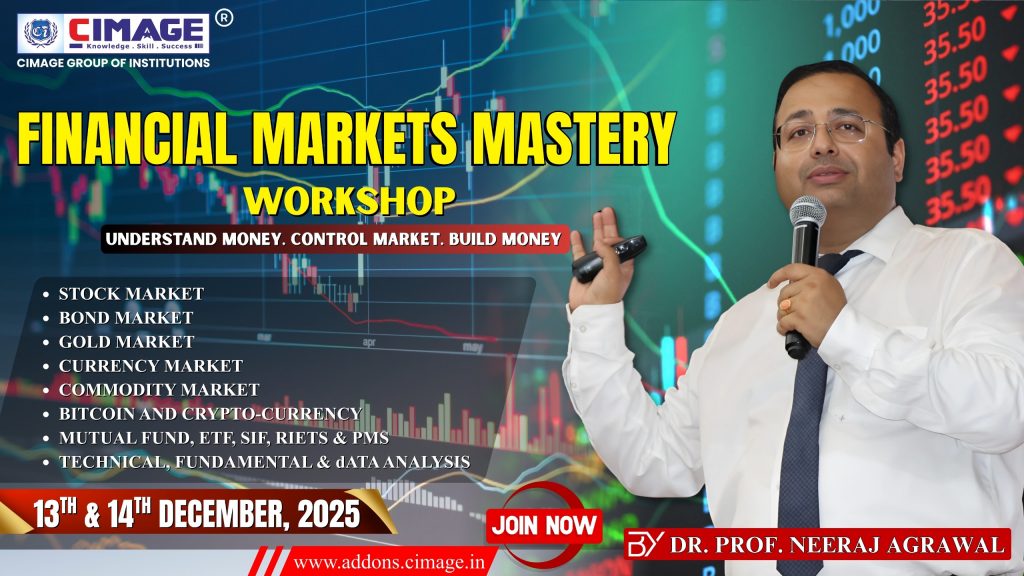
Understanding financial markets is essential not only for finance professionals but also for aspiring leaders across industries. To empower students from BBA, BCom (Professional), MBA and PGDM programs with practical knowledge, analytical skills, and real-world exposure, CIMAGE organized a comprehensive Financial Market Mastery Workshop as part of its Add-On Course: Financial Market Mastery. The workshop designed to bridge the gap between classroom learning and industry requirements, offering students hands-on insights into both domestic and global financial systems.
The multi-day workshop thoughtfully structured to move from fundamental concepts to advanced global market perspectives, ensuring that students developed both clarity and confidence in understanding how financial markets operate. The sessions conducted by experienced academicians and industry-oriented mentors, making the learning process engaging, interactive, and highly relevant.
Day One: The Journey into Financial Expertise Begins
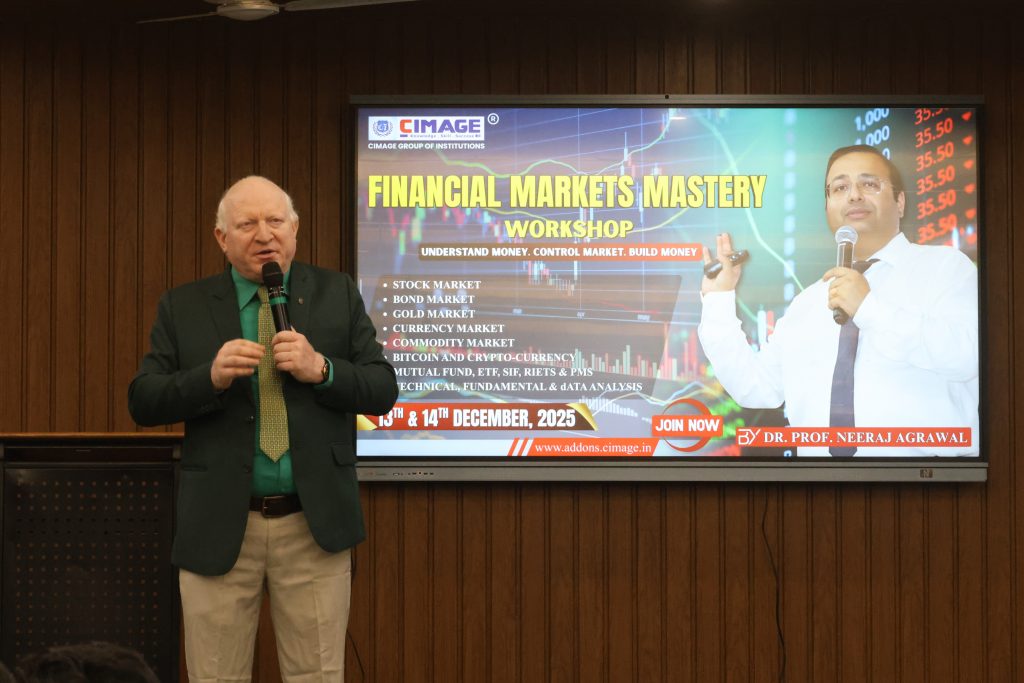
The workshop began on an energetic and insightful note with Day One conducted by Prof. Nitish Kr Rohatgi, who provided students with a strong and practical introduction to the world of finance. The session was designed to simplify complex concepts and help students understand how financial markets function in real-life scenarios.
Understanding the Core of Financial Markets
Prof. Rohatgi started the session by explaining the structure and importance of financial markets, highlighting their role in economic growth, capital formation, and wealth creation. Students introduced to the three major pillars of the financial market:
- Stock Market – understanding equity shares, ownership, and how companies raise capital through stock exchanges.
- Bond Market – learning about debt instruments, fixed-income securities, and how governments and corporations borrow funds.
- Mutual Funds – exploring collective investment schemes, professional fund management, and risk diversification.
Through simple language and relatable examples, students gained a clear understanding of how these investment avenues differ in terms of risk, return, liquidity, and suitability for different investors.
Key Technical Terms Explained
One of the most valuable aspects of Day One was the detailed explanation of technical terms related to the financial market, which often appear complex to beginners. Prof. Rohatgi broke down important concepts such as:
- Market Trends and their interpretation
- Risk–Return Ratio and its significance in investment decisions
- Portfolio Diversification as a strategy to manage risk
- Equity and Debt Instruments and their role in financial planning
- Basic Market Indicators used to analyze market performance
By connecting theory with real-world examples, students were able to relate classroom knowledge with actual market behavior.
Interactive Learning and Practical Insights
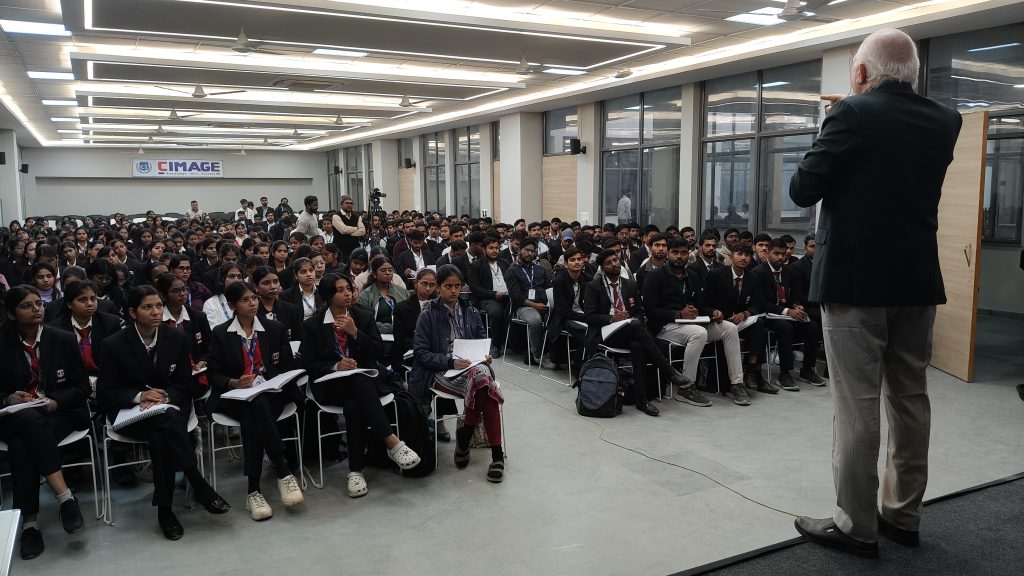
The session encouraged interactive discussions, where students asked questions, shared opinions, and analyzed real-life financial situations. Practical illustrations and current market references helped students develop clarity on market fundamentals and build a strong conceptual foundation.
Day One marked a valuable first step toward building financial awareness, analytical thinking, and investment confidence, setting the tone for the rest of the workshop.
Shaping Informed and Future-Ready Finance Professionals
The primary objective of the Financial Market Mastery Workshop was not just to deliver theoretical knowledge, but also to prepare students to become informed, responsible, and future-ready finance professionals. The structured flow of sessions ensured that students gradually moved from basic concepts to a broader understanding of how local and global markets are interconnected.
Final Day: A Global Perspective on Financial Markets
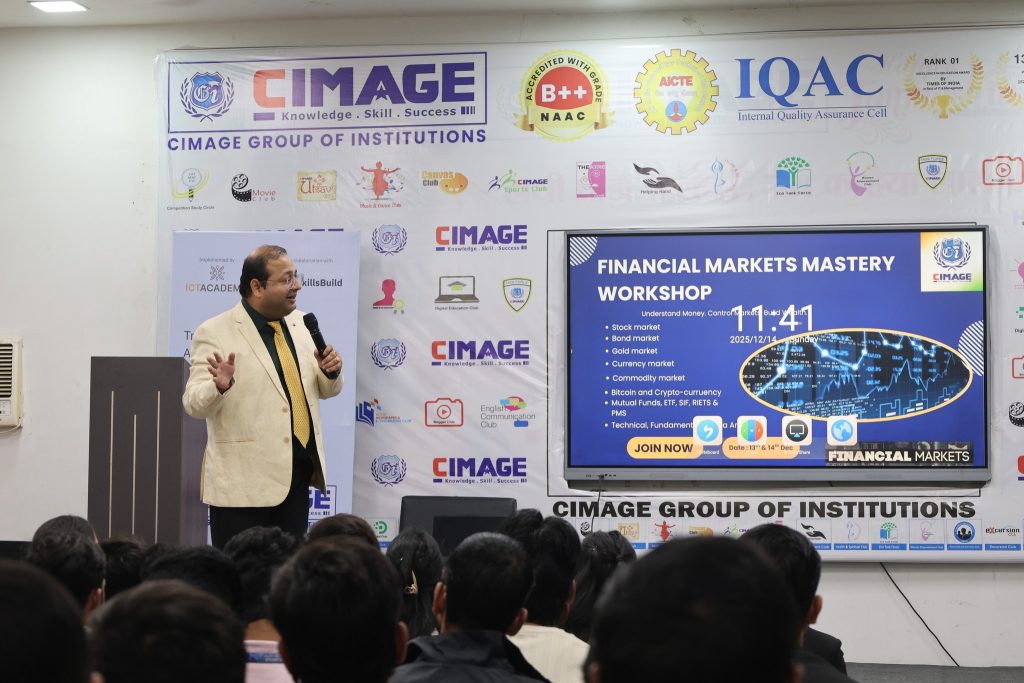
The workshop concluded with an insightful and thought-provoking final day session conducted by Director Sir, Prof. Dr. Neeraj Agrawal, who brought a global dimension to the learning experience.
Exploring Foreign and Currency Markets
During the session, Prof. Dr. Neeraj Agrawal discussed the functioning of the foreign market and currency market, explaining how exchange rates are determined and why currency fluctuations matter in a globalized economy. Students learned how international trade, capital flows, and geopolitical factors influence currency values.
He also explained the importance of foreign reserves, highlighting their role in:
- Maintaining economic stability
- Supporting international trade
- Managing currency volatility
- Strengthening a nation’s financial position
Understanding Commodity Markets
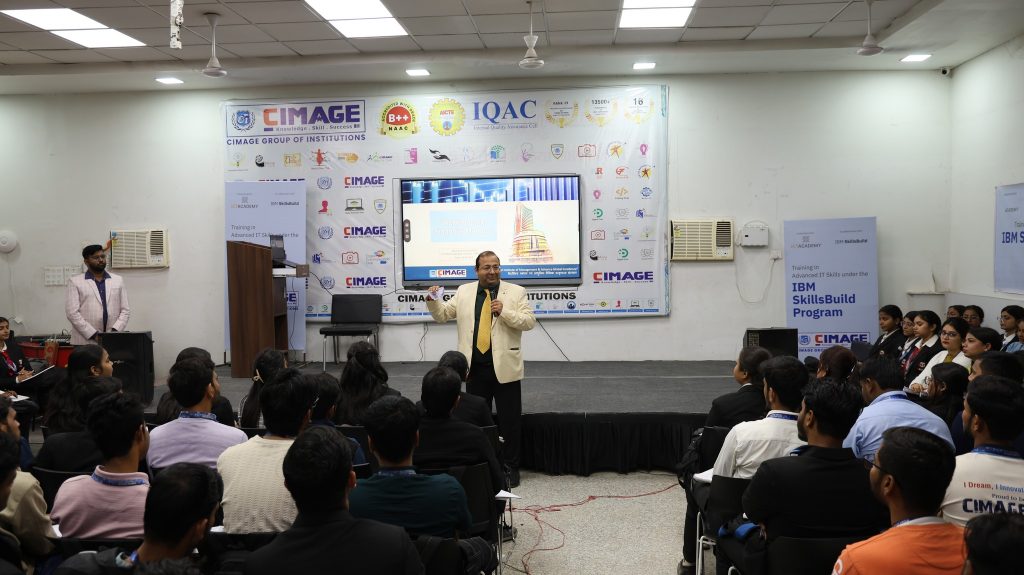
The session further covered commodity markets, where students gained insights into commodities such as gold, crude oil, agricultural products, and metals. Prof. Agrawal explained:
- Factors affecting commodity prices
- Demand and supply dynamics
- The role of commodities in inflation and economic growth
- How commodity markets impact both national and international economies
Economic Effects and Global Relationships
One of the most engaging parts of the final session was the discussion on economic effects and relationships between domestic and global markets. Students learned how international financial movements influence:
- Business operations
- Investment strategies
- Employment and growth
- Overall economic stability
The session-helped students understand the interconnected nature of global finance, where events in one country can have ripple effects across the world.
Key Learning Outcomes of the Workshop
By the end of the Financial Market Mastery Workshop, students achieved several important learning outcomes:
- Clear understanding of stock, bond, mutual fund, currency, and commodity markets
- Improved knowledge of technical financial terms and market indicators
- Ability to connect theoretical concepts with real-world financial scenarios
- Awareness of global economic relationships and market interdependence
- Enhanced confidence to pursue careers in finance, banking, investment, and management
CIMAGE’s Commitment to Industry-Oriented Learning
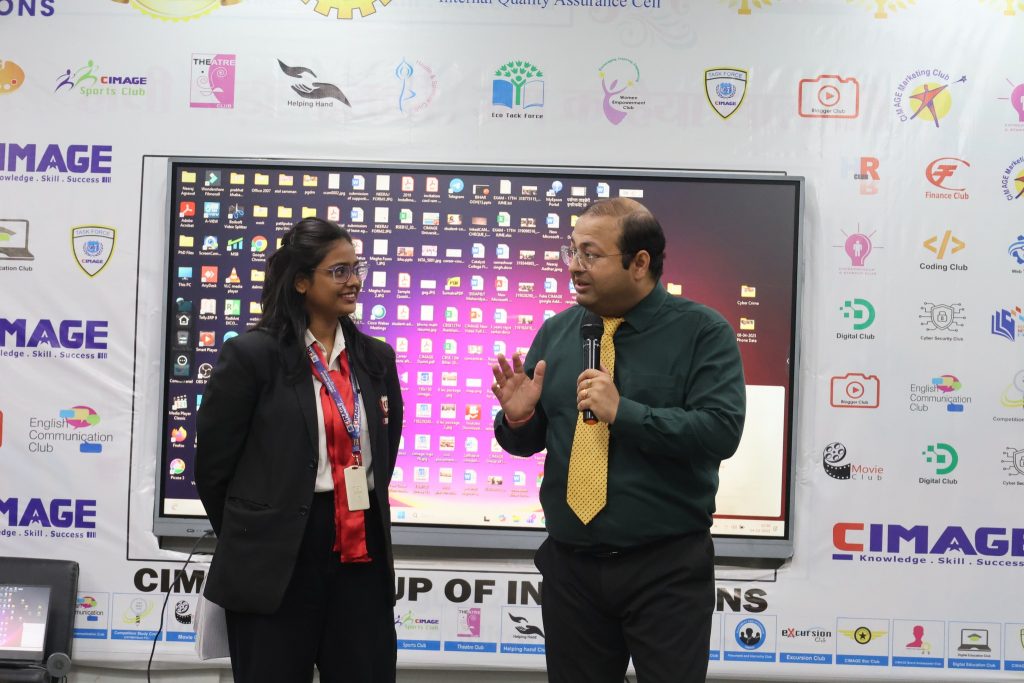
The successful completion of the Financial Market Mastery Workshop once again highlighted CIMAGE’s commitment to industry-oriented add-on courses that bridge the gap between academics and practical exposure. By integrating expert-led workshops with regular curriculum, CIMAGE ensures that students are well-prepared for professional challenges and evolving industry demands.
The workshop not only strengthened students’ financial knowledge but also inspired them to think critically, stay informed, and approach financial decision-making with confidence and responsibility.
The Financial Market Mastery Workshop stood as a meaningful step toward empowering students with real-world financial understanding—preparing them not just for exams, but also for life and careers in a dynamic global economy.
CIMAGE